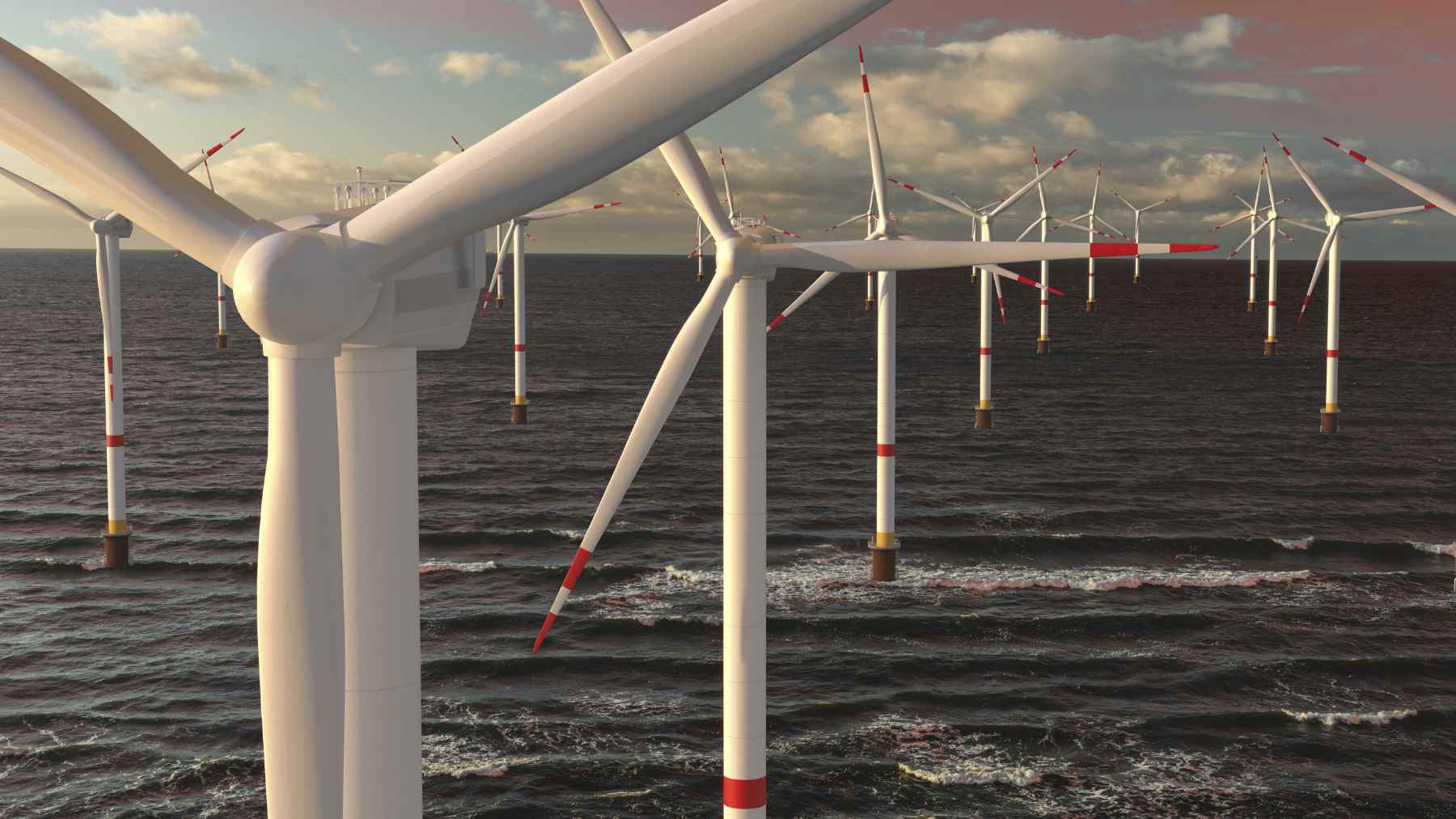
Do you remember when NASA brought the world to a standstill by announcing that they had found a new type of energy? They did it from renewable sources, something that has been put on the back burner with the Biden administration’s new plan to meet the 2030 climate targets. The whole country is on tenterhooks with a proposal to resurrect a type of energy that we should have forgotten about. We explain what it is and, above all, which state is in the middle of a huge controversy (understandable, now you’ll understand).
America has plans for 2025, but not good news: We will “resurrect” this energy after 50 years
The Palisades nuclear power plant located in Covert Township, Michigan, is set to return to active service after it was closed down in 2022. Thus, this new project aimed at reopening the plant is a major change in the energy direction and nuclear policy of the United States of America.
The Palisades facility includes only one 805 MWe pressurized water reactor power plant that plays a significant role in the energy system of Michigan. An analysis of the plant’s performance showed that over its 50 years of operation, the plant produced 230 TWh of electricity, showing its huge input to supplement the electricity needs of the region.
It can be defined by three simple keys:
- Reactor Type: Pressurized Water Reactor, or (PWR).
- Capacity: 805 MWe.
- Total Generation: More than 230 TWh.
From 1971 to 2022, but now we’re planning this for 2024: The Palisades nuclear plant project, in detail
With the facility’s shutdown in May 2022, Holtec International bought the Palisades plant from Entergy in June 2022. At the inception of the project, the goal was to fully shut down the facility by the year 2041. But communities and local, state, and federal support encouraged Holtec to change its mind and start the process of reopening the plant.
Another important feature of the reopening plan is the provided financial support provided by the U.S. Department of Energy (DOE). In March 2024, the DOE’s Loan Programs Office committed up to $1.52 billion for a loan guarantee. Holtec has already made significant strides in preparing for the plant’s restart:
- More than 228 additional specialists were hired on staff.
- New talents have been recruited, as well as engineers specializing in nuclear energy.
Will be the Palisades nuclear plant be reopened? Yes, but this unexpected way has America on edge
The company is undertaking several critical tasks to ensure the plant’s readiness:
- Renovation of the generator exciter, placed off-site.
- Preservation of the state of the reactor vessel so that it can carry out its functions.
- Preliminary work on the preparation for conducting deep chemical cleaning of the reactor cooling system.
- These are the plans for inspecting the reactor vessel internals and steam generators in the future.
- Purchasing new fuel stocks and other items that take a long time to be delivered.
Beyond 2024 (and 2031): These are the plans for the Palisades nuclear plant
The Palisades plant is also reliable in its operation, as evidenced by earlier records of operation. The 805 MWe power generation capacity of this plant makes a very good contribution to Michigan power generation. Potentially, when fully constructed, the plant is capable of delivering clean, dispatchable power to hundreds of thousands of citizens and establishments.
And what about the projected timeline? These are the plans:
- Target Restart Date: October 2025
- Current License: In reference to the same, then the validity of the credentials would be until 2031.
Holtec’s vision for Palisades extends beyond mere reopening:
- Long-term Operation: At present, the company is planning to continue operations of the plant up to the year 2051.
- SMR Development: Palisades is also important to America’s nuclear future because Holtec plans to construct its initial pair of SMRs at the site.
The resurgence of nuclear energy in America, with the Palisades nuclear plant as the best example, is an echo of what is happening on the rest of the planet. The European Union, led by France and Germany, is debating the possibility of bringing back nuclear power and reversing plans for ‘non-war denuclearization’. The same is true, and much more incomprehensible, for Japan, which suffered the Fukushima catastrophe and showed what this dangerous source is capable of.