One of the most talked about nuclear facilities in the United States, the Palisades nuclear plant in Michigan, is set to roar back to life, and after how many years of inactivity? The decision to bring the plant back online after its 2022 shutdown is bold and, all at the same time, liabilities. Yet more often, the need for electricity and an ever-increasing number of patients with global warming is higher than ever.
How Palisades is stepping up to meet energy demands
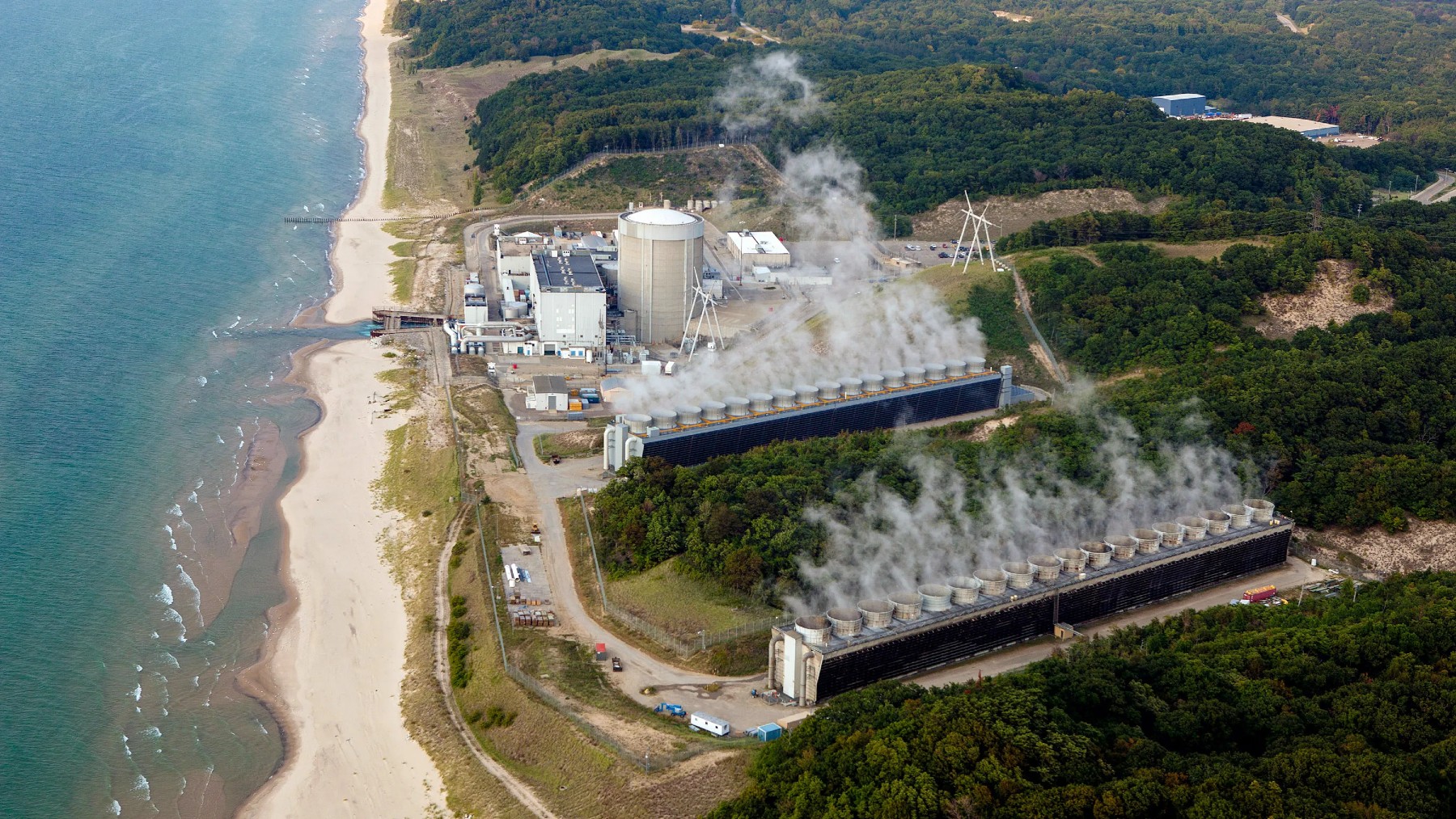
The Palisades nuclear plant has not been out of controversy for quite a long time now. Open for over fifty years, it was shut down in 2022. Nevertheless, the facility will be reopened in the next two years because of increasing energy demands and growing government interest in nuclear energy. The plant is owned by Holtec International, which has received a $1.52 billion loan from the U.S. Department of Energy to refurbish and bring it online by late 2025.
The government’s motivation is clear: Nuclear energy can minimize greenhouse gas output and meet the country’s rising electricity demands, especially as sectors such as AI, EVs, and grid batteries gain traction. Nuclear power is stable and predictable and provides clean electricity, so the Palisades plant is essential for meeting future climate objectives.
Overcoming obstacles: The risks of restarting a nuclear facility
Bringing back an idled atomic power station is not easy; it is costly and has never been done before. In the case of Palisades, engineers need to assess and repair infrastructures that may have worn out and become weak. This includes turbines, steam generator tubes, and other critical parts on which the safe operation of the generators depends.
The Nuclear Regulatory Commission (NRC), responsible for the safety of nuclear plants, has expressed concerns over the structural state of Palisades. Previous surveys have discovered imperfections in steam generator tubes that require additional review and possibly remediation. Such challenges explain why it is risky and challenging at the same time to bring an older nuclear power plant back to life. However, Holtec International is still hopeful to return by October 2025 despite experts, including the government, advising that it may take even longer.
The delicate balance between climate goals and safety concerns
Among the key objectives for the redevelopment of the Palisades plant is to deal with the issue of climate change. There is growing consensus that nuclear energy will play a role in any low-carbon energy mix. Unlike fossil fuels, which have been used for many years, nuclear reactors always produce electricity without greenhouse gases. It is projected that electricity demand in the U.S. will increase by 15% in the next few years due to factors such as electric cars and growing data centres, and nuclear could offer this sort of electricity reliability that renewables such as solar and wind cannot.
However, policy opponents contend that reactor rebooting, such as Palisades’, is perilous. Sierra Club and other environmental organizations have criticized this decision as being foolhardy and costly, while they recommend building wind and solar power infrastructure. Also, the problem of storing radioactive waste remains at the forefront. The United States has not come up with a long-term way to dispose of nuclear power, and bringing back Palisades means producing more nuclear waste without knowing how to handle it.
A brighter future for nuclear power in America
The Biden administration has laid out ambitious plans of tripling nuclear power capacity in the U.S. to meet future energy demands, and the Palisades revival can be viewed as the beginning of nuclear energy revival in the United States. Although generating new atomic reactors is capital-intensive and takes many years, regenerating old nuclear plants could be a more efficient solution. Even Holtec International proposed that they could construct two tiny reactors on the Palisades site in the 2030s, strengthening the plant’s position in America’s power generation map.
All in all, the reactivating of the Palisades nuclear plant, with all its implications, is a new page in America’s energy policy. As the energy requirements gradually increase and the imperative to reduce carbon footprint is becoming critical, nuclear power is back on the country’s power map. While Palisades’ restart has its dangers, it also means a new chance to reclaim atomic energy as a prominent component of America’s clean energy strategy.