The propulsion system is uniquely relevant to the probe’s speed in space probing as a technology. Recent innovations developed by Pulsar Fusion, a firm specializing in aerospace engineering in the United Kingdom, have presented astounding Space Engines that can significantly change the future chances of space discoveries.
Plasma-based engines and nuclear fusion propulsion are among the innovations bringing hope that these technologies will dramatically reduce the time it takes to traverse other planetary systems and open up new frontiers for exploration.
Plasma-based space probe engine: This groundbreaking engine will revolutionize satellite navigation and movement in space
Pulsar Fusion designed the next-generation space propulsion system, and Southampton University evaluated it for supersized next-gen satellites. It developed a new engine that used Xenon and Krypton gas and could shoot and move in space.
So, specifically on January 29, 2024, during the last five minutes of the test, an engine ten times larger than a typical engine of such kind was successfully tested. This development addresses the demand for larger, more robust ‘In Space propulsion’ to meet the growing global launch service need. The reduced weight of the new engine would allow satellites to move and position themselves, which is vital for long space voyages for mining, exploration, and better communication.
Nuclear Fission impulse inventions: This new technology could shorten your journey to Saturn by decades
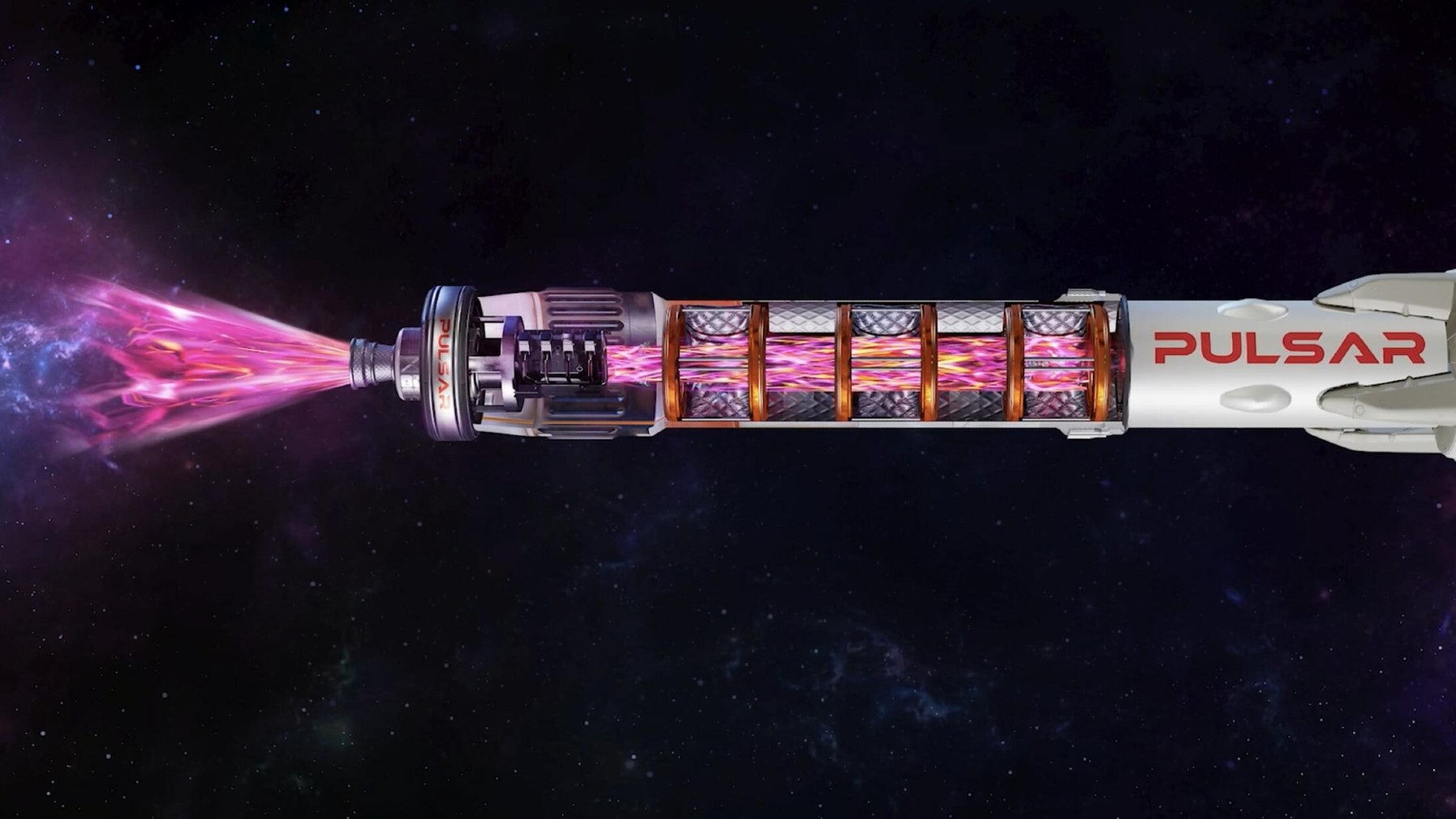
Pulsar Fusion is also still developing a new type of nuclear fusion, which might assist in traveling to various planets and escalating transit time to other star systems. According to the company, it is currently building ‘the biggest possible nuclear fusion rocket engine; the exhaust speeds can exceed 500000 mph.
This new system could make voyages to Mars, Jupiter, Saturn, and beyond just as quickly as present-day explorations of the Moon. For instance, the time taken to get to Titan—a moon of Saturn—can be reduced from decades to only two years. The firm has publicly stated that it intends to send a 1000 kg craft to Pluto in four years and return using nuclear fusion rocket propulsion.
Direct Fusion Drive (DFD) rocket engine: How this fusion-powered engine will redefine space travel and exploration
A new rocket engine called Direct Fusion Drive or DFD is unveiled by Pulsar Fusion, which is highly advantageous over earlier propelled engines. The new power plant seeks to drive and employ electrical energy for spaceships at much higher temperatures than the sun.
The DFD system for the interstellar ship contains a miniaturized fusion reactor that produces electrically charged particles, which are converted into propulsion force by a rotating magnetic field. It is clean energy; it can provide energy for spaceships until time immemorial; it is half as compact as it suits space travel. Pulsar Fusion is collaborating with Princeton Satellite Systems (PSS) to apply AI and machine learning techniques to process data from the Princeton field-reverse configuration reactor.
The advancements by Pulsar Fusion could lead humanity to new worlds and possibilities in our solar system and beyond
Hence, in conclusion, the long-awaited new phase in advancing interstellar space travel is possible with newly designed space propulsion technologies by Pulsar Fusion. These advancements may shift the meaning of space travel as it progresses from plasma-based engines of super satellite-like vehicles up to nuclear fusion engines that can reduce interplanetary travel time by half.
The next STEPs include static tests in 2024 and the In-Orbit Demonstration (IoD) in 2027; as the company passes through testing phases, the possibility of space travel increases. These advancements solve the existing issues in space propulsion and provide new opportunities for deep space exploration.
This will extend humanity’s possibilities to discover new worlds in the solar system and beyond, keeping up with the pace of this significant advancement in space technology and appreciating the knowledge and theoretical output provided by luminaries such as Einstein in the present and future of space science.