American astronomers achieved a groundbreaking discovery, which revealed a quasar that possibly acted as one of the key factors in terminating the “dark ages” era of the universe. The NuSTAR X-ray space telescope has located J1429+5447 as its most distant examined object and one of its most variable known quasars. This article delves into the significance of this discovery and its implications for our understanding of the early universe.
The cosmic object pointed directly toward Earth might have made the surrounding space brighter.
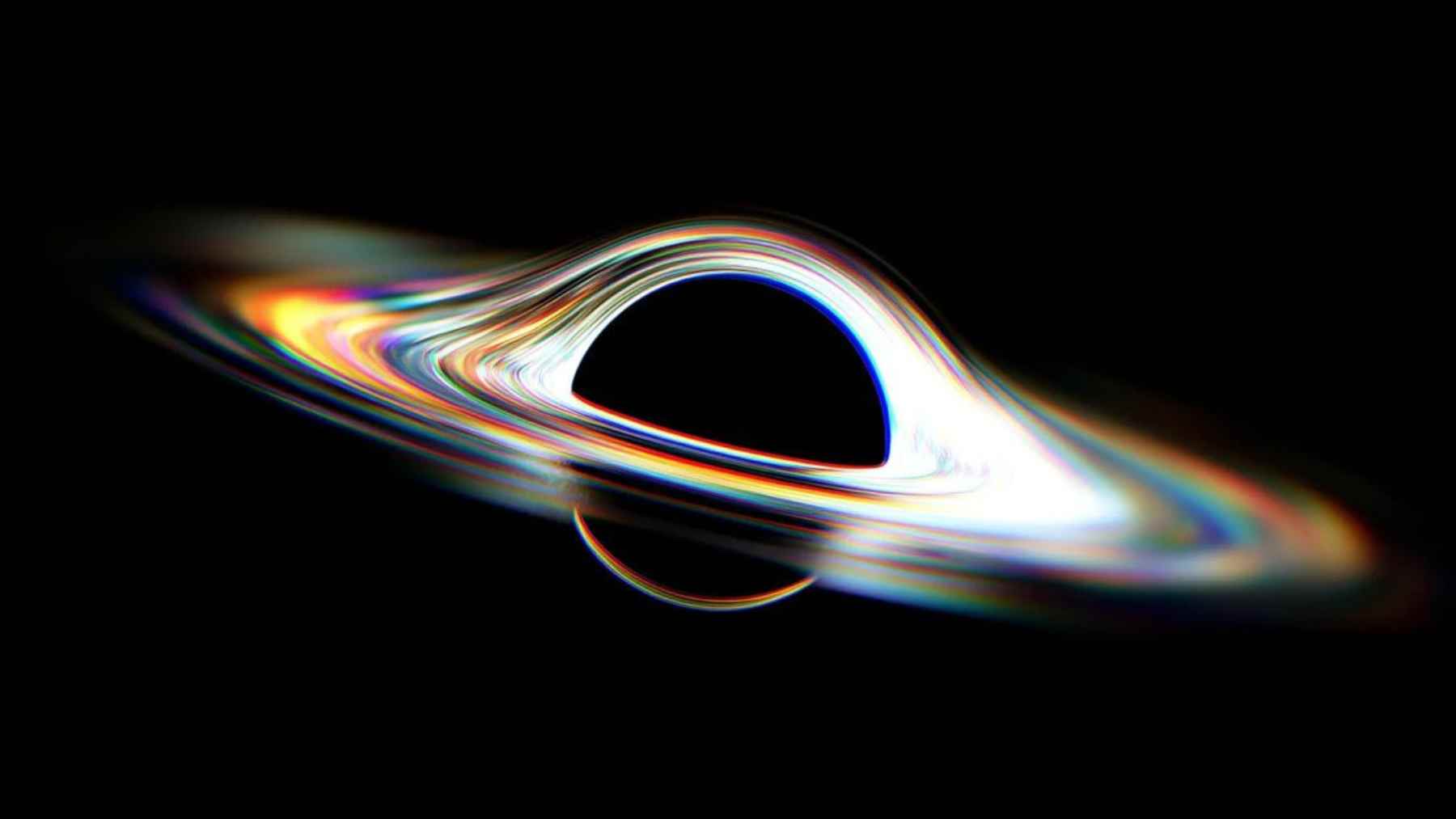
Scientific researchers at Yale University discovered a quasar named J1429+5447 through their observations in early parts of the universe, where its energetic jet points directly toward Earth. Scientists have detected significant variability in X-ray emissions from this quasar as the intensity levels almost doubled in a brief timeframe. The fast changes observed in this object result from the specialized relativistic elements that enhance changes using principles described in Einstein’s special theory of relativity. Its broad-ranging brightness characteristics enable researchers to investigate this object as an exclusive study case.
The astrophysical phenomenon of quasars shines as the most brilliant eternal objects in space since they originate from active galactic nuclei (AGN) during black hole material consumption. AGN-powered energy generation emits electromagnetic radiation at multiple wavelengths that researchers use to study these objects at radio and infrared and visible through ultraviolet X-ray and gamma-ray frequencies.
Scientific evidence shows that reionization occurred after a billion years following the Big Bang as stars from the very first generation caused a transformation from neutral electric atoms. Quasars produce such robust radiation levels that they helped trigger universe reionization—observations of J1429+5447 present vital information about how black hole jets influenced the reionization timeline. Research enhances our comprehension of cosmic development through this discovery.
Black hole jets contributed to faster universe growth than scientists originally predicted.
Researchers in the early universe now benefit from useful data acquired by discovering J1429+5447. Through Nustar and Chandra X-ray telescope observation analysis, researchers achieved a vital understanding of newborn universe black hole expansion. The exuberant variations and intense brightness of this quasar demonstrate how jets produced by supermassive black holes dramatically increased the development of these space objects.
The black hole in J1429+5447 emits jets that transmit particles across one million light-years of distance from the black hole. The rapid expansion of supermassive black holes advances through the power of these jets. The uncovering of black hole evolution relies heavily on research related to jet formation dynamics. Scientific observation of quasars becomes straightforward because they are both illuminated and distant, so researchers can apply these observations to understanding cosmic evolution.
The scientific investigation of J1429+5447 has opened new pathways to research into primordial origins. Astronomers can learn about supermassive black hole expansion during short periods by finding more jet-producing objects. Investigating jet formation links with black hole growth enables a more comprehensive understanding of the universe’s developmental processes. Because of these discoveries, the field of scientific research will advance rapidly.
This space telescope’s discovery could reshape what we know about creation.
Scientists discovered quasar J1429+5447, which opened new avenues for understanding space during its earliest periods. This highly variable quasar, with its jet, pointed towards Earth, offers crucial clues about the role of supermassive black holes and their jets in reionization. Astronomers’ research on the cosmos, through discoveries such as J1429+5447, allows scientists to unravel hidden processes that direct universe formation and evolution.
The prolonged investigation into cosmic history shows no sign of completion. J1429+5447 represents a strong lesson about the vast knowledge that remains out of our grasp. Exploring space reveals more and more information that leads humanity toward understanding universe secrets. Future generations’ scientific research follows the light that arrived from the past.