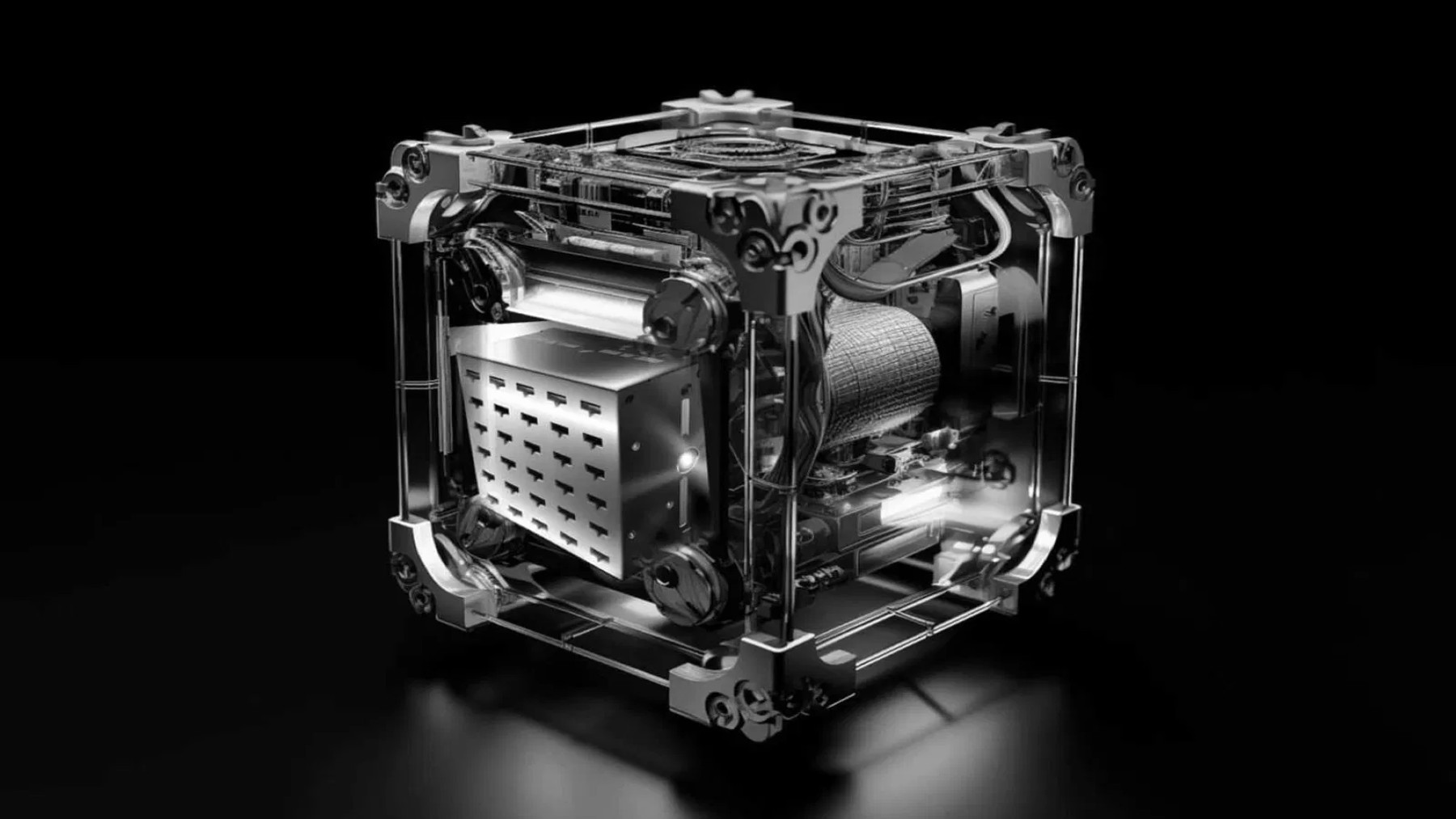
RocketStar has announced the FireStar™ Drive, a new propulsion system that is a revolutionary upgrade to the company’s propulsion technology. The most astonishing part? It is generated within the Sun and is an internal source.
The fact is that this invention is a breakthrough in the field of space research; the spacecraft can now travel farther and faster than before, thanks to a new way to obtain energy from fusion.
How the FireStar™ Drive works: The Sun is the source of fuel
The FireStar™ Drive is an excellent instance of how technology can open up hitherto unexplored opportunities. The base propulsion system is pulsed plasma propulsion driven by water to generate high-speed protons.
These protons then interact with boron atoms, where a fusion process occurs, creating carbon and alpha particles. This nuclear fusion-enhanced process increases the system’s efficiency by twenty times without needing more fuel, a revolution in space propulsion technology.
The key on the FireStar™ Drive is that the Sun, the biomass of nuclear fission, can be directly tapped for energy. RocketStar has developed the most efficient propulsion system that can further support long-term space missions by replicating the nuclear fusion process that occurs in the deep core of the sun.
This innovation is revolutionary, especially for mission assignments for extraterrestrial planets and beyond conventional propulsion technology.
Why FireStar™ Drive is a leap beyond all previous space propulsion systems
The key factor that sets the FireStar™ Drive apart is the application of aeutronic nuclear fusion. This fusion produces no radioactive waves and is more efficient than the usual fusion reactions.
At the core of the thruster’s exhaust is a fusion process that significantly increases thrust by 50%. This system is considerably eco-friendly compared to conventional engines that employ chemical propellants, where water is used as the fundamental fuel of this system in future spacecraft.
Adam Hecht, a professor of nuclear engineering, stressed that this is a significant achievement: RocketStar did not merely build on prior advancements in propulsion systems but made a quantum leap. The fusion-fission reaction in the exhaust is a revolutionary idea that, if implemented, will revolutionize space travel by providing more efficiency and performance.
The FireStar™ Drive was initiated as a concept drawn on a napkin during a conference. This idea was taken to build a working prototype by RocketStar’s CEO Chris Craddock in conjunction with CTO Wes Faler, who founded the company known as Miles Aerospace.
The project was advanced with support from the US Air Force’s AFWERX initiative, which helped the team provide the required support to test the system. The collaboration produced a fusion-driven propulsion module that has already been tested in a laboratory setting.
This technology is unique in the sense that it can operate in space without the use of conventional rocket motors. Although chemical propulsion is vital for space missions where a vehicle must be placed into orbit, electric propulsion, such as the FireStar™ Drive, is considerably more fuel-efficient once in space.
That water can be used as fuel, and the energy source in nuclear fusion makes this system a perfect solution for deep-space travel.
Testing and future implications: A faster way to explore the solar system
RocketStar plans to launch the FireStar™ Drive after testing in the High Power Electric Propulsion Laboratory at the Georgia Institute of Technology. The next flight test will occur in February 2025, when the propulsion system will be tested on Rogue Space System’s Barry-2 satellite.
This test will give important information about fuel consumption, performance, and the effect of fusion on propulsion in the actual space environment. The implications of this technology are extensive. If successful, it could reduce travel time to Mars and other distant planets to a significantly shorter one.
If missions could take days instead of weeks or months, new opportunities for exploring the solar system would be created. Interstellar and beyond travels may not be as far off as possible, thanks to the fusion-powered FireStar™ Drive.
Therefore, FireStar™ Drive of RocketStar is the future of space propulsion systems. Besides improving efficiency, this system also points to the directions for quicker and more practical space exploration through nuclear fusion.
The advancement of this technology goes a long way in revolutionizing how man can travel through space in search of other planets and even stars.