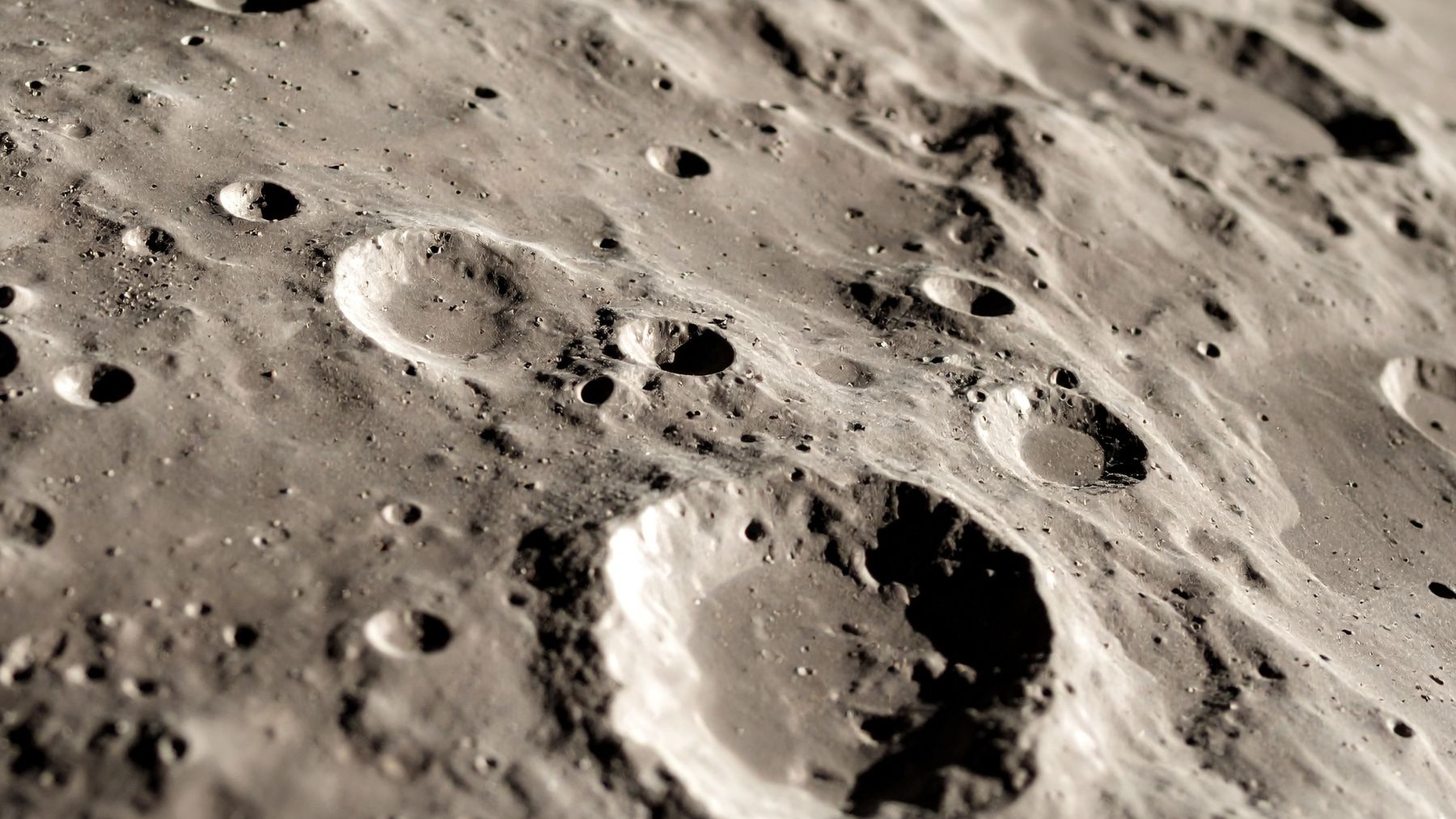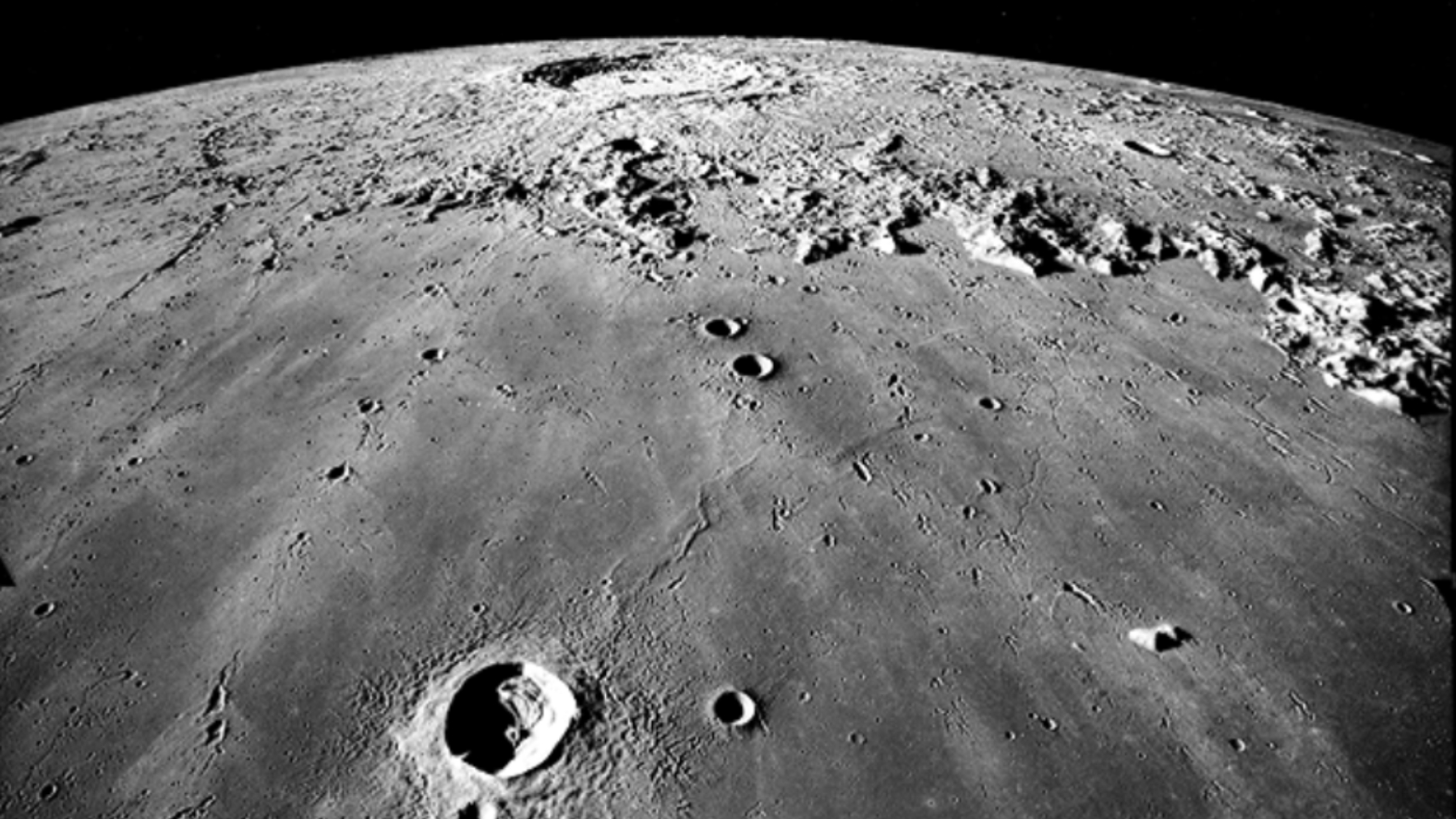
Often considered barren, the moon now reveals secrets that can alter future space exploration and human habitation. Chinese scientists have developed a revolutionary process to extract water using lunar soil and solar wind-implanted hydrogen. This innovation may solve one of the biggest problems in lunar colonization: sustainably sourcing water on the moon.
A revolution for moon missions: Using lunar soil and solar wind hydrogen to extract water
An essential part of this revolutionary process is the interaction between lunar soil and solar wind. Solar wind has hit the moon’s surface for billions of years, implanting hydrogen atoms into its minerals. Researchers examined these interactions using samples from the Chang’e-5 mission and found a promising method for extracting water.
When lunar soil is heated to more than 1,000°C, hydrogen combines with iron oxides to create elemental iron and water vapor. This vapor can be turned into liquid water through condensation. This method is notable for its effectiveness: one gram of lunar regolith can produce between 51 and 76 milligrams of water.
If we increase the amount, one metric ton of lunar regolith could provide more than 50 kilograms of water, enough to meet the daily drinking needs of 50 individuals. This discovery offers a helpful answer for future moon missions, as it lowers the need for expensive water shipments from Earth. It also creates new options for long-term habitation on the moon and scientific exploration.
Hydrogen-rich ilmenite: Making water extraction easier with lunar minerals
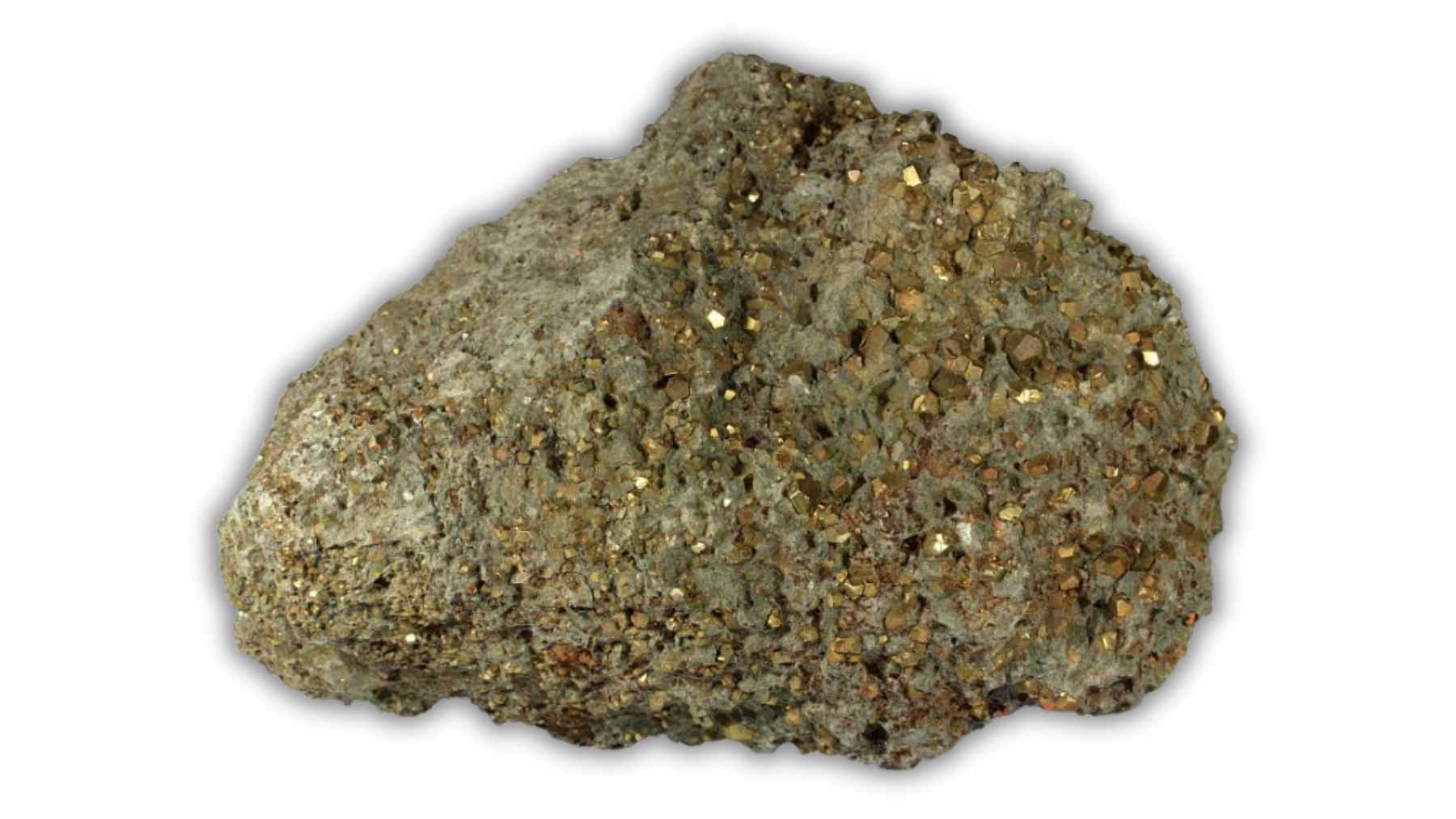
Producing water efficiently is determined by its hydrogen content in lunar minerals; some minerals are richer in hydrogen than others. Among the five principal lunar regolith minerals, ilmenite, plagioclase, olivine, pyroxene, and lunar glass, ilmenite (FeTiO3) appeared to be the best mineral.
Researchers found that ilmenite had the greatest concentration of solar wind hydrogen. Its unique structure among moon minerals features sub-nano tunnels that massively absorb and store hydrogen. Further analysis also revealed that lunar ilmenite might allow for greater atomic spacing than terrestrial counterparts, assisting in hydrogen storage.
There is also a milder condition where the temperatures for generating water can be reduced. The experiment showed that the temperature can be reduced from 800°C to 200°C. Lowering the temperature threshold will significantly enhance the process’s energy efficiency and feasibility in lunar environments.
Chang’e-5’s samples reveal the potential of lunar minerals and resources
The Chang’e-5 mission returned to Earth with 1,731 grams of lunar samples in 2020; these samples provided a deeper understanding of lunar mineralogy and whether the moon presents a resource-rich environment. This discovery has important implications for lunar exploration.
Water is critical to human life and vital in producing oxygen as well as hydrogen fuel. The discovery of water (like these strange twin oceans that were spotted) in the lunar regolith implies that water transportation from Earth has become logistically simple and not prohibitive.
The uneven distribution of hydrogen on the moon also offers excellent insights into the future exploration and exploitation of its resources. Researchers have observed that the moon’s equatorial region experiences intense solar wind exposure, which converts hydrogen into water vapor.
Areas at higher latitudes are expected to retain more hydrogen because of less solar wind electron irradiation. This experiment will allow upcoming missions to map out the proper areas where water can be extracted and used as a resource.
The brilliant work of the Chinese researchers marks a significant step toward sustainable space exploration (such as water exploration on Europa and Enceladus). By tapping into the moon’s natural wealth of hydrogen and developing efficient means of producing water, humanity is edging closer to establishing a constant presence on the moon.