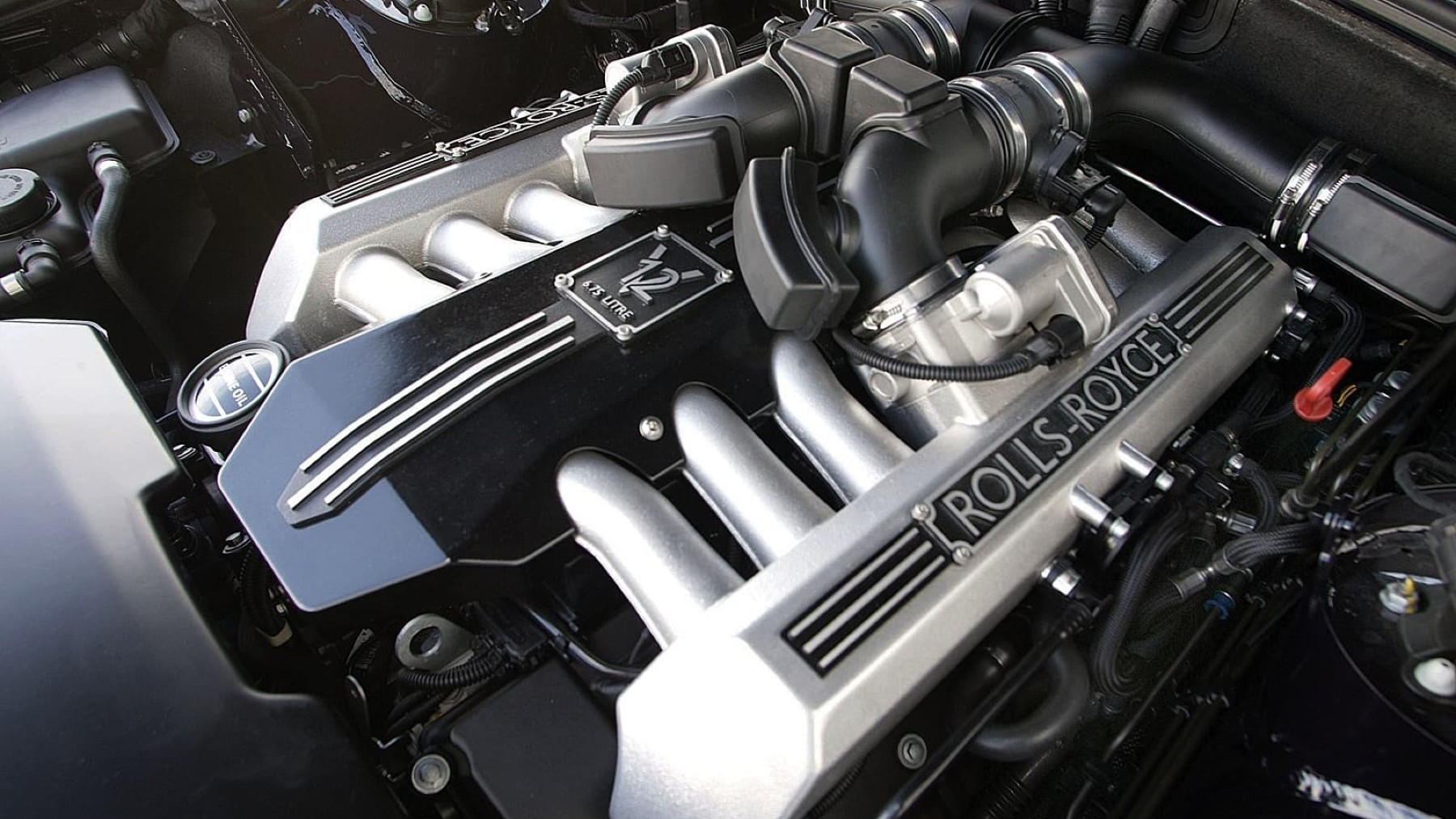
A legendary luxury brand has been lagging behind over the past few years due to the advancement of Tesla (with its EVs) and Toyota (with its FCEVs). However, eyes are now on Rolls-Royce, which has pushed all known limits of luxury with a model that reaches seven figures. That’s not all: the most striking thing is the engine it uses, with which they wanted to move away from hydrogen and even methanol and ammonia, two options that are far from futuristic for the British brand.
Legendary brand has unveiled a new engine: It’s neither hydrogen nor electric nor hybrid
This English car producer has always associated luxury and performance, and the development of a new engine for the Phantom series is one of the major steps in the company’s history. This article reviews the performance coefficient, construction, power, and other relevant aspects of the Rolls-Royce Phantom engine.
The most recent engine created for the Rolls-Royce Phantom can be considered the result of its work in this aspect. When I say this engine is not just an improvement but rather a revolution, you must understand that it has taken Rolls-Royce into a completely new territory when it comes to luxury vehicles’ performance while at the same time preserving the company’s fundamental principles.
Some keys to understanding the new Rolls-Royce engine
The new Phantom engine would, of course, be designed to provide an unparalleled performance, keeping in view the luxurious nature of the brand. Key performance figures include:
- Power Output: The heart of the Phantom is a potent 6.7-liter diesel engine that churns an astonishing 600 horsepower to guarantee the car’s smooth, accelerated movement.
- Torque: This engine develops a torque output of approximately 900 Nm and ensures splendid acceleration and powerful pulling factors.
- Acceleration: The Phantom can accelerate from zero miles per hour in about 5.1 seconds, something rather incredible for such a car and its line, which is considered to be luxurious.
- Top Speed: The top speed is limited to around 155 km/h, as is typical of many luxury sedans of modern production and in keeping with the brand image.
These figures also demonstrate the potential machinery of the engine, while at the same time illustrating Rolls-Royce’s commitment to the interrelation between power and sophistication.
Rolls-Royce latest engine breaks the limits of luxury: From hydrogen to new fuel, but a step back
To the design of the new engine, a great deal of effort was applied, which in Rolls-Royce is a matter of principle and tradition.
Research and Innovation: The development was preceded by a study of the latest technologies used in modern automobiles, together with the new achievements in engine technology.
- Testing and Refinement: The engine models went through different tests together with the environment to check on their reliability and performance. This phase involved on-road tests and trips to enhance the engine characteristics of the automobile.
- Sustainability Considerations: In a move that is in line with most new engine designs all over the world to be environmentally friendly, the new engine features technologies to make it blander and friendlier to the environment and the consumer’s pockets.
- Collaboration: These partners have involved high-caliber automotive engineering professionals and incorporated modern technologies into the engines’.
A new engine layout for the Rolls-Royce Phantom entails a V12, which defines many of the vehicles’ performance types.
- Displacement: The size of the engine used is estimated to be about 6 cylinders. 75 liters, which gives a rather powerful and, at the same time, rather smooth drive typical of Rolls-Royce cars.
- Fuel System: It uses direct fuel injection, which increases fuel economy and power, you inject fuel accurately and burn it well.
- Turbocharging: I like such features as twin-turbochargers; it increases power, and at the same time, the engine operates with optimum efficiency at varying RPMs.
This new Rolls-Royce engine belongs to a completely different generation of prototypes that go beyond the ZEVs (zero-emission vehicles) and that are on the fringes of Tesla, BYD or Xiaomi, three brands that are “at war” with each other. However, we will see if the carmaker manages to overcome the restrictions on its fuels, which have an expiration date in Europe of 2035. Remember, however, that the UK has its own goals, which are somewhat less concrete as the decarbonization of its transport.