When it comes to a sustainable mobility future, the EV industry comes to mind. However, an invention relying on merely air has already somewhat put a new spin on what a sustainable mobility future could look like. Japan seems to be putting a stop to the conversation on lithium-ion batteries and hydrogen fuel cells as its newest invention relies on no burned fuel, emits no carbon, reaches a speed of over 80 mph, makes no noise, and seems to be powered by compressed air alone. Perhaps innovation at its finest, but could air really be what the mobility world is searching for?
An invention that was ignored for far too long
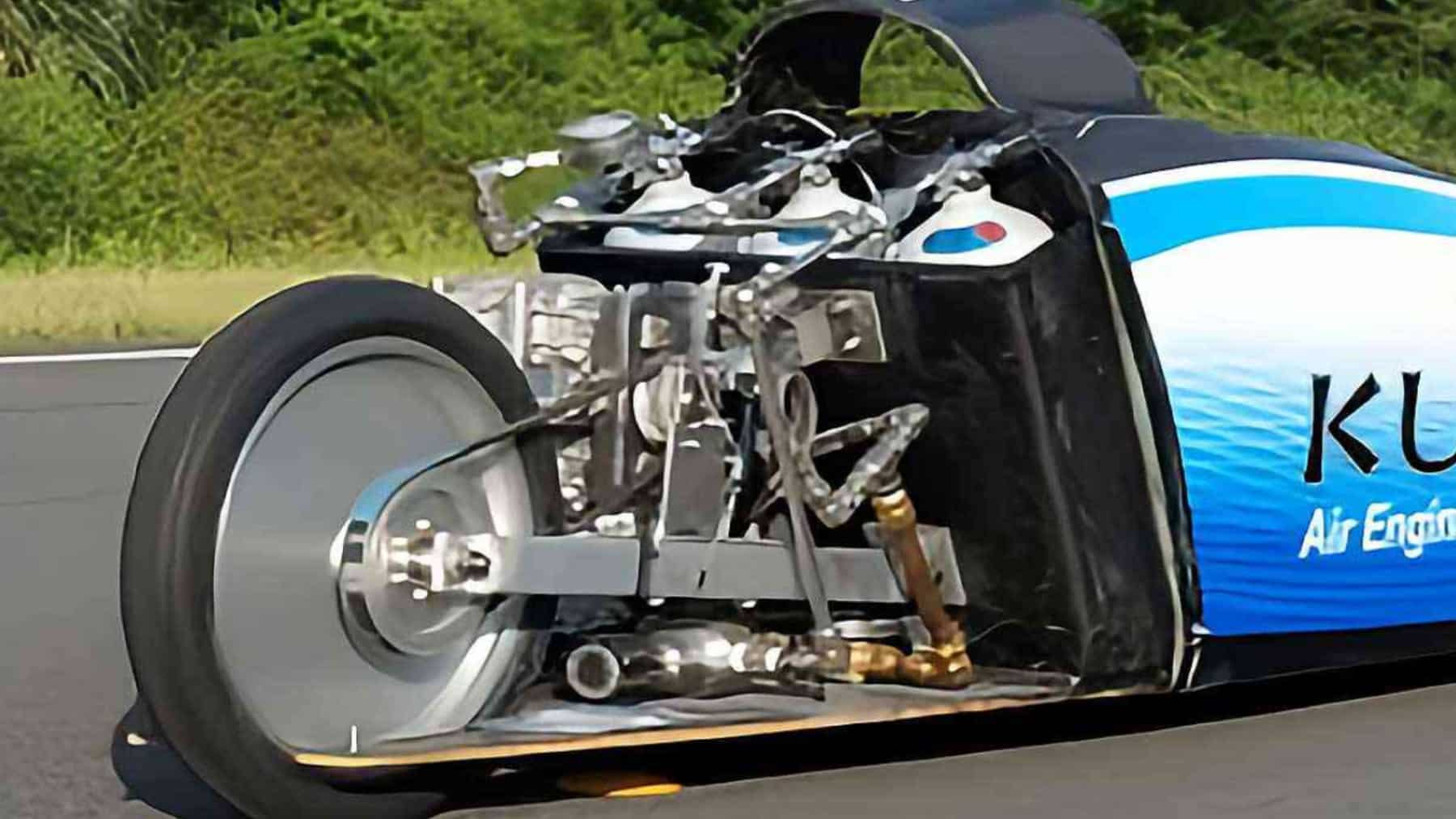
With the revelation of the Ku:Rin by Toyota Industries Corporation came an air-powered vehicle that could reach speeds of 129,2 km/h (80,3 mph). What started off as a passion project by in-house engineers called Yume no Kuruma Kobo (Dream Car Workshop) became a showcase for something incredible.
The Ku:Rin was one of the first vehicles to run on compressed air alone that was stored in a tank so as to power the engine due to expanding and pushing pistons. Not only was compressed air used, but an emissions-free design that set records in terms of speed.
However, as revolutionary as the Ku:Rin was, we have never since seen such cars on our roads today. Could the dream of a vehicle powered by compressed air remain just a dream?
Why did the Ku:Rin dream fail to materialize?
Although there were talks of the Ku:Rin dominating the cleaner mobility future back in 2011, the whole hype of the Ku:Rin died down when the vehicle battled with practical limitations. One of the biggest setbacks was the vehicle’s range. The range allowed was only 3,2 kilometers (about 2 miles). When the compressed air was finished, refueling became necessary immediately. The energy density of compressed air made it impossible to compete in consumer markets.
However, there was no lost hope as the Ku:Rin was never made with the intention of being mass-produced. The engineering team at the time was looking at testing something revolutionary and something that had never been done before.
Turning our full focus to compressed air nowadays
What the Ku:Rin did was put compressed air in the forefront, allowing automakers to consider and incorporate compressed air with electric engines and internal combustion engines. By utilizing compressed air alongside electric engines and internal combustion engines, the drawbacks of relying on air-powered cars alone are taken care of.
There was much success in Sweden, where a hybrid system was used and where braking energy was captured and stored as compressed air. The energy stored was thereafter reused to help with acceleration, simultaneously reducing fuel consumption and emissions.
We cannot fully turn our attention away from air-powered components that surely do provide us with scalable solutions that are far cheaper than batteries and cleaner than imaginable. Although Japan’s new engine that runs on air could not wipe out every EV on Earth, it did set a whole new tone for the mobility future, silently threatening all EVs in the process.
The EV realm is experiencing a threat due to compressed air
With Toyota unveiling another secret project targeted for as soon as November, we can only remember what the big unveil of the Ku:Rin meant for a sustainable mobility future. Since hydrogen fuel cells are expensive and lithium supply chains are constantly under threat, the need for alternative solutions has never been more important.
The Ku:Rin was a revolution brought out 14 years ago that did not succeed only because it was brought out too early. Since then, advanced materials and hybrid drivetrains have enabled the idea of compressed air to make a reappearance, and perhaps soon compressed air will steal the show again. Air may very well be the force that we were in search of.