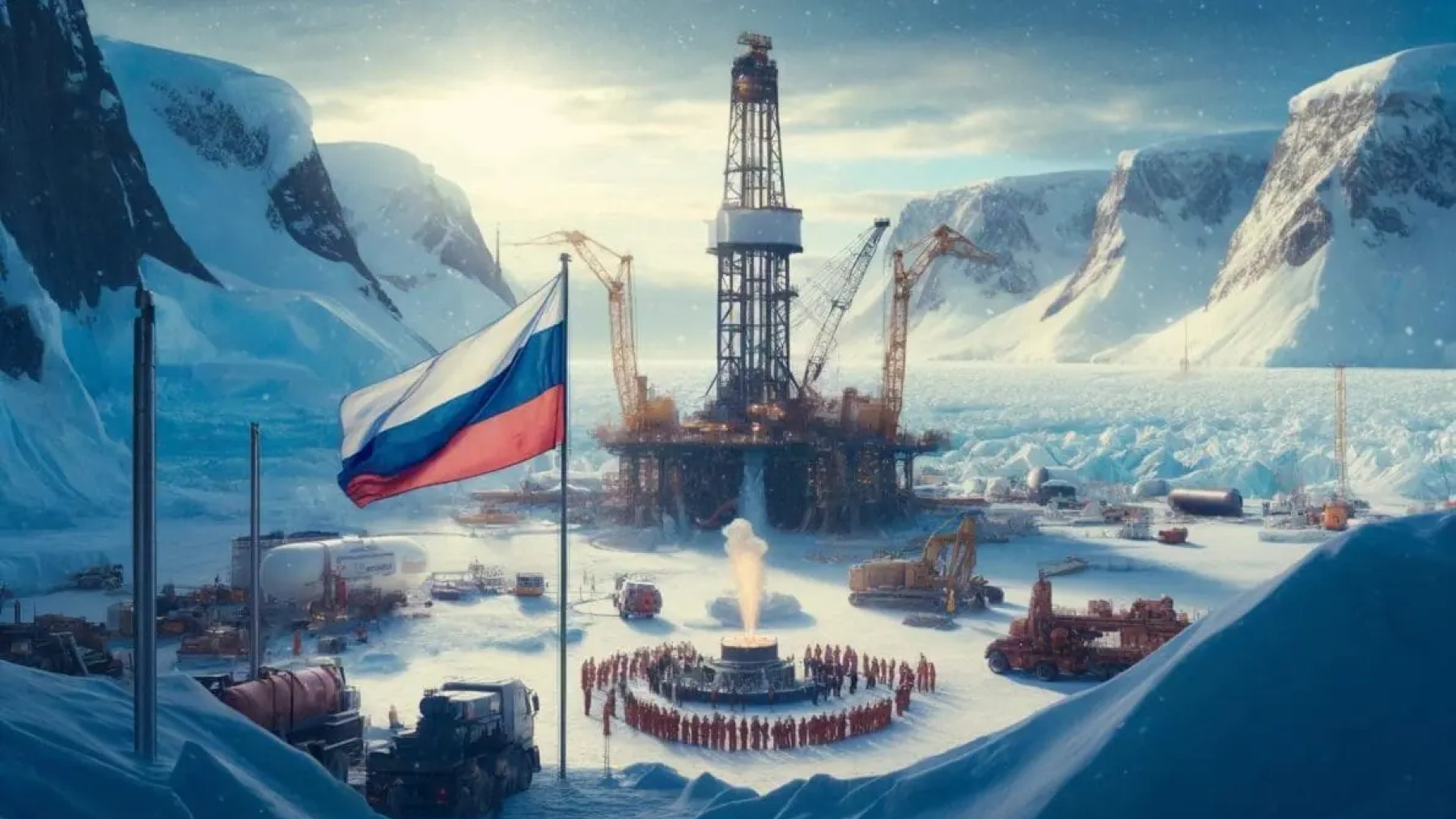
In a latest development which has captured global attention, Russia disclosed the finding of a massive oil reserve in the British Antarctic Territory, a region also asserted by both Argentina as well as Chile. The finding, approximated at 511 billion drums of oil, might have extensive geopolitical, conservational, as well as financial effects. Although the Antarctic Treaty presently forbids oil drilling, this discovery calls into question the areas future along with the possibility for global unease to increase.
Antarctica’s Secreted Jewel: Colossal oil reserve discovered by Russia
The finding of oil in Antarctica by Russia was announced just recently, ensuing surveys which were carried out by the research vessel, Alexander Karpinsky, owned by the biggest geographical exploration corporation in Russia, Rosgeo. Approximated to be 10x bigger than the North Sea’s production in the last 50 years, this oil reserve is found in the British Antarctic Territory, an area which is almost completely covered by ice.
Although the 1959 Antarctic Treaty strictly forbids all resource removal in the area, the findings are already raising alarms. This substantial discovery has increased discussion around the likelihood of modifying the treaty, raising concerns amongst conservationists, geopolitical strategists, as well as the global community. Considering the magnitude of the reserves, it’s evident why countries might be encouraged to push for resource harnessing, regardless of the conservational effects.
Russia’s scientific assurances supported by the British Government amidst regional unease
Russia has maintained that their actions in the area are completely scientific, confirming their dedication to the Antarctic Treaty throughout conversations at the Antarctic Treaty Consultative Meeting. But some specialists dispute that Russia’s seismic surveys along with other geological research are an introduction to the withdrawal of hydrocarbon.
Royal Holloway University geopolitics professor, Klaus Dodds, indicated that Russia’s activities must be seen as foundation for future resource enhancement instead of simple investigation. The data gathered from the surveys might offer the blueprint for drilling procedures, possibly modifying Antarctica’s passive status.
However, the British government, seems to have accepted sureties from Russia that they are performing genuine research. Nevertheless, the probable dispute hovers as both Argentina as well as Chile, who have established territorial assertions in the region, could feel obliged to declare their own rights more forcefully.
BRICS unease: Argentina’s oil discovery might alter partnerships Westward
The finding of such enormous oil reserves exhibits an enormous prospect for Argentina, a nation already placing themselves as a possible South American forerunner. Javier Milei’s, Argentina’s President who has strong connections with countries such as the US, along, as well as the UK can assist in making way for the country to acquire considerable geopolitical guidance.
Should Argentina influence this recent oil affluence, it might reinforce their role as a main supremacy in the area, surpassing Brazil. But this would additionally make relationships in BRICS difficult, the partnership between Brazil, Russia, India, China, as well as South Africa, by positioning Argentina nearer to Western powers.
Further than the political insinuations, the ecological hazards related to oil drilling in Antarctica cannot be overlooked. The territory is among Earth’s most immaculate environments, and any steps towards the extraction of oil would have terrible outcomes. Ecologists disagree that opening Antarctica to hydrocarbon enhancement would weaken international attempts to fight climate change as well as safeguard vulnerable environments.
Moreover, the global discussion regarding whether the Antarctic Treaty must be adjusted emphasizes the unease among financial concerns as well as ecological conservation. The finding of oil in Antarctica has brought attention to the region, raising significant questions regarding Antarctic Treaty’s future along with the role of massive powers in the region.
Although Russia asserts their objectives are completely scientific, the oil reserve’s significance as well as the geopolitical risks implies that the situation might developed into a crisis for global dispute. As humanity considers the practicality of utilizing this resource, the fragile balance between both financial concerns together with ecological responsibility will be examined, possibly reforming the future of an unharmed frontier of the globe.