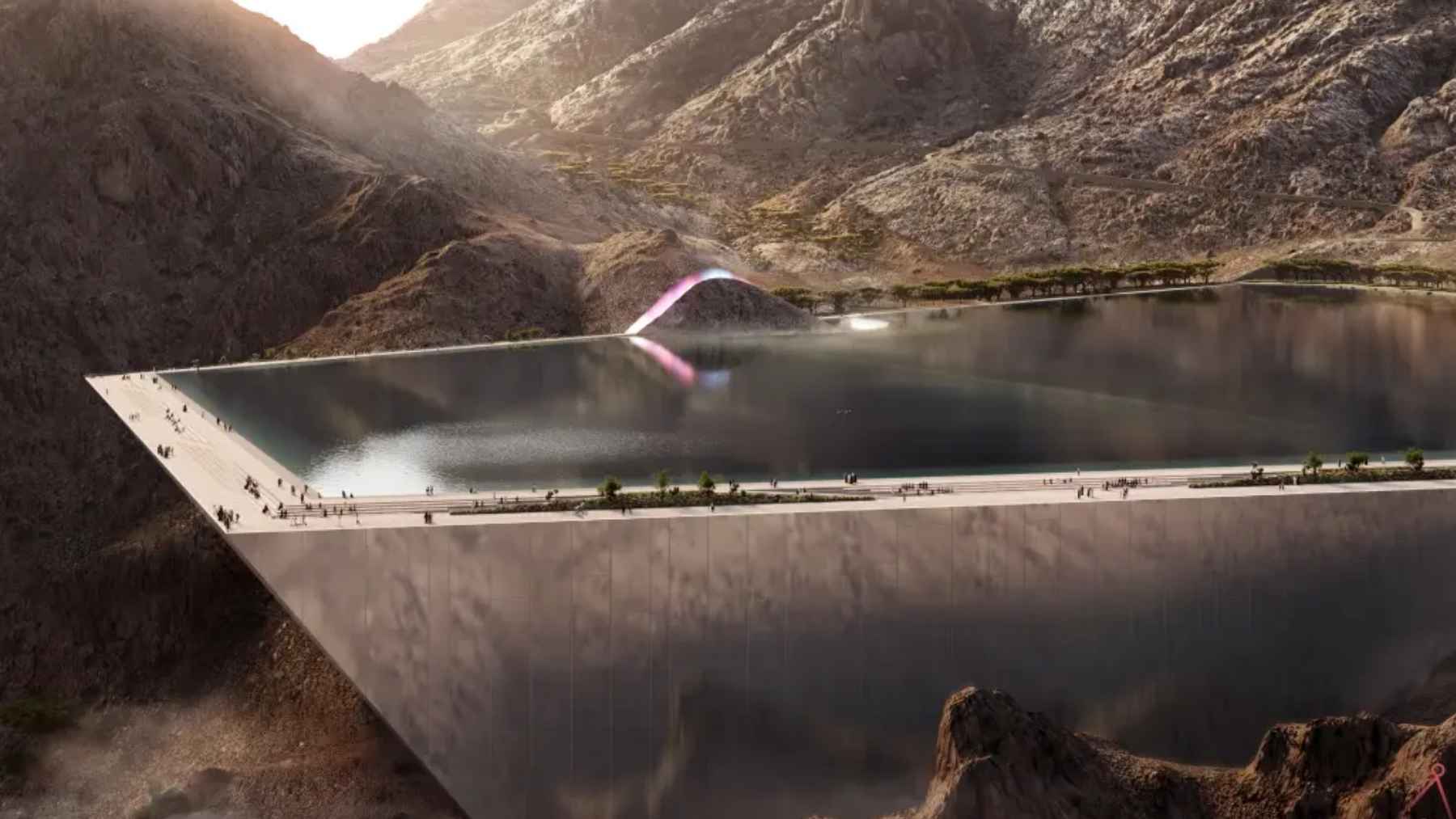
A March 25, 2026, update from the contractor on the Trojena site says the project owner, NEOM, has ended the deal to build three dams and a linked structure called “The Bow.”
The notice took effect March 29, with the work described as about 30 percent complete. The contractor said the remaining backlog was about €2.8 billion, or roughly $3.2 billion, and that termination and shutdown costs will be reimbursed under the contract.
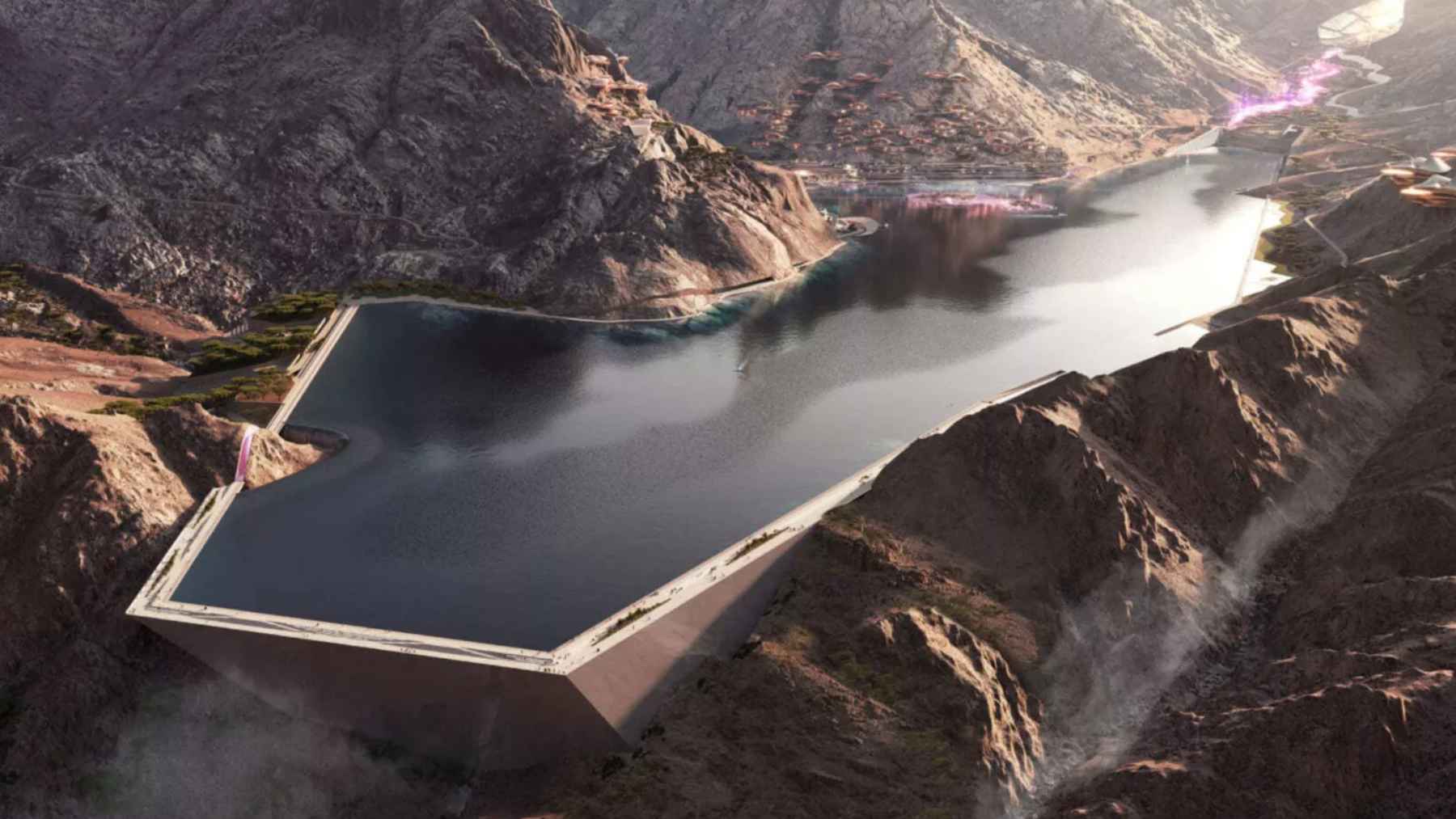
The contract was announced in January 2024 as a roughly $4.7 billion effort to create a freshwater lake about 1.7 miles long in the mountains of Trojena.
Plans called for a main dam about 476 feet tall, built with “roller-compacted concrete,” plus large-scale excavation that was already running at about 118,000 cubic yards of rock per week. “The man-made freshwater lake will be a key asset,” said Pietro Salini, while Trojena executive Philip Gullett said the site was continuing weekly excavation and reusing rock for construction.
What changed
A “termination for convenience” is a contract clause that lets a client stop work without claiming the builder did anything wrong. In everyday terms, it is closer to hitting pause on a purchase order than losing a lawsuit.
That legal language matters because it shapes what happens next. The public update did not include a revised timeline, a replacement contractor, or a new design for the lake system.
For now, the biggest takeaway is uncertainty. When a project’s centerpiece is a lake, even a short pause can ripple into hotels, roads, and the jobs that depend on a fixed schedule.
A lake in the desert mountains
Italian officials have described Trojena as a high-elevation development in northwestern Saudi Arabia, around 31 miles from the Gulf of Aqaba coastline. The same materials point to peaks reaching about 8,530 feet, which is high enough to be noticeably cooler than the lowlands.
Why build the lake up there instead of on the coast? The pitch has been that altitude and engineered snow systems could support winter sports, while the lake helps sell the idea of a mountain “waterfront” with boating and other activities.
But mountains do not create water by themselves. A reservoir only works if water reliably flows in and losses are managed, which is one reason the project drew so much attention in the first place.
How three dams would hold water
The plan relied on three barriers rather than one, using multiple structures to seal the valley and control where water can move. Two of the dams were described as concrete, while a third was planned as a rock structure, a common mix when terrain makes a single straight wall hard to build.
One dam was set to use roller-compacted concrete, a method described in U.S. Army Corps of Engineers guidance as concrete placed in layers and compacted by heavy rollers. Think of it like paving a road, but stacking the layers into a dam that can hold back a reservoir.
RCC can speed up construction, but it is not a shortcut. The layers have to bond, and builders still need careful checks to avoid weak seams where water could work its way through over time.
Hotels and the visitor pitch
Before the construction reset, the lake was already central to hotel marketing. In September 2023, Marriott International said it signed an agreement for Saudi Arabia’s first W Hotel in Trojena and a JW Marriott property designed around the lake and “The Bow.”
That announcement described a 236-room W Hotel in the Lake Village and a 500-room JW Marriott that would sit within the water-facing structure. “We are excited to work” on the two properties, said Chadi Hauch, pointing to Trojena’s mix of design, entertainment, and year-round tourism.
A separate June 2023 release said Minor Hotels planned a 270-room Anantara resort in the Water Village, with private pools, a spa, and its own helipad. “Trojena is the perfect location,” said Dillip Rajakarier, while Chris Newman said the brand is known for balancing luxury and nature, and the same release pointed to a target of late 2026 for welcoming visitors.
Winter Games deadlines eased
In January 2026, the Saudi Olympic and Paralympic Committee and the Olympic Council of Asia said the 2029 Asian Winter Games would be postponed, with Saudi Arabia hosting standalone winter sports events instead. The statement did not announce a new date for a future Games edition in the kingdom.
In February 2026, that same council signed a host city contract for the 2029 edition in Almaty, Kazakhstan. In practical terms, that decision shifted the 2029 deadline away from Trojena.
Water, energy, and open questions
The hard part of a desert lake is not building a shoreline – it is keeping water in the basin. Anyone who has watched a pool level drop during a hot week knows evaporation adds up, and reservoirs are exposed surfaces too.
When the Winter Games plan shifted, the Associated Press noted that Trojena had faced criticism over environmental concerns and the practicality of staging winter sports in a desert region. It also described the postponement decision as part of a wider push under Saudi Vision 2030, where tourism and global events are meant to diversify the economy.
The next signals will likely come through new tenders, redesigns, or updated timelines for the lake and dams. Until then, Trojena remains a case study in how far engineering can stretch, and where budgets and deadlines push back.
The main project update has been published by the Webuild Group.