Northern European countries have always shown an almost inordinate degree of innovation, with a firm commitment to renewable energies and ecosystem conservation projects. But what about their mobility? Why do they embrace EVs but ignore the hydrogen that Japan is revolutionizing? We didn’t know why until now, when a legendary brand has just unveiled an engine that changes everything we imagined about traditional fuels, making it very clear that it is not one of them.
Sweden wants nothing to do with hydrogen: They are clear about the future of mobility
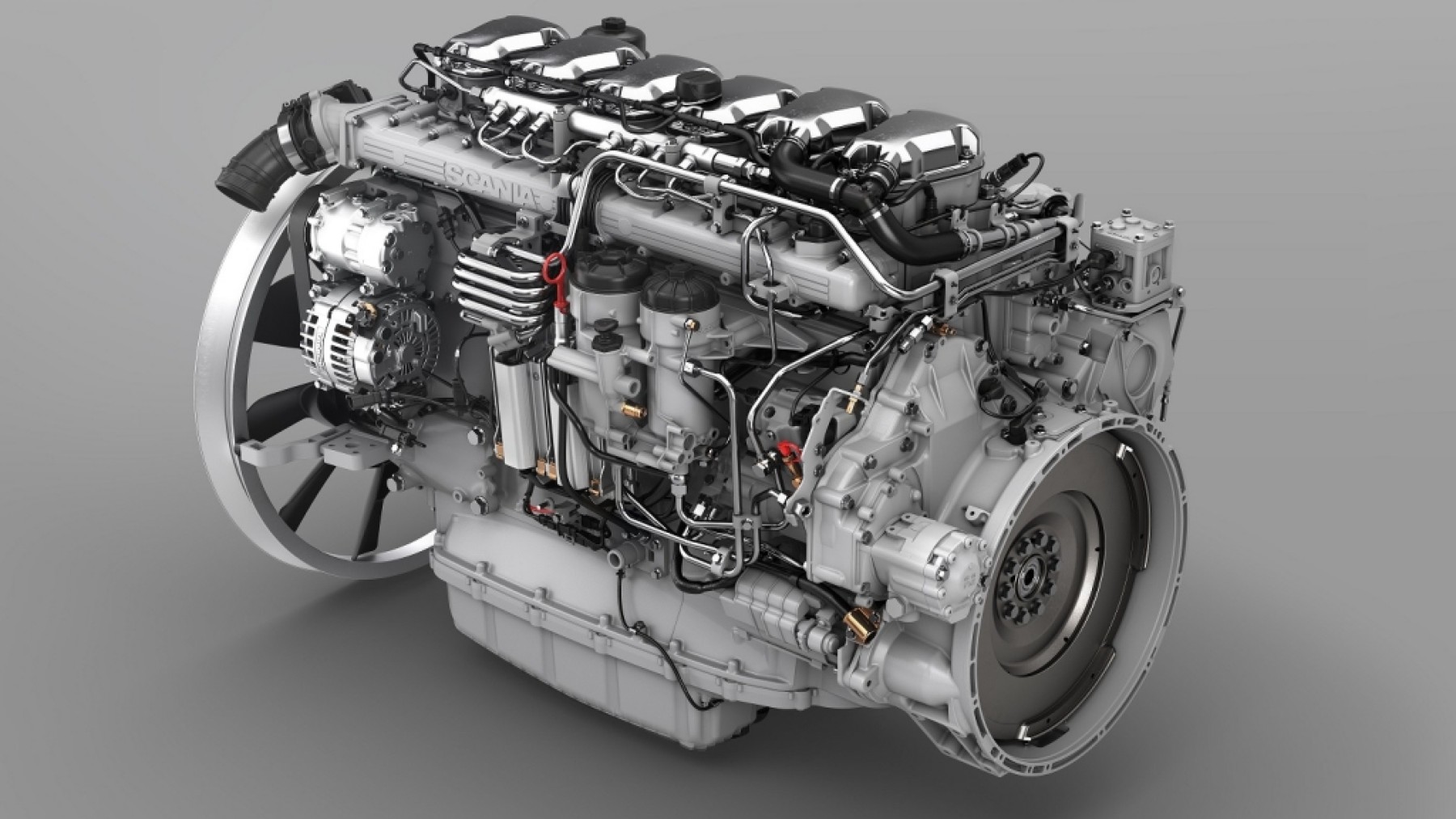
Scania is an automotive industry giant that has unveiled its new line of biogas engines and indicated this is a new move in efficiency and sustainability. Both of these engines have been developed with the aim of meeting increasing demand for environmentally sustainable transportation systems while providing significant accommodation for decreased CO2 emissions and cost of operation.
Scania’s new biogas engines are offered in 13-liter offerings, with power ratings of 420 hp and 460 hp. The engines operate on a displacement of 12.7 liters, with a bore and stroke of 130 x 160 mm and a compression ratio of 12.6:1. Fuel injection is managed by Bosch and CEM1 systems, and emission control is achieved through Scania’s Exhaust Gas Recirculation (EGR).
That is why the performance of Scania’s biogas engines is quite impressive. The OC13 engine variants deliver maximum power output of 311 kW (420 hp) at 1900 rpm, 340 kW (460 hp) at 1900 rpm for the other model, and maximum torque of 2100 Nm and 2300 Nm at rpm 1000–1300, respectively.
The first biogas engine to revolutionize mobility: Scania has unveiled its prototype
Further, the engines allow the usage of biomethane fuels such as Bio-LNG or Bio-CNG, which results in a well-to-wheel reduction of up to 90% of CO2 emissions. Therefore, it makes them a perfect choice, especially for companies that are seeking ways of reducing their carbon footprint regarding transportation means.
These biogas engines are a great example of Scania’s engagement with corporate sustainability and innovative solutions for the future. These engines were first revealed at the IAA fair, and their release has contributed greatly to the delivery of eco-friendly transport systems.
Another major influence on the improvement of the engine efficiency and performance has been in the integration of the Super-based power train components. Scania’s strategy of designing and producing biogas engines is aimed at fulfilling the operational requirements of different industries.
Could this Scania’s biogas engine be the future? An (inevitable) comparison with hydrogen
Although hydrogen is becoming recognized as the fuel of the future, biogas has several benefits that predispose it to become the future fuel. Engines running on biogas, such as Scania’s, have near-term advantages in terms of CO2 emissions and fuel savings. The value chain for biomethane fuels is already scaling up rapidly, which presents a solution for decarbonizing transportation.
Also, biogas engines can build on currently existing technology and hardware to a rather high extent, which need not mean extensive investments into new biogas availability points or changes to car designs. This makes it easier to scale biogas for many industries, giving it a competitive edge over synthetic gases. The future will show whether this is in fact a viable solution, as you know.
The reality behind this Scania biogas engine is as promising as what lies ahead. Its commercialization aims to be a record for the mythical brand, which has always bet on gas to develop an alternative proposal. Will we see Sweden someday try hydrogen? Maybe in the medium term, but it does not seem that they are in a hurry to do so, given that they have other much more economically and technically viable options, something that Japan is still taking time to demonstrate.