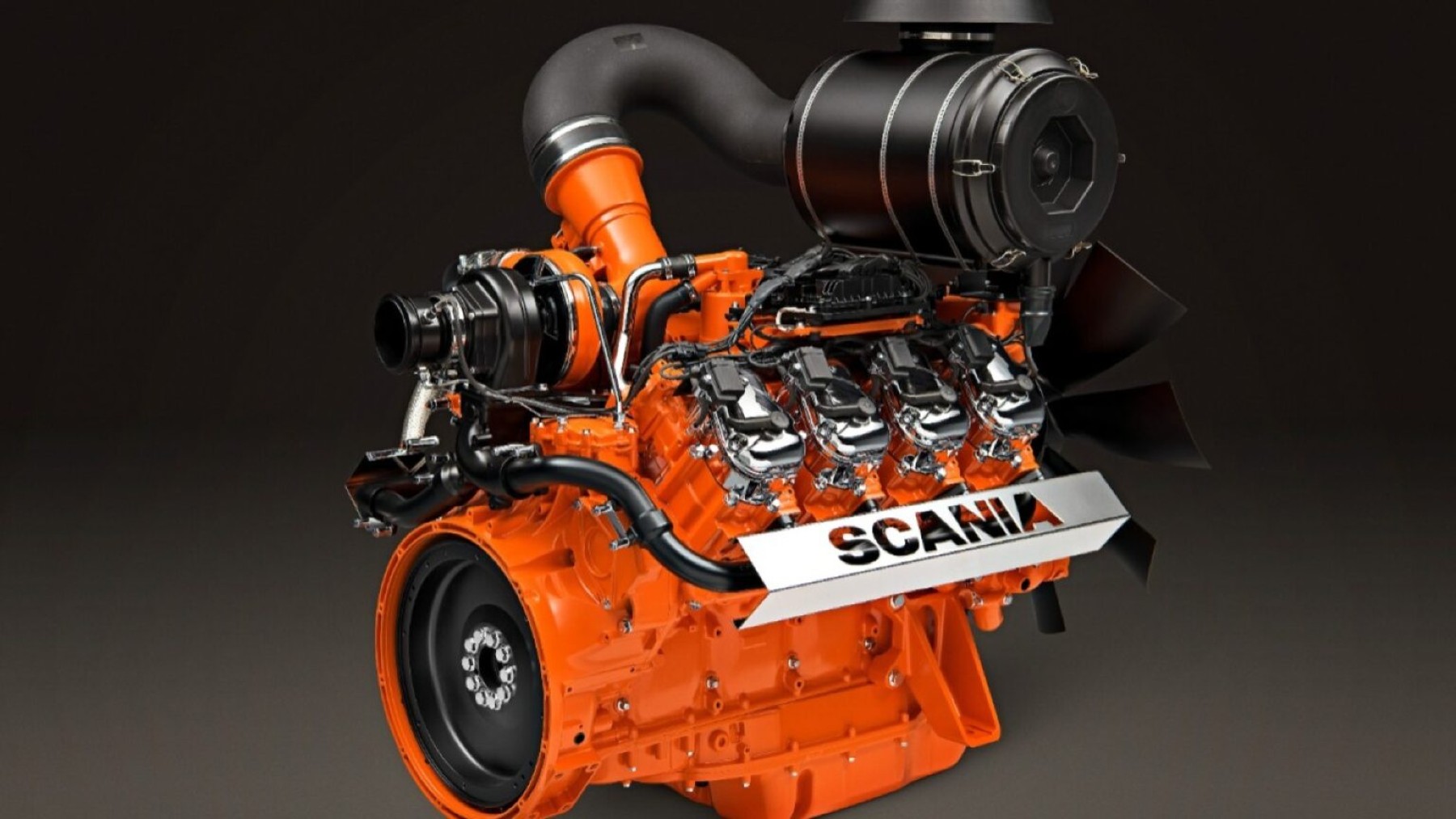
Scania has now designed a new biogas engine, which is appropriate, mainly because the transport sector pays much attention to sustainability and effectiveness. Using progress engineering with an environmentally friendly approach, Scania designers developed a powertrain that saves 5% of fuel and reduces CO2 emissions by up to 90%.
This advancement is a revolutionary change in long-haul transportation. It offers a short-term solution that can significantly impact climate change on a large scale in terms of measurable results.
The power trio: Biogas engines, G25 gearboxes, super-based axles
Scania’s latest innovation lies in the harmonious pairing of its new biogas engines with two-thirds of the successful Super-based powertrain: Some of the known publicly available types of equipment include the G25 gearboxes and axles. This well-coordinated and articulated trio has become the game changer since it has advocated for a fuel saving of 5% in long-haul operations.
The source of this efficiency is thus additively tied down to the increase in the G25 gearbox, whereby the biogas engines can spend most of their time in the preferred working range.
Ola Henriksson, the Senior Product Manager for Renewable Fuels at Scania Trucks, said, “When we began to add these components together, it did not take long to understand that we have a champion combination here. ” These components helped to enhance performance and effectiveness while reducing the effects of heavy transportation on the environment.
Bio-LNG and bio-CNG: Fuels driving Scania’s green revolution
Bio-LNG (Liquefied Natural Gas) and Bio-CNG (Compressed Natural Gas) are described as invisible, floating, hyper-powered fuels that constitute the green revolution Scania. These solutions based on biomethane have a reduction potential of up to 90% of CO2 emissions in the ‘well to wheel’ approach, making this kind of solution crucial for decarbonization, while the advantages of these fuels are the availability and relatively fast growth of the number of stations with fuel in Europe.
For companies and transport buyers who are willing and able to go through the decarbonizations right now, the good news is that biomethane fuels are distinctive. For the intercontinental performance, Scania has two output power biogas engines, 420 and 460 horsepower. Combined with the enormous Bio-LNG tanks, the car can cover a distance of up to 1,400 kilometers.
Unleashing power, range, and quiet: Scania’s biogas engines
Other fuels for long-haul transportation have been considered wrong by new biogas engines from Scania. The OC13 104 is an excellent example of the possible power of biogas, since it can develop 460 hp and 2,300 Nm. This high output and broad versatility mean that even the most demanding long-haul characteristics can be achieved through a long-term Scania product without compromising.
Moreover, these engines bring an often-overlooked advantage: they dramatically reduce the noise level. On the same note, Henriksson also provides the driver with a substantially reduced noise level, which is environmentally friendly and enhances the driver’s satisfaction.
Pioneering sustainability: Scania’s biogas engine future
Scania’s new biogas engines can be said to be a quantum leap towards making long haulage a more sustainable and efficient business. The new super-based powertrain contains the latest biogas technology and components from Scania that have decreased the fuel consumption rate by 5%. The possible reduction of CO2 emissions is also relatively high and can reach 90%.
Bio-LNG and Bio-CNG have an instant and attractive solution for decarbonization, which is underpinned by the growing capacity investment in the facilities in Europe. With the increase in the demand for biogas and the entry of key players in the fuel industries, more filling stations for biogas are being established, and the way to sustainable transport is evident. This innovation indicates that we can now consider targeting a lower carbon footprint at Scania without sacrificing performance or other advantages.