Remember back in school, we learned that the planet had four oceans: the Atlantic, Pacific, Indian, and Arctic? Well, this idea became so entrenched that it seemed unquestionable. But in 2021, some surprising news came: the National Geographic Society officially recognized the existence of a fifth ocean. And no, this isn’t a “new” ocean in geological terms, but a shift in the way we view maps and science.
The day the world finally named its fifth ocean
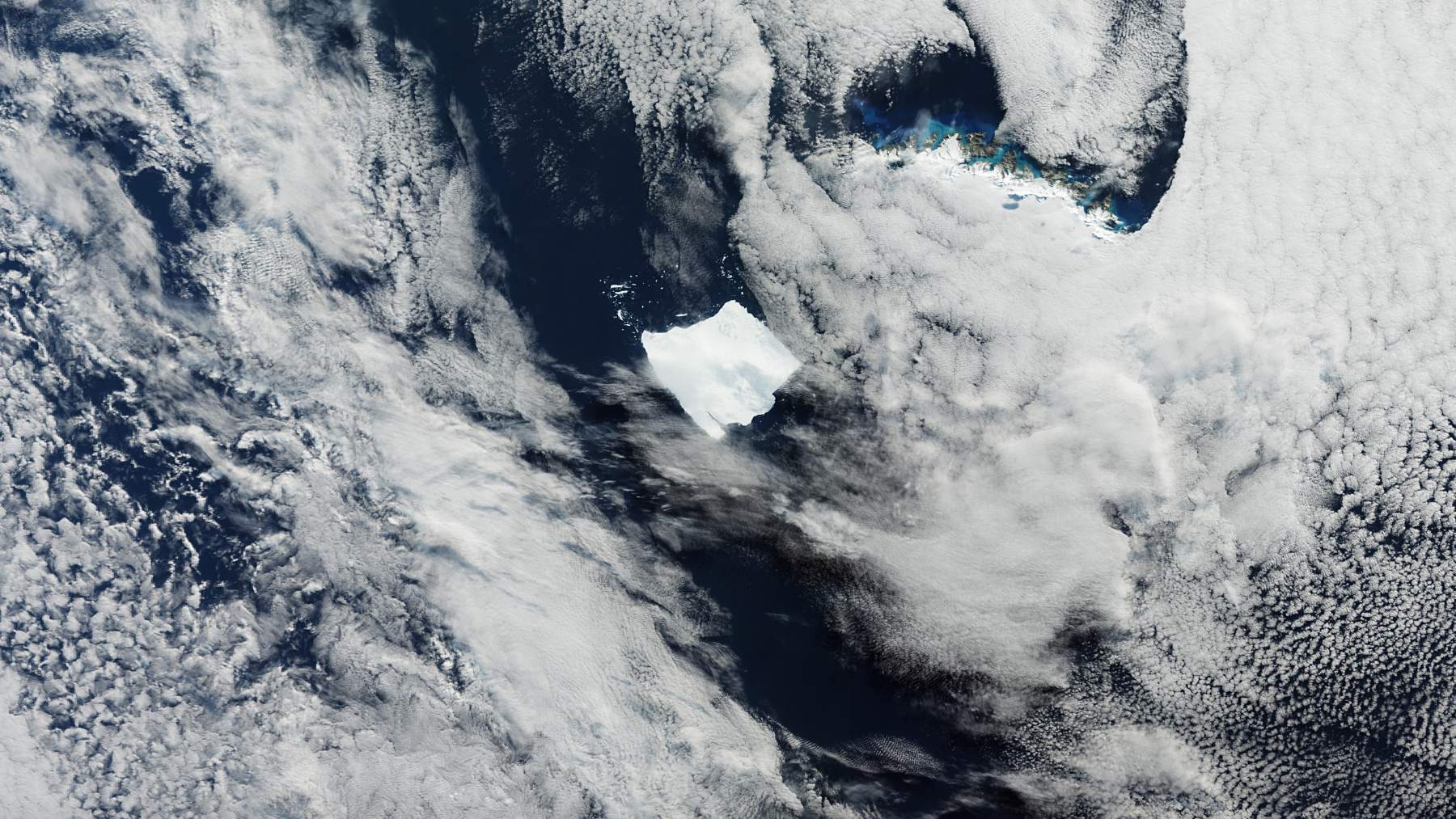
Most people who have traveled to Antarctica often say it’s impossible to describe the feeling of being there. This is because the glaciers are bluer, the air is colder, and the landscape is almost intimidatingly imposing. But until recently, this unique landscape was considered merely an “extension” of three distinct oceans: the Pacific, Atlantic, and Indian.
However, in June 2021, on World Oceans Day, the National Geographic Society made a decision that would change this perception. It made an announcement that brought visibility to a body of water that had always been there but had never officially received the attention it deserves. According to Sylvia Earle, renowned marine biologist and National Geographic Explorer:
“Rimmed by the formidably swift Antarctic Circumpolar Current, it is the only ocean to touch three others and to completely embrace a continent rather than being embraced by them.”
How Earth’s fifth ocean shapes life far beyond Antarctica
This new, frozen, and unknown ocean reflects both its icy condition and the fact that it is a territory still little explored and understood by humanity. So much so that the National Geographic Society’s decision to recognize the Southern Ocean as Earth’s fifth ocean has brought this topic to the forefront of attention. This is because this ocean was already widely recognized by scientists, thanks to its unique characteristics.
However, the official recognition has a clear strategic objective: to raise global awareness of its fragile ecosystem. At the same time, the decision strengthens scientific research and pushes for more conservation actions. We also need to talk about what truly sets the Southern Ocean apart from the rest, and the key point is the Antarctic Circumpolar Current (ACC), the most powerful current on the planet, because:
- It circulates freely around Antarctica, without continental barriers.
- It transports more water than any other ocean current.
- It regulates the global climate by redistributing heat and storing carbon in the depths.
In other words, even if you’ve never seen an iceberg up close, you’re already connected to the Southern Ocean. It influences everything from weather patterns to the oxygen you breathe (just like this historic discovery in Antarctica made by Germany).
A frozen ark: The Southern Ocean’s hidden web of life
It’s worth noting that the Southern Ocean is a veritable frozen ark of biodiversity. It is home to species found nowhere else on the planet, such as:
- Penguins that depend on the icy shores for food and reproduction.
- Humpback whales migrate thousands of kilometers after feeding on krill.
- Seals and seabirds find their permanent home in these waters.
We also need to remember phytoplankton, because these microorganisms are the base of the food chain, feeding krill. Krill, in turn, sustain whales, birds, and seals. Furthermore, phytoplankton produce about 50% of the planet’s oxygen. The impact of recognizing also reaches classrooms. School maps now display five oceans, helping students learn about the uniqueness of the far south.
Not stopping there, there’s also an inspiring aspect: many tourist expeditions to Antarctica today carry researchers on board, who share their discoveries with travelers in real time. This transforms science into a direct experience and education into an unforgettable memory. This also reminds us of the experts from China who discovered an ocean on the far side of the Moon, but it’s not made of water.