From humans and dinosaurs to starfish and seagrass, every animal, plant, and fungus on Earth appears to trace its origins back to a single strange clan of microbes known as the Asgard archaea.
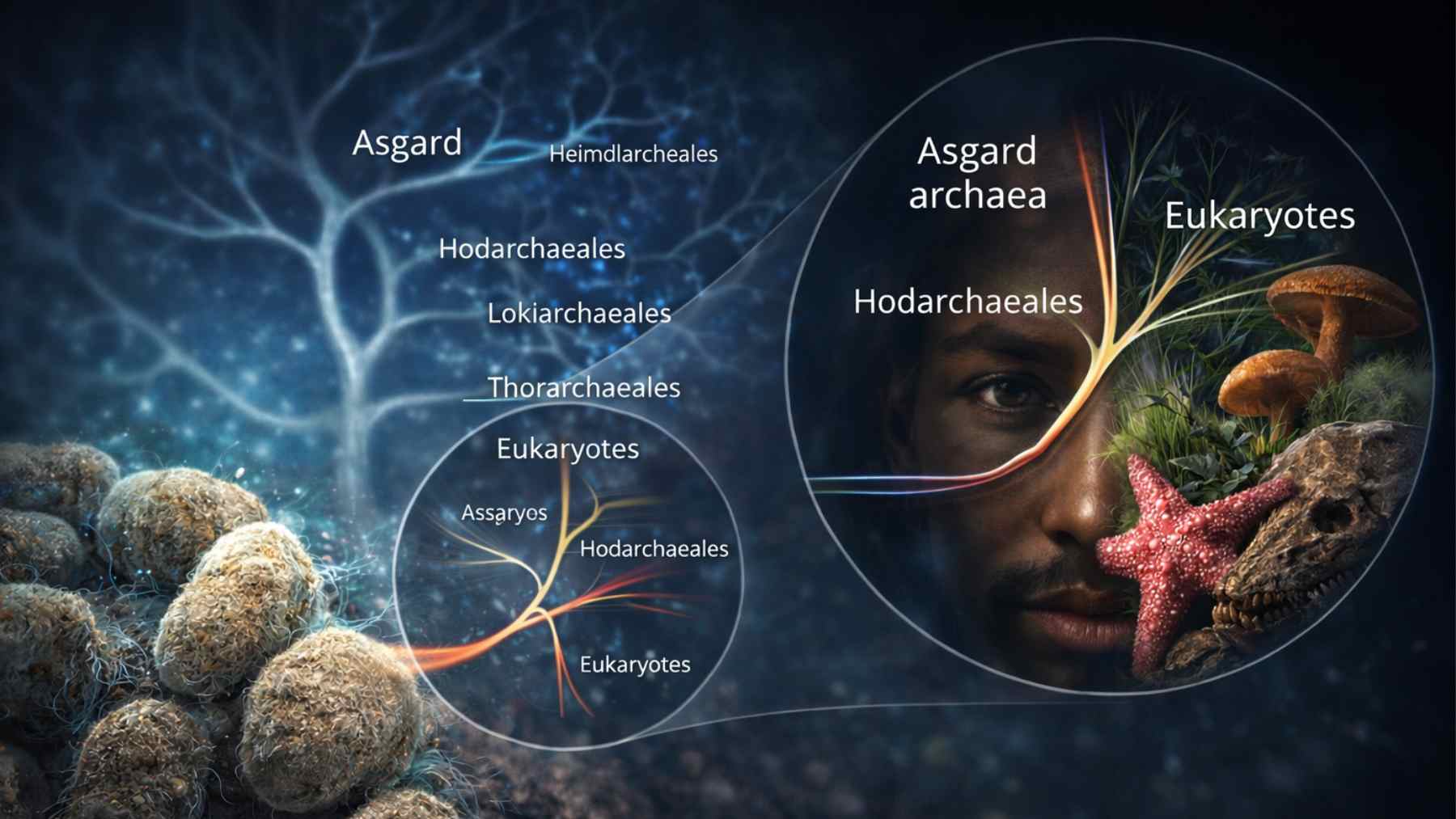
In a major study published in 2023, an international team led by researchers at the University of Texas at Austin concluded that all known eukaryotes, the group that includes us, sit inside the Asgard branch of the tree of life and share a common ancestor with one particular lineage called Hodarchaeales.
In simple terms, this work tackles one of biology’s biggest questions: Where did complex cells come from in the first place? Eukaryotic cells are defined by a nucleus wrapped in a membrane and by internal compartments that keep different tasks neatly separated. They likely emerged roughly one and a half to two billion years ago, long after simpler microbes had already transformed the young planet.
Scientists have suspected for years that eukaryotes arose when an archaeal microbe entered into a close partnership with an oxygen-using bacterium. The new study puts much sharper edges on that picture. By combing through the genomes of hundreds of archaea collected from marine sediments and other environments, the team could follow the evolutionary breadcrumbs back to the Asgard group and then to Hodarchaeales, or Hods for short.
Ancient microbes with mythic names
Asgard archaea take their name from the realm of the gods in Norse mythology. Within this group, different branches carry names such as Lokiarchaeales and Thorarchaeales. Hodarchaeales honors Hod, the blind son of Odin and Frigg who is tricked into killing his brother Baldr.
The mythological flavor is more than a naming gimmick. It captures how deeply these microbes are woven into our own story. Study coauthor Brett Baker joked that “we are all Asgardian” and suggested that line might end up on his tombstone.
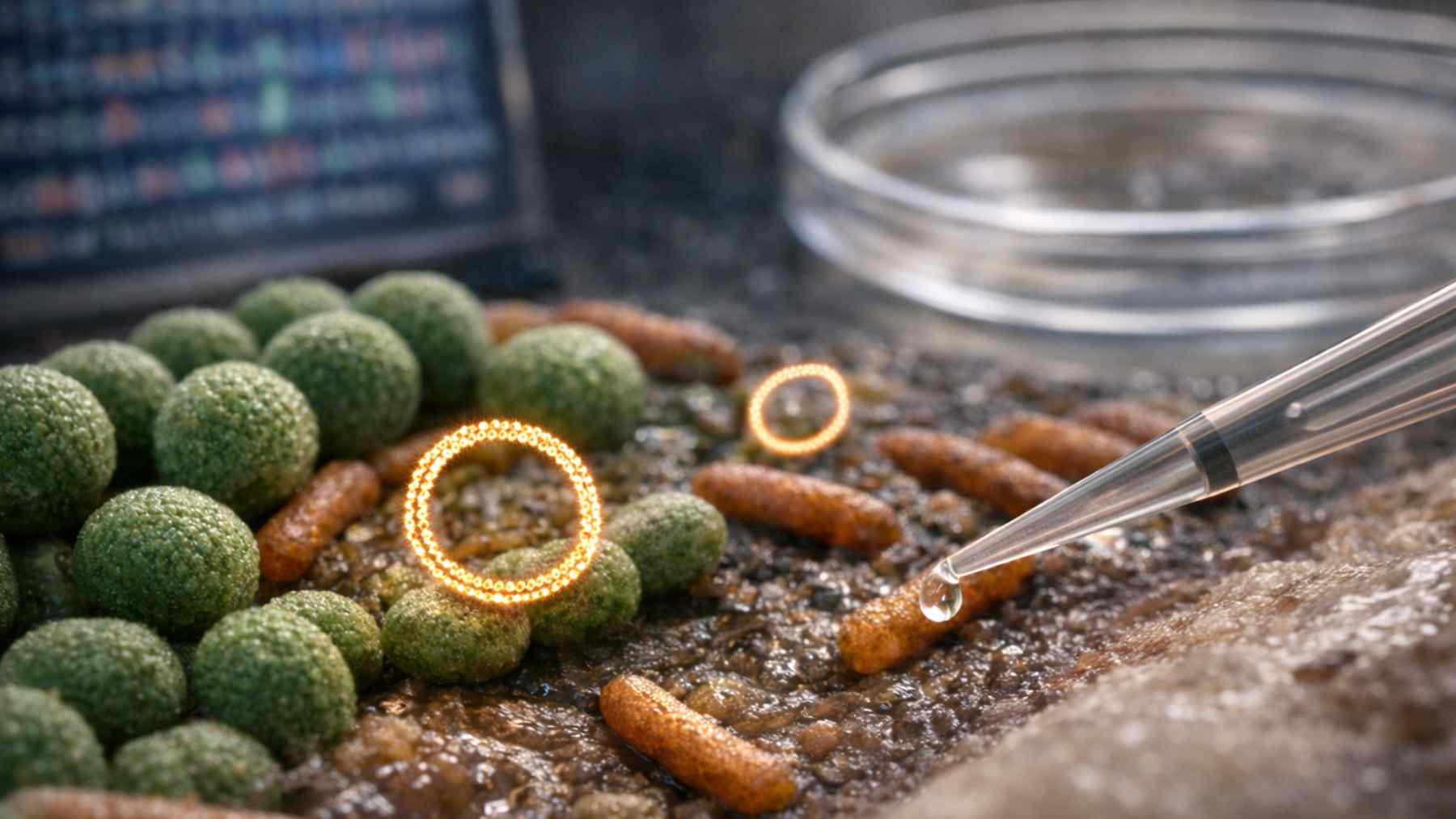
The Asgard archaea themselves are tiny, single-celled organisms that live out of sight. According to the new research, they likely evolved more than two billion years ago. Their modern descendants still inhabit the planet today, buried in seafloor sediments and thriving in hot springs.
A family tree that pulls us inside Asgard
To test where eukaryotes belong in the tree of life, the team used large sets of genetic markers from Asgard genomes and compared them with those from animals, plants, fungi, and other eukaryotes. Their analyses consistently placed eukaryotes as a well-nested branch within Asgard archaea, closely related to Hodarchaeales. One science summary compared this to the way birds sit inside the dinosaur family rather than next to it.
Baker described what excites him most. He said that Hodarchaeales look less like the simple archaeal cells biologists expected and more like early versions of eukaryotic cells. In his words, these Hods can be thought of as our “sister group” in the archaeal world.
That sisterhood shows up in the genes. Members of the Asgard group carry many proteins once thought to be exclusive to eukaryotes, including components involved in reshaping membranes and organizing internal cell structures. Researchers also see many duplicated genes in Asgards. In eukaryotes, such duplications often take on new functions and help drive evolutionary innovation.
Life at the edge of hot chemistry
Genomic reconstructions suggest that the earliest Asgard ancestor probably lived in hot environments and used carbon dioxide and chemical energy from its surroundings to survive. Hods, which sit closer to eukaryotes on the tree, appear to be metabolically more similar to us, feeding on organic carbon and preferring cooler conditions.
That picture connects the deep past to familiar environmental questions. Carbon-hungry microbes that consume CO₂ or organic matter help shape how this gas moves between rocks, oceans, and the atmosphere. If Asgard relatives have been doing versions of this work for billions of years, they have quietly influenced the backdrop in which complex life evolved.
The team did not resurrect ancient cells in the lab. Instead, they treated modern genomes as a kind of time machine. Coauthor Valerie De Anda explained that they read the “molecular blueprints of the ancestor that gave rise to the first eukaryotic cells” by studying living Asgard microbes and inferring what their common forebears must have looked like.
What Asgardians mean for life on Earth
For most of us, archaea feel very far away. They live in mud under the sea, not in city parks or kitchen gardens. Yet every time you look in a mirror or walk through a forest filled with leaves, mushrooms, and insects, you are seeing the long-term outcome of that Asgardian ancestry.
The work in Nature does not close the case on how eukaryotes formed, but it narrows the suspects and gives researchers a concrete target. By sampling more sediments and hot springs and by piecing together additional genomes, scientists hope to refine this portrait of our microbial ancestors and test how their metabolisms interacted with early Earth environments.
At the end of the day, the message is surprisingly down-to-earth. Complex life did not begin with towering trees or prehistoric reptiles. It began with tiny, unseen “Asgardians” that still linger in the planet’s hidden corners, carrying in their DNA the first chapters of our shared story.
The study was published on the Nature website.