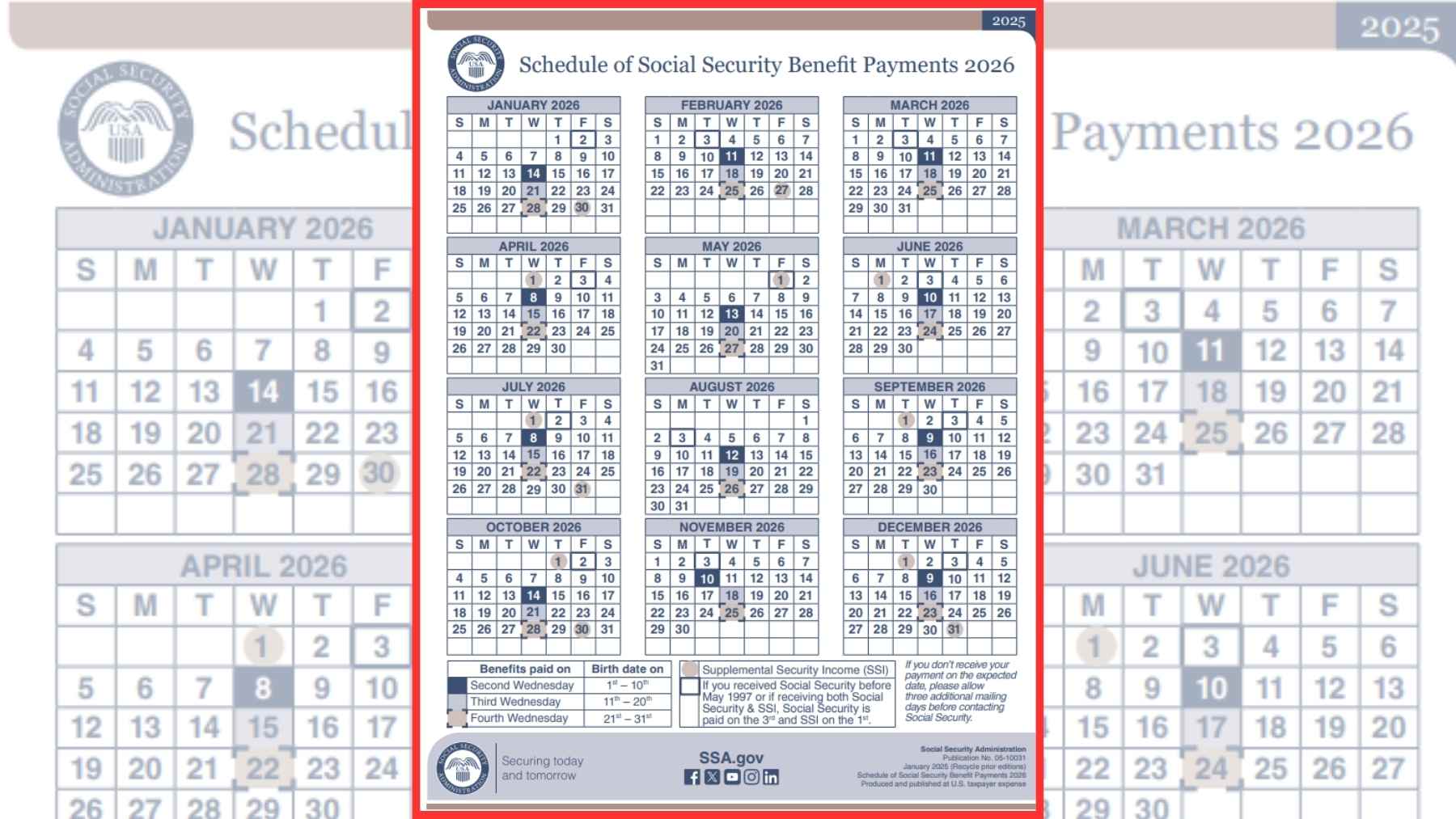
Here is the payment calendar that the Social Security Administration (SSA) has made to show when Stimulus Checks should be expected in July 2024. These include the payments for retired people, survivors, disabled persons, and the Supplemental Security Income (SSI). With millions of Americans struggling with their finances, these payments are essential to help many recipients make ends meet and prevent further worsening of the situation, especially in some states’ absence of additional stimulus checks.
Disbursement of such funds is critical to ensure the beneficiaries meet their various bills, including housing, healthcare, and other day-to-day needs throughout the month. As inflation and cost of living pressures have not decreased, the monthly check of Social Security Payment still holds its relevance as the bedrock of financial security for many families across the country.
Here’s the payment schedule for July 2024: Know when to expect your check
Specific monthly Social Security payments are made in July concerning the General Principles concerning beneficiaries of Social Security, their birth date, and their program. SSI recipients and Americans will be paid in July, usually on the first of the month. Social Security payables: retired workers entitled to benefits before May 1997 will receive payables on July 3.
Additionally, for other recipients, payment dates are as follows:
- Those born between the first and the tenth of a given month are paid on July 10
- Those born between the eleventh and the twentieth are paid on July 17
- Those born between the twenty-first and the thirty-first of the month receive their wages on July 24
Such an organization of funds also benefits the recipients since such individuals or institutions can clearly understand the available funds at their disposal during a specific month and, hence, can manage their funds well. Since the SSA has persisted with this schedule, the beneficiaries are assured of a systematic timeframe to effectively address their monthly needs and other implications of the financial planning exercises.
Discover how payment amounts are calculated: Get the maximum benefit
There are two types of Social Security benefits: retirement and disability, and the amount of payments fluctuates based on certain factors such as work experience, age, etc. It is currently $1,907 monthly for a retired worker and an average of $3,303 for couples filing a joint application. The amount is $2,710 for those retiring at 62, $3,652 for those of 66 years, and can go up to $4,873 for individuals who retire at 70.
The SSA utilizes a set formula that considers the highest average indexed monthly earnings of 35 years, the indexed total benefit amount, and arrives at the PIA. This calculation allows benefits to correspond to lifetime earnings and contributions to Social Security. The SSA also continually monitors and makes adjustments to it to ensure equal distribution of benefits across ages and incomes.
What the future holds: COLA adjustments and financial security in 2024
The Social Security payments in July 2024 include the 3.2% Cost of Living Adjustment (COLA) received in October 2023. Such an adjustment ensures that benefits’ real value is not eroded by inflation. The first tentative estimates for COLA for 2025 point towards a range of 2.2%, but the official percentage will still be revealed in the latter part of 2024.
Such adjustments are necessary for beneficiaries because they can help mitigate growing living costs and make programs like Social Security more sustainable for recipients, including retirees, disabled persons, and others. The COLA mechanism explains that SSA is keen on ensuring that the value of the benefits is preserved by adjusting them according to factors such as the Consumer Price Index for Urban Wage Earners and Clerical Workers (CPI-W).
This approach is intended to improve the beneficiaries’ financial security in the context of continuous economic shifts. Thus, millions of Americans will expect to receive their Social Security payments as they arrive in July 2024 because it offers critical resources to retirees, disabled persons, and seniors living below the poverty line.
The properly scheduled payments, the various benefits calculated, and the quarterly cost-of-living adjustments show that SSA is interested in having as strong social protection as possible. Despite the system’s long-term problems, it offers economic protection to many of the U.S. population. Beneficiaries and policymakers will keenly monitor future COLA estimates and any alterations to Social Security administration moving forward.