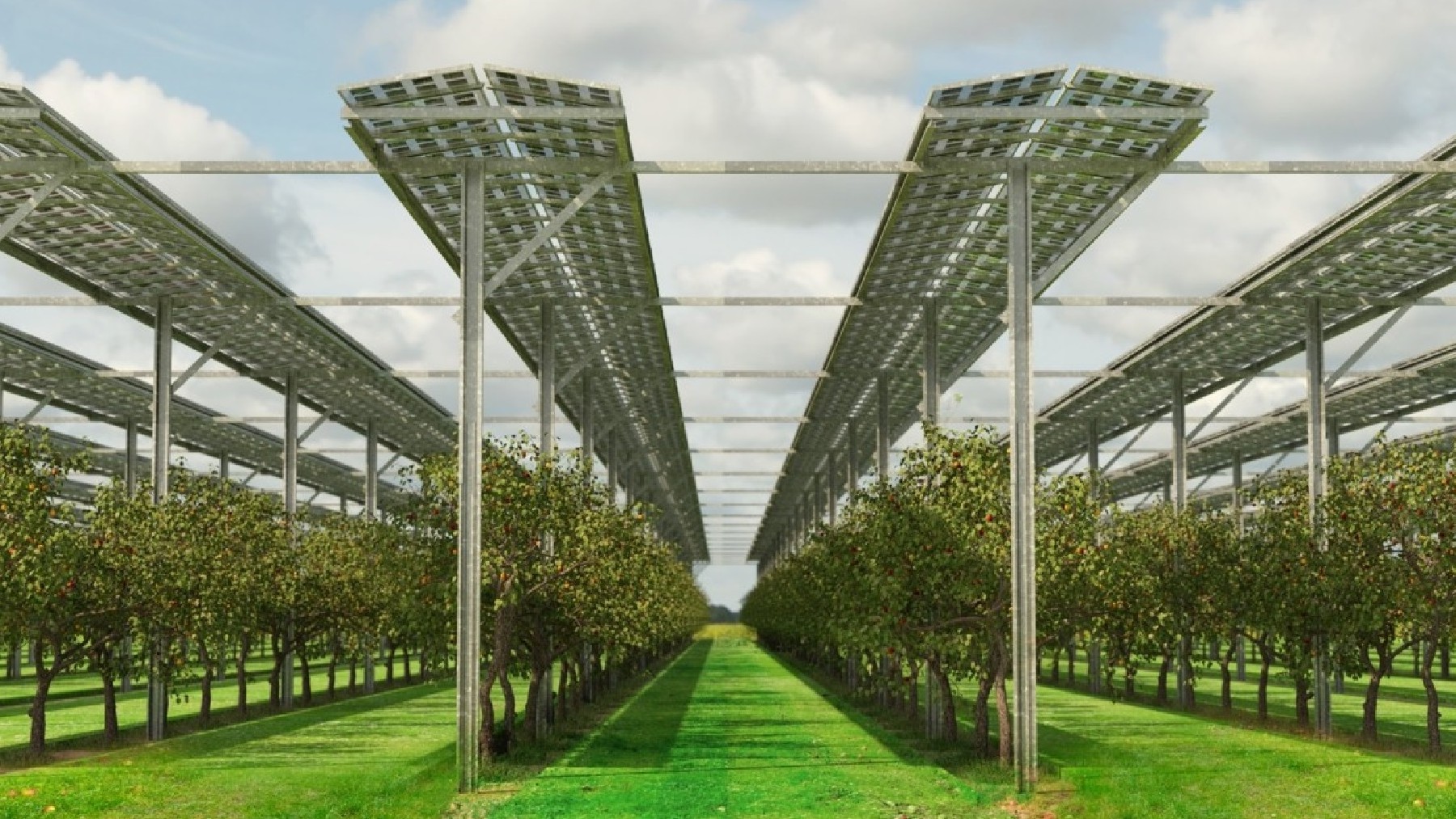
An issue like decarbonizing the economy of the whole of America is not only a headache for the federal government but also for thousands of companies. However, they have now invented a solution that seems crazy but could work: this is the way to “cultivate” solar energy, and they want to export it to the entire planet to materialize this year.
An innovative technique for “farming” solar energy
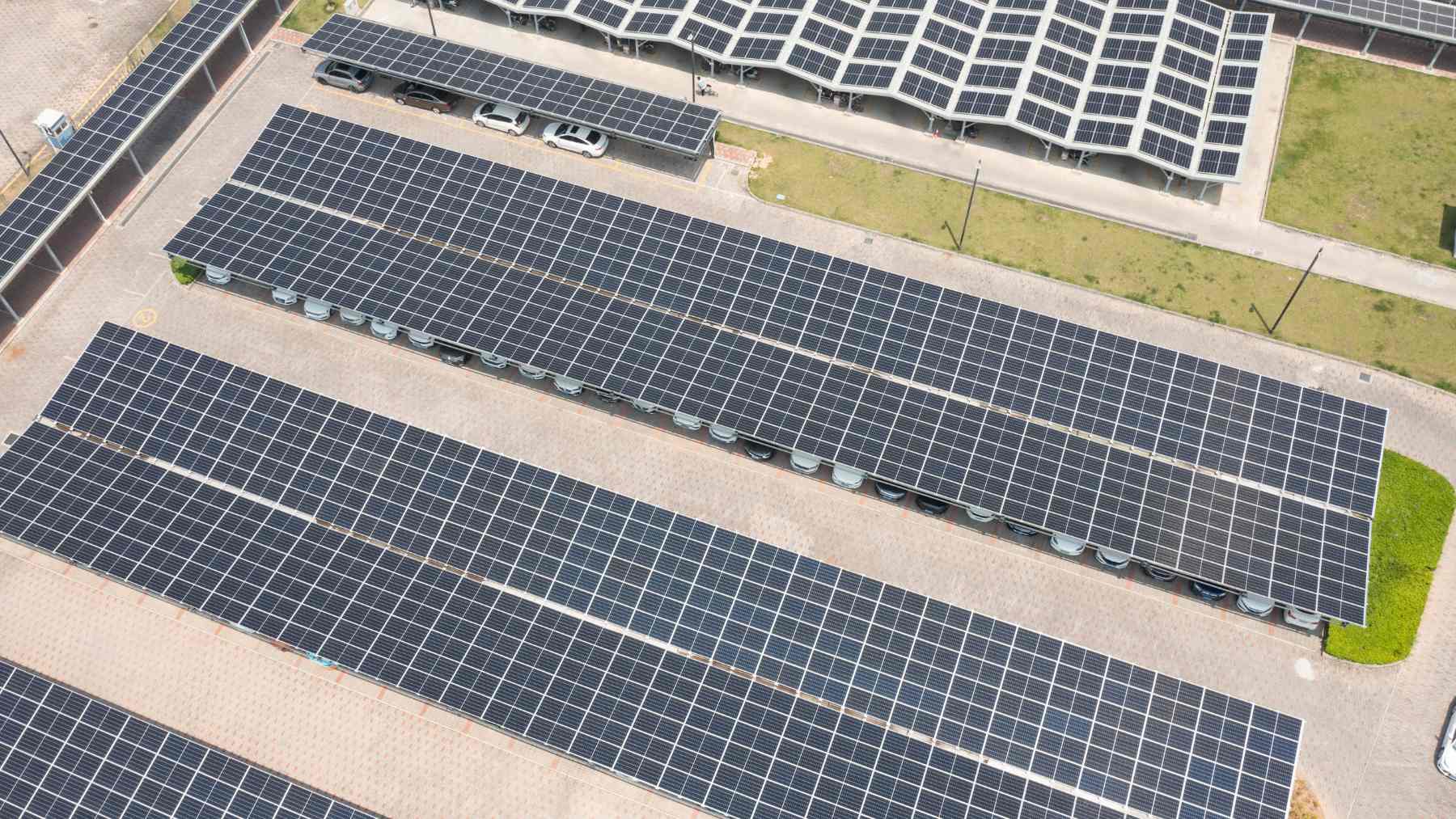
Agrivoltaics merge agricultural production with solar energy generation, and PV panels are being set up on the same land cultivated for agriculture. The solar panels are raised at a distance where the crops can still grow under them.
The panels give the crops below shade and protection. By covering the fields, the panels influence the formation of an advantageous microclimate: less evapotranspiration, more humidity, and protection from hail, frost, heat waves, and other weather extremes.
Various crops have shown improved growth and yields with agrivoltaics:
- Vineyards take advantage of cut down on the water requirements and protection from hail and frost. Studies in Italy found up to 13% quality increment and yield enhancement under agrivoltaic systems.
- Crop vegetables such as lettuce, kale and cabbages, perform best under partial shade and yield increases ranging from 5-40% are realized from the utilization of agrivoltaic systems.
- Specialty crops which are shade tolerant like ginseng, mint, and meadowfoam also do very well.
- Grasses for grazing livestock grow better than other plants under pasture with less water usage and stress.
Through careful system design of agrivoltaics tailored to the needs of particular crops, large benefits are accruable in crop productiveness and resilience.
More benefits than doubts: this is how agrivoltaics is evolving
Agrivoltaics provides a range of advantages which makes it a most attractive innovation for both the agricultural and renewable energy sectors. Here are some of the key advantages of combining solar power generation with agriculture:
- Maximizes land use: Using the same land for both growing crops and generating solar power, agrivoltaics maximizes efficiency in employing arable land. In this regard it is even more advantageous that land is now the commodity experiencing increasingly acute shortage.
- Diversifies farmer income: Agrivoltaics adds alternative income source to farmers as they can sell the solar power generated on their farm. This means their income becomes more diversified making them less vulnerable to price fluctuations of crops.
- Improves crop resilience: Shade and shelter are provided by the panels for the crops grown below. This protected environment minimizes evaporation and protects plants from hail, frost, heat waves and other climate extremes.
This is how agrivoltaics has been functioning out of America
Agrivoltaic ventures are on the rise globally, with impressive findings on different regions and crops. Here are some examples you should know about to make an idea about the future of these ideas:
- A 2010 study in Chiba, Japan installed solar panels along with tomato plants. Plants grown under the panels were shorter and needed less pruning. However, they yielded power and tomato throughout for six years uninterruptedly with no long-term loss in productivity.
- At Biosphere 2, in Oracle, Arizona, researchers grew hot peppers under solar panels raised above 17 feet. The shade-grown peppers did well under the filtered light of just the right intensity.
- In Montpellier, France, olive trees grow under solar panels 20 feet elevated. Sheep feed on indigenous grasses and plants below making the soil fertile. The site generates renewable energy plus olives, lamb meat and wool.
What sounds strange today will soon cease to be so, perhaps by the end of the year. An issue such as agriculture will cease to be a trend and become an economic activity that will help us to make progress in solar energy. Everything is to reduce emissions; survive and adapt to the future that our planet requires.