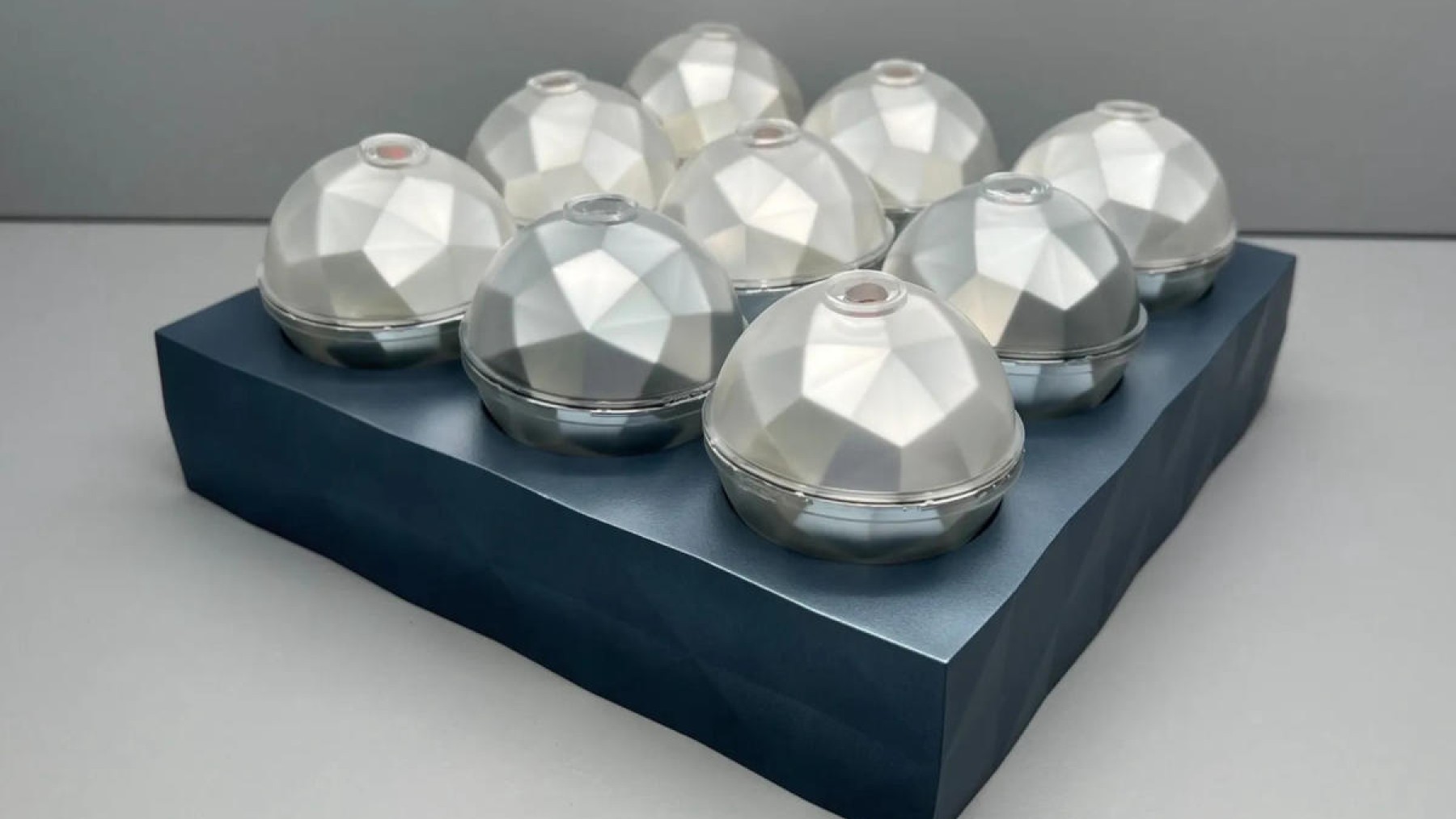
The globe is on the search for environmental energy resources, and solar energy has arisen as a top competitor. Kyosemi a Japanese company has launched a groundbreaking resolution: the Sphelar, a spherical micro solar cell which harnesses sunlight from every direction. Not only does this groundbreaking design improves energy effectiveness but it also tackles the limits of conventional solar technology placing Kyosemi in the spotlight of solar energy revolution.
Utilizing sunlight from all angles, The benefit of spherical solar technology
Conventional solar panels utilize flat photovoltaic cells which should be ideally placed to harness sunlight making their effectiveness reliant on the angle of the sun. In comparison, Kyosemi’s Sphelar cells introduce tiny, spherical units in which sunlight is absorbed from all angles, removing the necessity for pricey mechanical frames as well as decreasing installation complication.
The spherical structure permits Sphelar cells to harness directly, reflected, as well as dispersed light, attaining energy transformation effectiveness of almost 20%, exceeding majority flat solar technologies. This results in Sphelar cells being perfect for several uses, including domestic solar panels as well as mobile devices.
Furthermore, spherical solar cells generation substantially decreases waste by decreasing kerf loss, the substance wasted when cutting silicon ingots into wafers. By utilizing molten silicon immediately, Sphelar cells promote a greater environmental production procedure, meeting the rising demand for effective generation techniques as silicon costs rise.
Exposing adaptability: Sphelar sells for compliant & transparent power resolutions
Kyosemi’s Sphelar cells provide an extensive range of advanced uses that go further than conventional solar panels. Their efficient size, varying from 1 to 2 mm in diameter, makes them compliant for flexible as well as translucent modules, perfect for incorporation into many products.
This adaptability positions Sphelar cells as an ideal solution for premium, energy efficient devices like mobile electronics as well as compressed sensors. A noteworthy usage of Sphelar technology is in wireless information terminals, that can function utilizing Sphelar cells to obtain not only power but also data via infrared light.
This discovery might transform portable devices by decreasing the dependence on traditional power resources as well as allowing more effective, independent systems. Sphelar cells may be incorporated in building equipment such as windows as well as facades, letting structures produce solar energy whilst allowing natural light in, ideal for progressive designs concentrating on aesthetics as well as sustainability.
They also hold promise in conservational monitoring, fueling small sensors which monitor temperature, along with humidity, and the quality of air, creating networks for observation in areas such as factory automation, logistics, as well as healthcare, where live data improves both competences together with security.
Defeating trials: The way to exposing Sphelar Cells’ complete capability
Although Kyosemi’s Sphelar cells shows significant promise, there are trials to beat before they can achieve their maximum potential. Presently, the generation capability for Sphelar cells is restricted, and accomplishing economical mass generation is still in development.
But, as Kyosemi maintains its study as well as enhancement attempts, the corporation aims to normalize as well as automate the generation of these advanced solar cells. When the mass mass system is implemented, the complete advantages of Sphelar spherical solar cells will be recognized.
They can become a substantial resource of energy, assisting to meet the increasing international requirement for sustainable energy whilst contributing to a greater sustainable future. Additionally innovations in lens technology may possibly improve the light capturing potential of Sphelar cells additionally increasing their competence.
In closing Kyosemi’s Sphelar spherical solar cells signifies a pioneering revolution in the solar energy subdivision. Their distinctive design as well as adaptability provides thrilling chances for numerous uses from building resources to mobile devices as well as conservational tracking. As Kyosemi guides the way to mass generation the possibility for Sphelar cells to reform the energy landscape is massive. With repeated innovations in technology as well as generation techniques solar energy’s future is at its brightest.