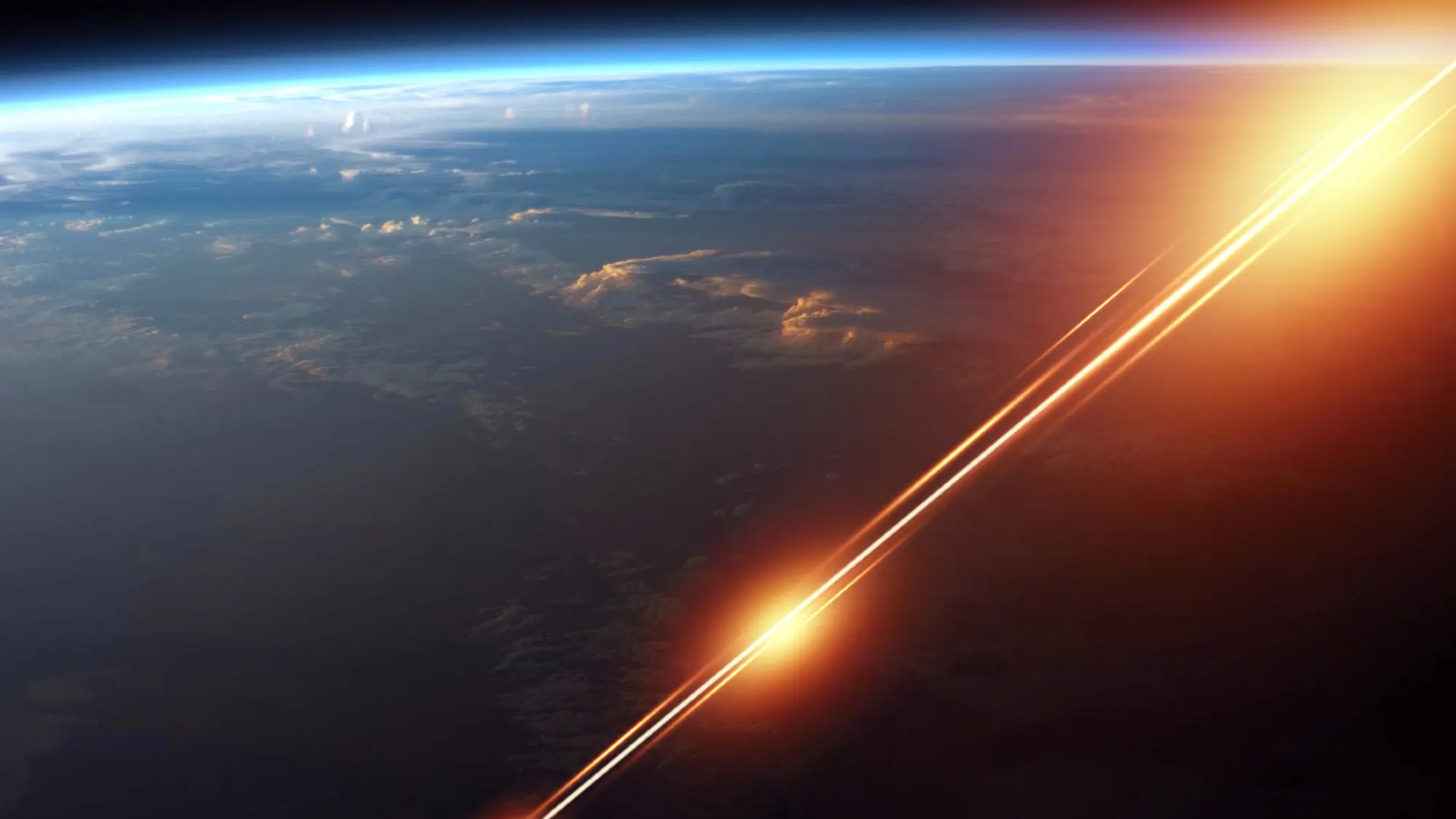
Renewable sources go far beyond hydrogen in all its colors. This is an idea you will be familiar with, but what other sources can you think of that have greater potential, always without polluting? One of them is solar energy, with which experts have just broken a decades-old record. They have done it in the strangest and most futuristic way possible, by ‘bombing’ the Earth from space. Can you imagine how they have done it and where all the ‘bombs’ are falling? We tell you all the details.
The MAPLE project has revolutionized renewable energy: This decades-long belief has been changed
The microwave array for power-transfer low-orbit experiments, simply called MAPLE, has made a significant advancement in the field of space-based solar power. It has become possible to wirelessly transfer solar power from space down to the Earth’s surface through MAPLE in the recently launched Space Solar Power Demonstrator (SSPD-1) in January 2023.
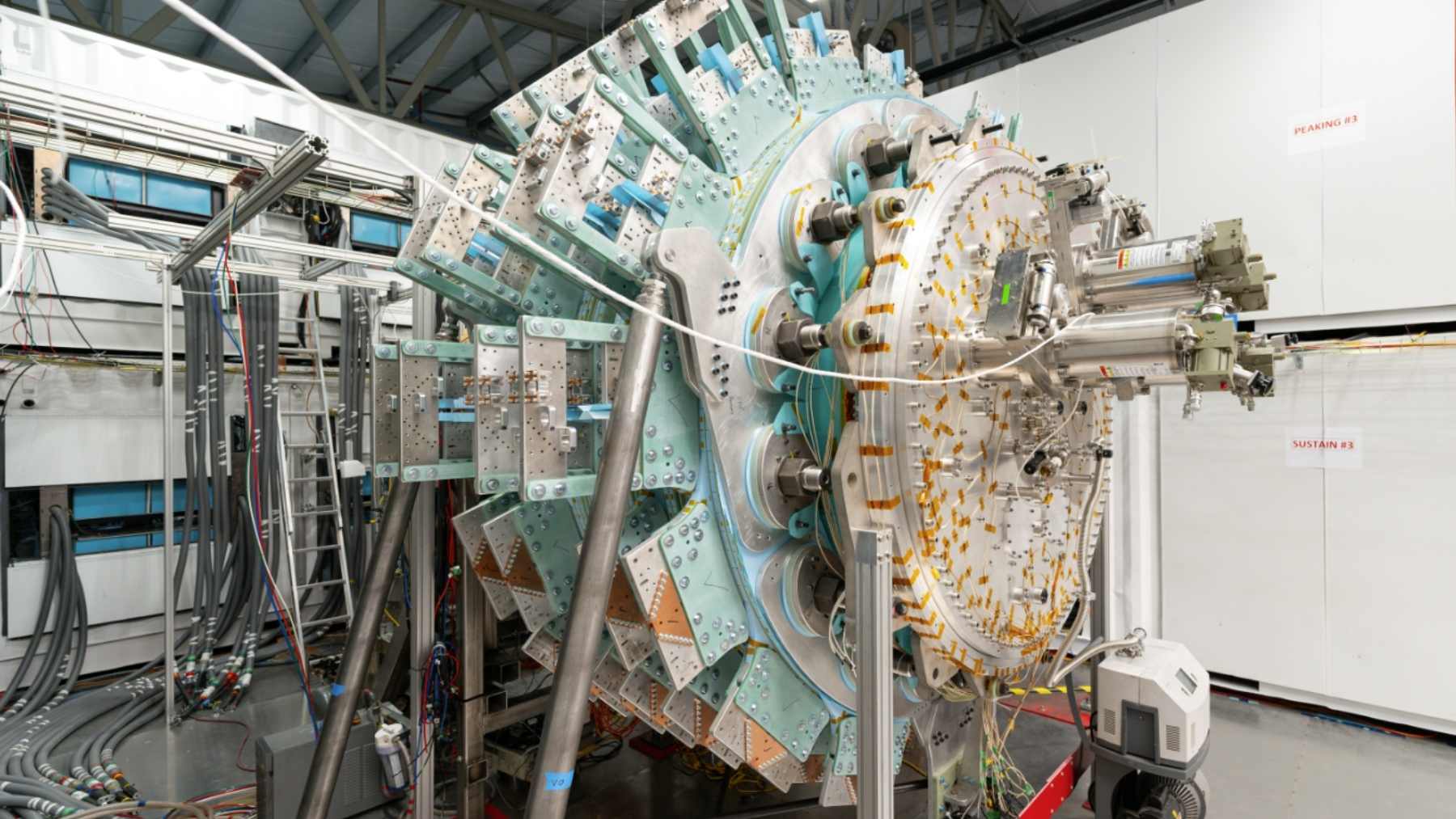
MAPLE’s core technology is anchored in a family of advanced and compact microwave power transmitters. These are in the form of specialized electronic chips that are developed on low-cost silicon technologies, thus making the system not only effective but also economical. This has to do with the versatility of this formation, as it must be easily compacted for deployment in space.
The essence of MAPLE tech lies in its energy transmission, which is done through wireless transmission. Through devising constructive and destructive interference between individual transmitters, MAPLE is able to concentrate and direct energy without the need for mechanical processes.
The design of MAPLE is modular, and the distribution of antennas for transmitting power is usually packaged in the form of sixteen. The workings of each group are controlled by a single customer-specific flexible integrated circuit chip. This feature makes it easier to manage the system, referred to as scalability, since it can be added or redesigned as a whole.
We have “teleported” solar energy, but that’s not all: The MAPLE project, in detail
MAPLE has demonstrated impressive capabilities in its initial tests:
- The energy beaming was achieved by transmitting power to two different receiver arrays that were approximately one foot apart (similar to what we could call “teleporting”).
- The photovoltaic energy was converted into electrical energy to light two LEDs in order to complete the full cycle of wireless energy transfer in space.
- Energy emerging from the MAPLE facility was first detected on the receiver located on the roof of the Gordon and Betty Moore Laboratory of Engineering at Caltech on May 22, 2023.
100 milliwatts that mean so much for mankind
MAPLE has published some relevant data about this project, but we have taken some keys for you to understand why it’s not about the power but its transmission.
- MAPLE, during its test phase of wireless power transmission, successfully radiated about a hundred milliwatts of power into space.
- In Earth-directed tests, approximately 100 milliwatts of power were transmitted three times during an eight-month period.
The future of the space solar power system is the Space Solar Power Project (SSPP), where a scattering of small structural units is planned to effectively feed about 10,000 households with electricity. Individual satellites that would make up each modularity would be 1 meter-cubes, and the satellites would be laid out in a square formation of 50 meters per side.
The process of beaming energy to Earth involves several steps:
- The energy collection in space is done by using solar power.
- Conversion to electricity.
- Transformation into microwaves.
- Wireless transmission to Earth.
- Conversion back to useful form at ground level from received form on receiving antenna.
This method eliminates many of the challenges characteristic of solar power captured from the surface of the earth, for instance, the day/night cycle and the atmosphere, among others.
This new MAPLE project is much more than a Space Solar Power Demonstrator, which Russia has also tried to create. However, the interest we have shown in America has led us to promote it as a real alternative to hydrogen, and even as a new type of photovoltaic energy. A source that has been with us for decades has just shown that we still don’t know it at all, let alone if we produce it in space and ‘bombard’ the Earth, don’t you think?