Japan has the lead in hydrogen, and both America and Germany are vying for the lead in EVs. But a group of experts in Switzerland has just succeeded in developing the engine of the future, with a fuel that hasn’t even reached our shores and could change everything. Proof of how special it is? It reduces emissions by 99%, runs on a new type of combustion, and is super-efficient, but also toxic. This is the proposal that will revolutionize the automotive world and change our roads forever.
Not Japan, not Germany: This country is working on the “ultimate engine”, with these results
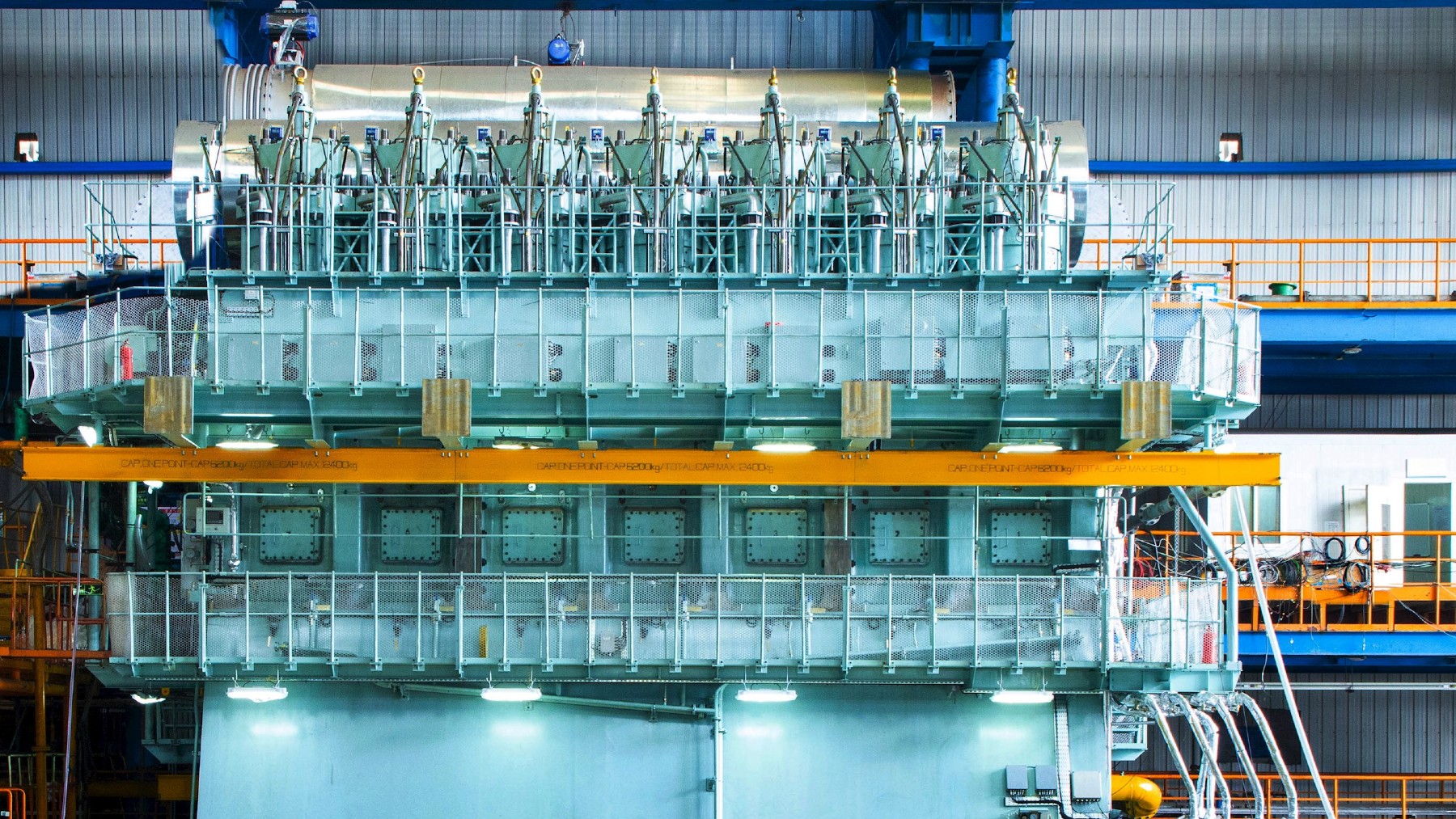
WinGD, a Swiss company specializing in marine engines, is expecting to release the first X-DF-A ammonia-burning dual-fuel engines by the first three months of 2025, with vessels using the X-DF-A starting in 2026. This has been a proud moment in the fight to reduce carbon emissions and change the face of the manufacturing industries, particularly the shipping industry, for the better.
WinGD has stated that its current line up of low speed marine engines will be capable of running methanol and ammonia by 2024 and 2025, respectively. This is a part of the company’s plans to increase orders with multi-fuel engines that are designed to run on carbon-neutral fuels, at 50% of its order book by 2030.
Currently, the manufactured diesel-fueled X Engine series will need modifications to use methanol and ammonia, but the company’s X-DF Engine series designed to work on biogas will not cause many problems. This, in turn, enables WinGD to build on already existing technologies in order to support its clients, the shipowners and operators, in their quest to transition to green sources of energy.
Switzerland has unveiled its secret: It’s not about “money”, but about research and cooperation
It’s important to take a look at the investment in research and cooperation with other players in the development of WinGD’s X-DF-A dual-fuel ammonia engines. It has spent on a single validation platform called the Spray Combustion Chamber, or SCC, which is based in the Engine Research & Innovation Centre, or ERIC for short, based in Winterthur, Switzerland.
The ‘low’ level of physical scale has allowed for rapid advancement of 2-stroke combustion concepts and emission models and has delivered substantive information to the team about ammonia combustion and emission. Beside the works at ERIC Winterthur, the WinGD currently tests a single-cylinder engine and a multicylinder test engine at the Global Test Centre in Shanghai.
The company now has methanol and ammonia engines in the developmental stage, and thus, it has not provided specific performance statistics. The company has insisted that there are plans that indicate that the new X-DF-A engine will be able to utilize the zero-carbon fuel effectively, dependably and safely.
This ammonia engine is better than hydrogen: When will it be commercialized?
The company has also claimed that it is now possible to give correct quantitative data for ammonia use and the proper emissions relating to it, all of this was made possible by the actualization of the SCC validation platform. It will be such vital information for the shipowners and operators when they assess the feasibility of ammonia as a marine fuel.
This is in consonance with WinGD’s – and the expectations of the entire marine industry: when methanol and ammonia engines will be ready, when these fuels will become available on a large scale and as a feasible option for deep-sea vessels. It is therefore engaging with shipowners, engine and ship builders, and other related stakeholders.
The company has already entered into several strategic deals with regard to the realization of the ammonia engine method. WinGD entered into a cooperation agreement with CMB in January last year. Tech company based in Belgium that is affiliated with the CMB shipping company to construct ammonia-powered engines for ten 210,000 DWT ore carriers.
The new Swiss ammonia engine could be the end of hydrogen and, therefore, of FCEVs. It is a proposal aimed at decarbonizing sea transport, but it could also be used on the roads. We have already seen that Toyota had no intention of innovating in this regard (we even denied the rumor that ran through the networks and claimed otherwise), but fortunately, there are brands that do dare to develop this fuel that has everything to be the fuel of the future.