Charles Darwin, to whom we owe something as important as knowing who we come from, made a prediction that no one believed 200 years ago. Against all odds, a group of experts has just confirmed that he was right: animals talk. Artificial intelligence and technology have been the firsts to decipher their language and create the first alphabet in history: we have succeeded, and these are the results that have shocked the entire planet in the middle of 2024.
Experts have made a historic achievement: Animals speak, and now we know what they say
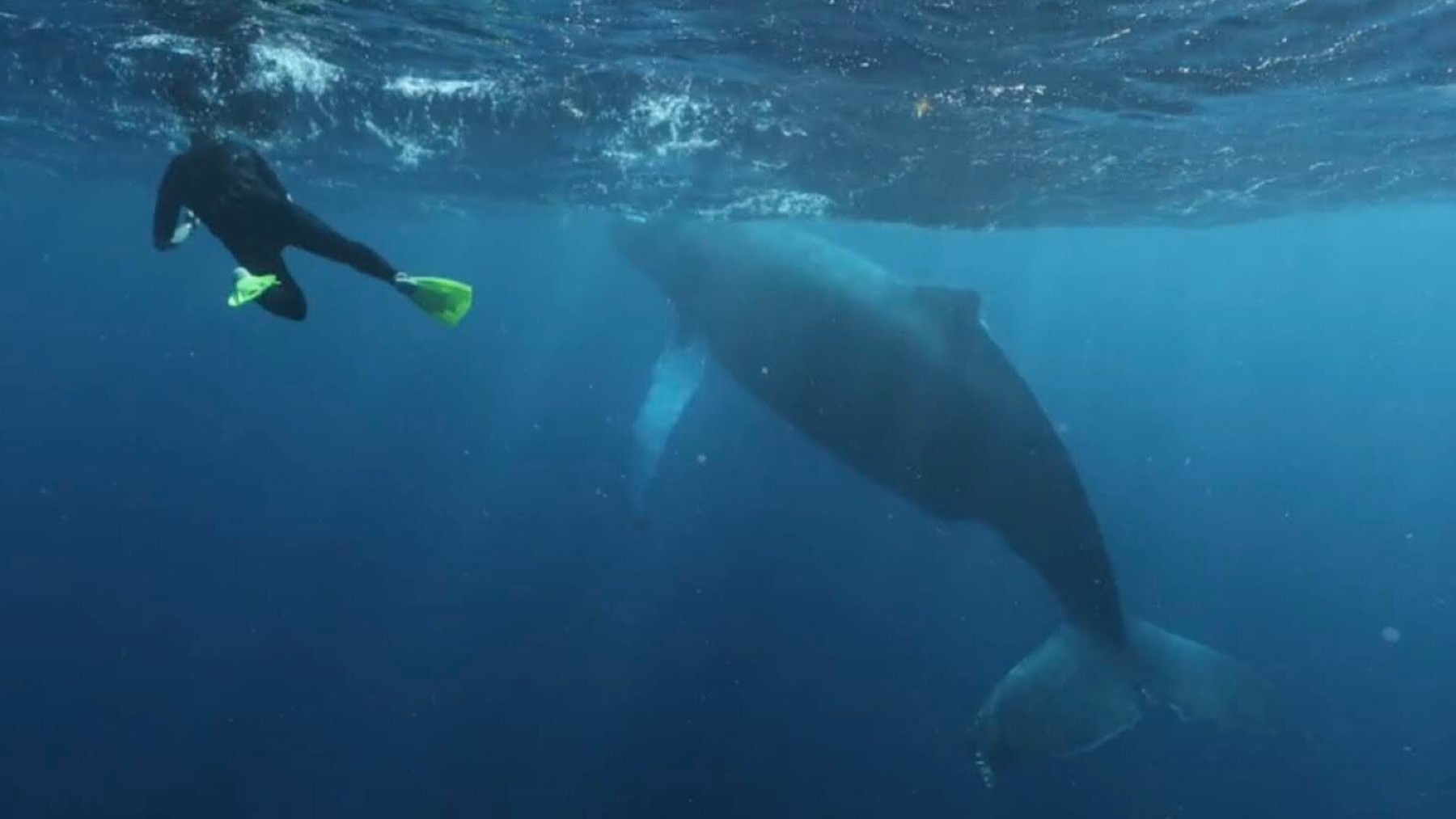
Calling on the sperm whales, the biggest toothed whales on planet Earth has been documented to use various forms of clicks and codas. However, their capability for communication in their relationships has not been fully explored – not until now, as you know.
A research program established by the E2O Foundation, Project CETI, the work of which was recently boosted by advanced AI, has unveiled the first-ever translation of the sperm whale ‘ping’ phonetic alphabet. The study shows that the communication of sperm whales is much more complex than was believed, and it was released in the Nature Communication journal.
The team observed and noted almost 9,000 codas—the noises that sperm whales make—from the Eastern Caribbean clan and found rhythm, tempo, rubato, and ornamentation elements in the combinatorial coding system sperm whales use. According to Dr. Daniela Rus from MIT’s Computer Science and Artificial Intelligence Laboratory:
“What this study demonstrates is that coda types need not be random, as they constitute a novel combinatorial code: rubato and ornamentation are musical concepts merged with two other categorical, context-free characteristics, rhythm and tempo, all European in origin, following the conventions of the musical terminology,” said
Sperm whales have conversations, and we have “heard” them: This is how they speak
In the course of the conversations, the sperm whales are able to make adjustments with split second intervals and can append more clicks on familiar coda types depending on the surrounding conversation. This type of complexity and versatility in their communication network is characteristic of human language, which makes the finding all the more exciting.
The discovery of the knowledge of the sperm whale’s unique communication signals is also worth mentioning, since it has had a significant impact on the thought of animal communication. This implies that the sperm whale, while genetically morphologically and culturally differing from humans, has elements in his acoustic language typically belonging to human fraternity.
How has artificial intelligence “deciphered” the whale’s language? This invention changes everything
This has only been made possible by the calls and transforms from artificial intelligence and machine learning provided by the researcher team at CETI. The process involved several key steps:
- Data collection: The CETI team has been following the sperm whale families of the Eastern Caribbean clan for more than a decade and has obtained about 9,000 codas from them.
- Data annotation: The original data set used in this experiment was collected and manually coded in tones, rhythm, tempo and so on by the CETI team for each coda.
- Machine learning: This coda-annotated data was further fed to a number of machine learning models, mainly neural networks and clustering techniques, to discover the possible dependency and correlation within/between the codas.
- Feature extraction: Choi et al.’s models were able to identify other features like rhythm and tempo, notes on rubato and ornamentation from codas.
- Combinatorial analysis: In this way, by comparing these features of the codas and the various opportunities for combination and variation of the codas obtained by the researchers, it was possible to understand the organization of the system.
What do you think of this discovery about sperm whale language? The animals have been talking about what they knew for a long time, but not what they said. Thanks to artificial intelligence, we are now able to listen to them as they communicate and know what they are saying. Well, maybe not 100% (you’ve seen how phonetics works), but at least we have as close as possible to an alphabet for whales, with a set of sounds decipherable and translatable into human language. It is just the beginning.