Tesla Cybertruck has always epitomized innovation and, thus, a futuristic look. The range of this vehicle can now be increased with a third-party modification that wraps the saddle’s solar panel for a fee of $10,000. In this article, we will discuss the details of this ambitious project, the benefits that could be realized, and the costs that would have to be incurred.
Venture Design: the off-grid dream moves closer to reality by turning a Tesla Cybertruck into a solar vehicle
The idea of moving towards using solar panels in Tesla vehicles is not permitted. In 2017, Elon Musk proposed the idea of incorporating solar cells into the Model 3. However, this became impossible as the technology at the time was immature. However, in 2019, Musk promised that the Cybertruck would get a solar roof that would provide an additional range of 15 miles daily, but that never happened.
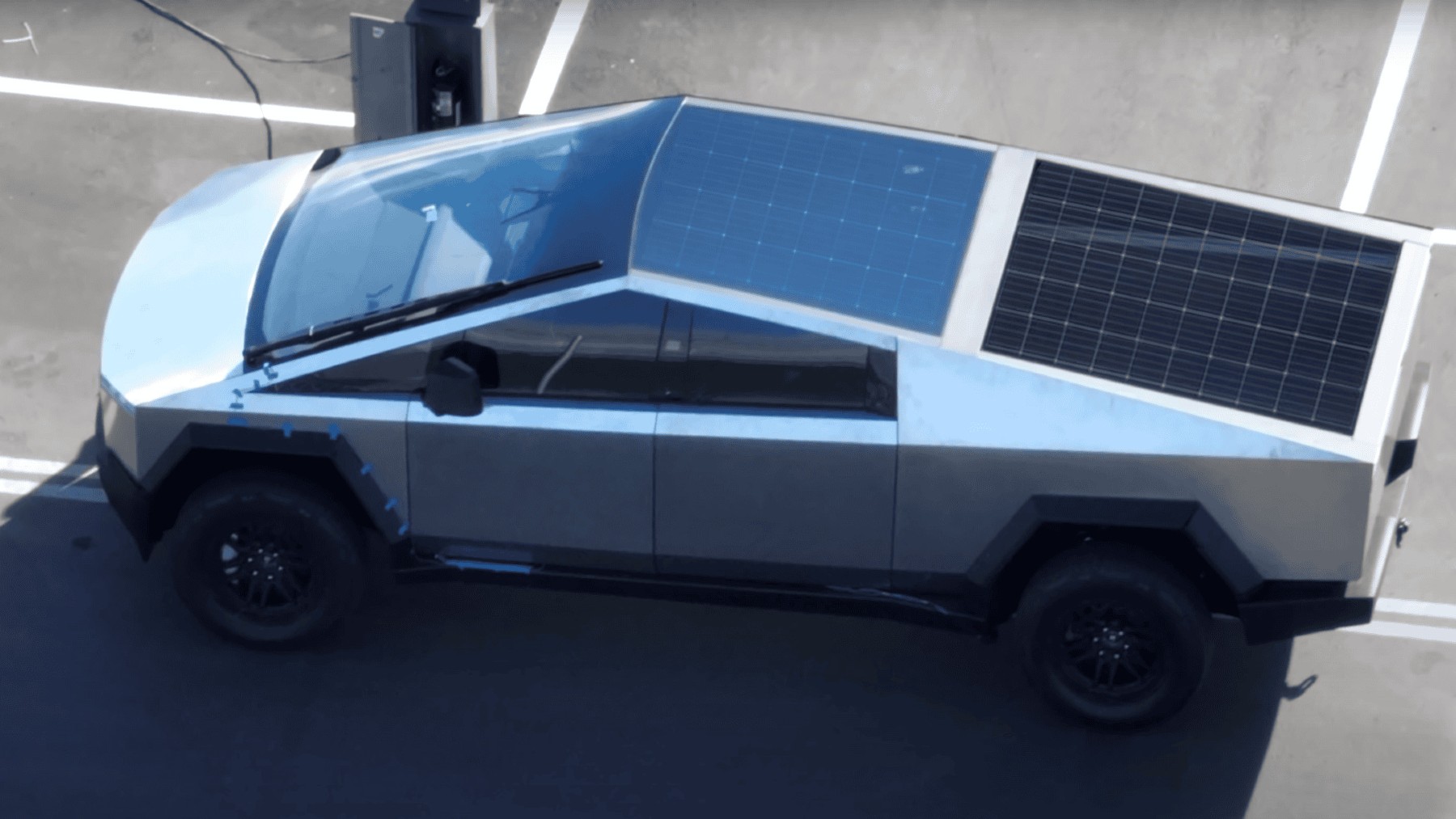
Sunflare Solar, a California-based company, stepped in to fill the gap. At CES, the group presented flexible panels that were tailored to fit the flat, angular surfaces of the Cybertruck. These panels can generate approximately 1.5 kW of renewable energy with an effective output of around 15 miles in range daily. This implementation brings Musk’s original vision to life with a third-party twist.
The astonishing technology surrounding the Cybertruck’s solar panel development
Solar cells integrated into Cybertruck’s steel body rather than the traditional glass panel are included in Sunflare Solar’s wrap. This innovation possesses an inveterate battery with a 5 kW power output that feeds the energy generated by the solar cells back into the vehicle, making it ideal for use off-road or in remote areas. There is something compellingly futuristic in the idea of building a rugged vehicle and integrating it with green energy technologies.
However, even so, concerns are still raised about the feasibility of this upgrade. Although highly durable, the stainless-steel shell of the Cybertruck brings another layer of concern to the longevity and reliability of the device – a solar wrap, which is a more brittle transition. Since flexible solar cells are used, they can be damaged in rough outdoor conditions such as rugged terrain, flying debris, or harsh weather. The lifespan of the wrap may be compromised by these effects.
High costs and low yield: Does this wrap justify its price tag?
One problem that needs to be solved before releasing a solar panel wrap for the Cybertruck is the small amount of electricity that the wrap will produce. As the solar industry has evolved over the years, so has the amount of power produced from the surface area of the solar panels. The extra 15 miles of range should supplement specific use cases, such as when on remote camping trips or when commuting from one location to another in a sunny area. But, the addition is far from a game-changer.
One other question arises when the sticker price of $10,000 is mentioned. Such a huge cost for the little benefit offered may put off a lot of would-be purchasers. People who drive regularly may consider solar systems installed at homes far better because the systems can store more power while charging vehicles and do it faster. The plastic wrap of the car is amazing, but I don’t think the everyday consumer of any vehicle will find the use case worth the price.
Future prospects: Will solar-powered vehicles become mainstream?
Though such concerns remain, the appeal of a solar Cybertruck is simply irresistible. This takes the bold concept of the Cybertruck that emphasizes sustainability and innovation and leaves it at the heart of all discussions around renewable energy sources. It aligns perfectly with Tesla’s vision of the future, which is integrating the sun’s power available on the move. Nonetheless, the need for efficiency and effectiveness in the product has remained a constant barrier. In true Tesla fashion, this solar wrap is as controversial as it gets.
In conclusion, the Tesla Cybertruck $10,000 solar panel wrap is a striking and ambitious concept. It is productive in that it provides more range and enables off-grid use, although this comes at a cost. The commercial wrap is quite weak and does not produce much energy making it a specialized product rather than a universal one. Finally, the wrap demonstrates Tesla’s continuous pursuit of soaking the world in renewable energy, even with many new ideas being introduced daily. Does this become a working product, or is it just a fashion accessory? Only the future knows, but this product has added to the shape of the Tesla story.