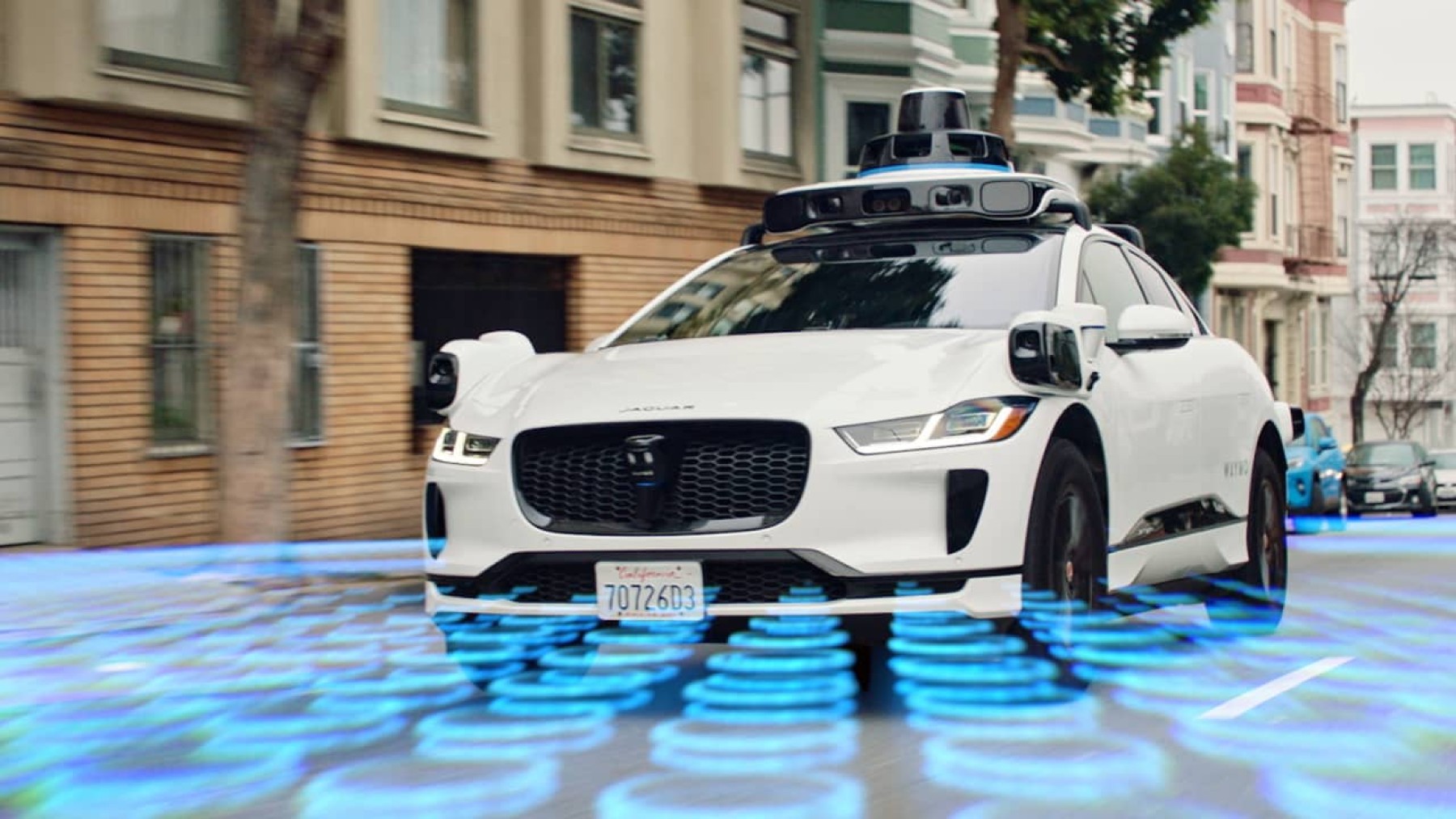
Tesla has been a leader in electric cars for quite some time now, but its attempt at autonomy has been met with problems. Although Tesla has improved its Full Self-Driving (FSD) software, a new contender appears to be emerging to outdo other players in fully autonomous vehicles. This paper analyses the present status of Tesla’s self-driving project and looks at the threat that Waymo, a subsidiary of Alphabet Inc., poses to Tesla.
Tesla’s path to autonomy: why their reliance on driver attention remains a challenge
Tesla’s strategy for developing its autonomous driving systems has been to rely on many user cars to collect actual use data. It has also enabled Tesla to gather a pervasive data set for training and improving the rich neural networks. The FSD system, which is still in beta, is quite capable of handling many complicated scenarios in urban areas.
Nevertheless, Tesla’s path to full autonomy has been rocky. Drivers must stay attentive and update the system at times, but it has been criticized, bearing in mind the safety aspect. The company has repeatedly made big promises about attaining full autonomy, which have been met with scepticism by industry watchers and policymakers.
Why Waymo’s slow but steady approach is reshaping the self-driving industry landscape
While Tesla has been grabbing attention with its consumer-facing driverless features, Waymo has been inching forward with its autonomous technology. There is also Waymo, a company focusing on the production of self-driving cars, which, however, was developed by Google and has been more careful regarding the further advancement of self-driving technology.
Several points make Waymo’s strategy of constructing self-driving cars fundamentally different from Tesla’s. First, Waymo has concentrated on developing new autonomous vehicles for levels 4 and 5 and contracted with conventional car manufacturers. In contrast, Tesla has modified existing car models to adapt them to autonomous driving.
Second, Waymo only works in geofenced areas, starting with specific locations and expanding as the technology develops, while Tesla’s approach is to deploy its cars across the country. One prominent example is Waymo’s LiDAR (Light Detection and Ranging), which shows a detailed 3D map of the environment, while Tesla has opted for cameras and radar.
In addition, Waymo heavily emphasises physical testing, running billions of testing miles in simulation environments and millions in natural environments. These tests mainly focus on complex scenarios and corner cases, often the most difficult for self-driving vehicles to navigate.
Waymo is already operating driverless cars in real-world scenarios: could this be the future of autonomy?
What makes Waymo different and a counterintuitive frontrunner in autonomous driving is the use of fully driverless cars in the real world. Waymo has been deploying self-driving cars to develop a robotaxi service with no human safety drivers in Phoenix since 2020. This is a significant industry achievement and proves technological enhancement, which Tesla has not acquired.
Perhaps Waymo’s ability to begin using actual driverless cars is as much a regulatory triumph as a technological one. The company has had to engage the local authorities and has had standard operating procedures for interactions with emergency services.
Although Tesla’s FSD system is still dynamic and needs the driver’s attention and further intervention, Waymo’s automobiles can perform trips independently. This transition from driver assistance to full autonomy makes Waymo’s technology look like science fiction as opposed to what is available to the consumer today.
The future of autonomous driving: who will win the race between Tesla and Waymo?
Based on the trends observed in the field of autonomous driving, it is possible to state that there is still a long way to go. Tesla’s vast data collection capabilities and frequent software updates put it in a position to learn and adapt quickly. However, Waymo’s meticulous and well-organized approach has resulted in fully autonomous operations on public roads.
The coming years will likely witness a fierce rivalry between these two titans of the autonomous driving market. The winner will need to display technological superiority and prove its ability to comply with regulatory standards, public opinion, and commercial viability.
Tesla and Waymo’s rivalry over self-driving vehicles is a perfect example of the more enormous challenges the industry faces. Tesla has aggressively collected real-world data to make its driver assistance systems some of the best in the business. On the other hand, Waymo has taken a more conservative approach, delivering a fully autonomous service that seemed like science fiction just a few years ago.
Finally, it will be the consumer and society that will benefit from this technological race. With the further development of the self-driving system, we will also observe the development of safety products and opportunities for disabled people, as well as potential changes in the structure of cities and personal transport.
It is still very likely that the journey towards complete autonomy of cars may not be as straightforward as people expect. However, with autonomous driving technology giants such as Waymo on the prowl for new frontiers to explore, that future may be here sooner than expected. Tesla’s example shows that the firstcomer does not always come out on top, and the competition can come from the most unlikely quarters.