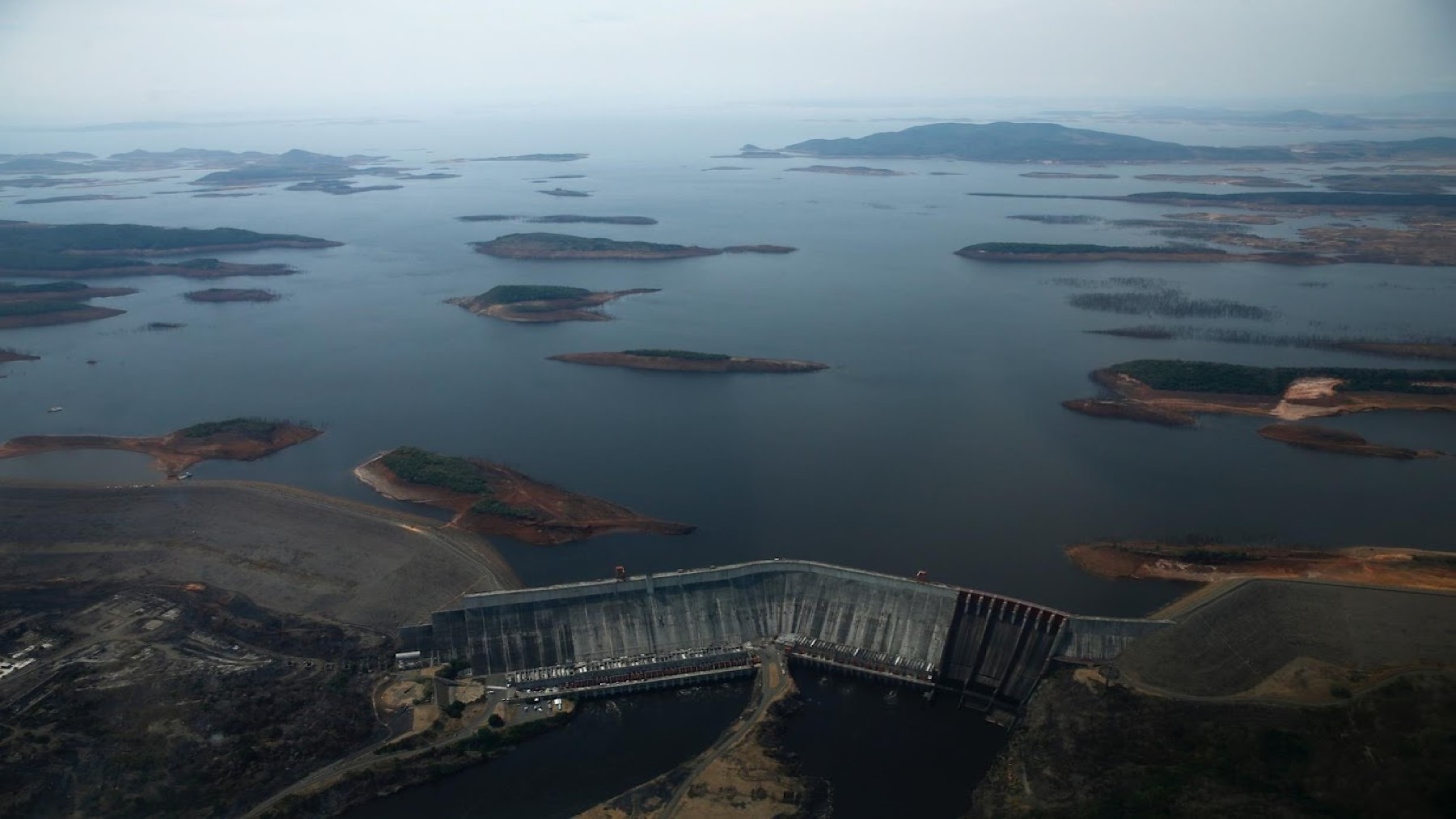
The Guri Dam otherwise the Simón Bolívar Dam is one of the marvels of engineering and a vital backbone of Venezuela’s energy system. At a flow rate of 27 million liters per second effectively making it one of the largest hydroelectric plants in the world. Here we provide a historical overview of the dam, the main aspects of its construction and technology as well as its importance in Venezuela’s economy and power generation.
The journey of one of the world’s largest dams spans decades
Construction of the Guri Dam began in the 1960s as the Venezuelan government embarked on a drive toward reduced dependence on fossil-based energy. The first stage was accomplished in 1969 which included a dam of 348 feet in height and a length of 2264 feet. This stage was to come with a powerhouse furnishing electricity of 1, 750 MW.
Increased power requirements called for the second stage in 1976. Finally, by 1986 of the year, the height of the dam was 531 feet and visibility at crest of 37,222 feet allowed storage capacity to rise to a whopping 10,300 megawatts. This expansion made the dam one of the largest hydroelectric power stations in the world.
The modernization programs started in the year 2007 and saw the plant receive a thirty-year tension period. Deals with companies including Andritz Hydro and Alstom Hydro improved turbines, generators, and control systems with functionalities to maintain efficiency enduring periodical overhauls.
Advanced technology and sheer scale: This research study is titled: How the Guri Dam powers a nation.
The Guri Dam is 531 ft high and is 37,222 ft long. It has a storage age capacity of a maximum of one hundred and eleven thousand, eight hundred and seventy-seven thousand acre-feet and is used for flood control and the production of electricity. In its construction, more than 8 million cubic yards of concrete have been used to emphasize the scale of work accomplished.
The dam consists of innovative utilities such as an industrial video and control system with leakage identification. This innovation leads to early identification of issues affecting issuance and safety, as well as operational integrity. Modernization also included the installation of a water treatment plant, lift facilities, and advanced fire protection.
This paper seeks to explain why Venezuela depends on 73% of its energy on the Guri Dam.
The Guri Dam supplies electric power of about 50,000 GW/h per year, it meets 73% electricity demand of Venezuela. Currently, it has an installed capacity of 10,300 MWs divided in two powerhouse and is an important link in the national power generation network Power.
However, the opportunity brought by the project has some drawbacks to Venezuela which relies heavily on the dam. Low river levels hit the generation of electricity in 2010, 2016, and 2019 leading to power rationing and disruption. These instances show that it is dangerous to depend so much on one type of source and that it is high time the country searches for other types of energy resources.
The Guri Dam’s dual impact: The environmental decisions and cost implications
Even though the Guri Dam has brought change in the way energy is produced in Venezuela, it has also brought about changes to the physical environment. The building of the dam flooded the village of Guri and changed the dynamics of the aquatic area. Long-term, the unconventional feedstock reliance creates numerous environmental problems, although the produced electrical energy is almost fully derived from clean sources, thus decreasing dependence on fossil fuels.
From an economic perspective, the dam has promoted industrial development and solidity. It aids energy-intensive industries while continuing to employ ongoing modernization and maintenance activities. All the same, the dam is an architectural marvel and a key determinant of Venezuela’s economy and energy sector.