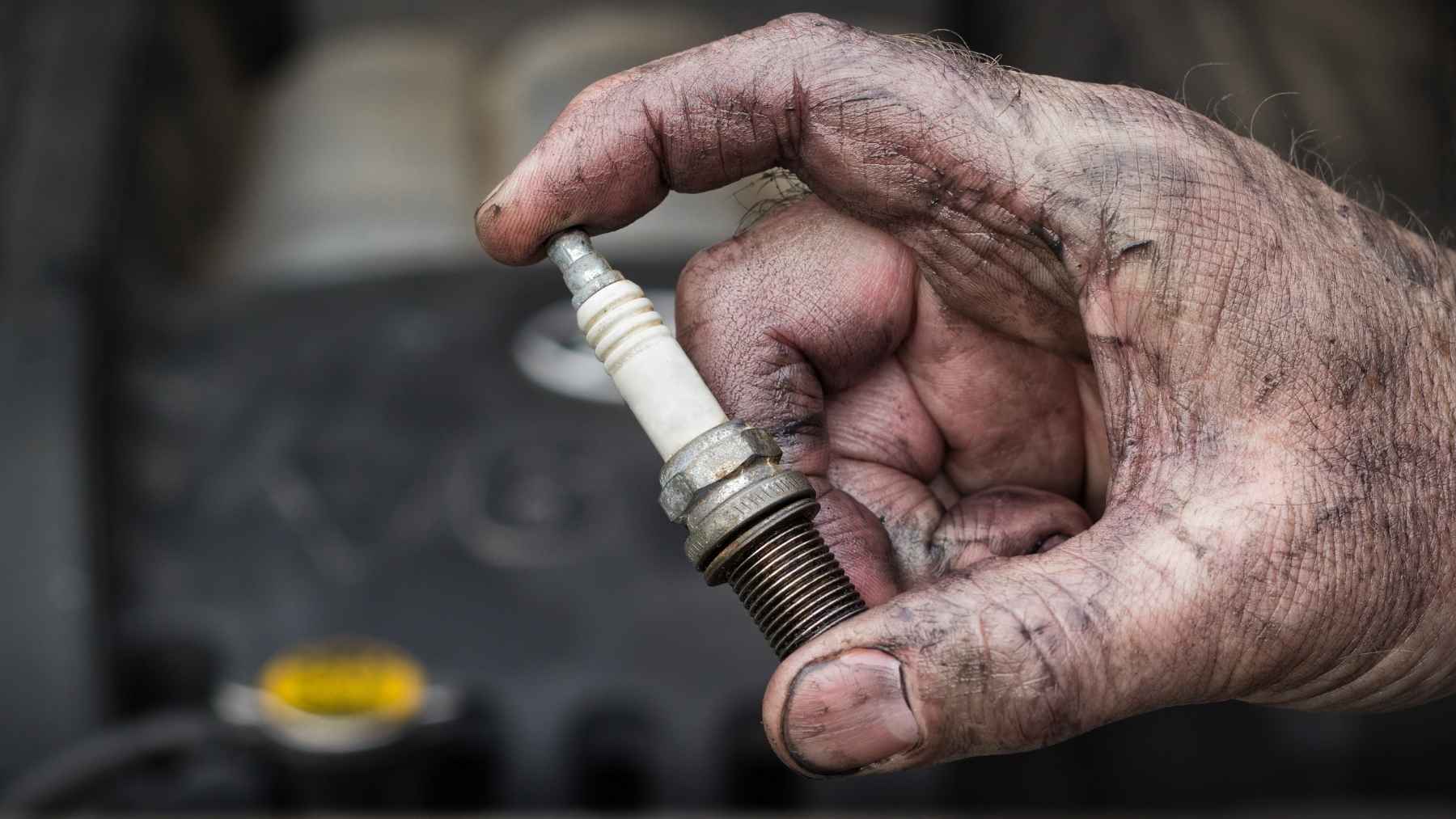
Trying to save money on car repairs feels very familiar. You look at the estimate, swallow hard, then wonder if you can buy the parts yourself and just pay for labor. A recent story from a mobile mechanic shows how that strategy can backfire for your wallet and for the environment.
In his video, mechanic Simeon describes a repeat customer who asked for a quote to replace her spark plugs. When the total for parts and labor felt too high, she asked whether she could buy the plugs herself and pay him only for the work. He agreed, told her which NGK plugs matched her engine, and warned that other types might cause trouble.
At the parts counter she ran into a common problem. The recommended plugs were not in stock, so an employee suggested a different brand. She went with that option, and Simeon reluctantly installed them.
Within weeks her check engine light came on and he found multiple misfires. According to his account, he then replaced the plugs again with the specified model. Soon after, a coil pack failed, the light returned, and the customer blamed the mechanic for the cascade of problems.
Misfires, combustion, and tailpipe pollution
Set aside the customer drama for a moment and look at what is going on inside the engine. Spark plugs are tiny electrical devices that ignite the air-fuel mix in each cylinder. When they work properly the fuel burns almost completely, which keeps the engine smooth, protects sensitive components, and limits the amount of unburned hydrocarbons and other pollutants that exit the tailpipe.
When plugs are worn, incorrectly gapped, or simply the wrong specification, they can misfire. That means raw fuel enters the exhaust stream, forcing the catalytic converter to work harder and raising overall emissions. Over time this incomplete combustion can also damage coils and the converter itself, which are much more expensive to replace than a set of plugs.
CO2 emissions and fuel use
For the environment the stakes are not trivial. The United States Environmental Protection Agency (EPA)estimates that a typical gasoline passenger vehicle emits about 4.6 metric tons of carbon dioxide per year, along with smaller but important amounts of methane, nitrous oxide, and smog-forming pollutants. If poor maintenance pushes fuel use even a few percent higher, that adds up to hundreds of extra pounds of carbon dioxide from a single car each year.
Fuel economy and tune up guidance
Government and industry guidance point in the same direction. An official fuel saving fact sheet from the US Department of Energy notes that fixing a car that is noticeably out of tune or has failed an emissions test can improve its gas mileage by about four percent, with results depending on the repair.
Routine service articles from repair shops highlight spark plug inspection as one of the key steps in those tune ups and link healthy plugs to better fuel economy, reduced emissions, and longer engine life.
Choosing the right spark plugs
So where do brand names and part numbers come in? Plug makers and automakers both stress that spark plugs are not interchangeable in a simple one-size-fits-all way. The correct part has a specific thread size, heat range, and gap that match the design of each engine. Using the wrong heat range or geometry can hurt fuel efficiency and, in some cases, risk engine damage. That is why tools from companies such as NGK and others ask you to enter the exact make, model, and engine before they suggest a plug.
From an environmental perspective, Simeon’s story is less about one brand versus another and more about who takes responsibility for that compatibility. When a shop supplies the parts it typically chooses plugs that meet the original specifications and is willing to stand behind both part and labor.
When customers hunt for the cheapest option at the counter, they may save a few dollars up front yet unknowingly pick a plug that will misfire, waste fuel, and shorten the life of other components.
There is also the everyday comfort factor. Misfires are not only bad for the climate. They show up as a rough idle at stoplights, sluggish acceleration when you try to merge, and that glowing check engine light that makes every commute feel a bit more stressful.
What drivers can do to cut emissions
What can drivers take from all this? First, maintenance really matters for air quality. EPA guidance on reducing pollution from vehicles explicitly urges regular tune ups and sticking to the manufacturer’s schedule as a way to cut emissions, save fuel costs, and drive more safely.
Second, when the repair involves critical ignition parts such as spark plugs, there is a strong case for using the exact specification your engine was designed for and letting a qualified technician source and install them.
In other words, the greenest spark plug is usually the one your car’s engineers picked in the first place. Choosing it, and keeping it in good condition, can quietly trim your carbon footprint every time you fill the tank, even if all you notice day to day is a smoother ride and a calmer dashboard.
The official guidance on greenhouse gas emissions from a typical passenger vehicle was published on the U.S. Environmental Protection Agency website.