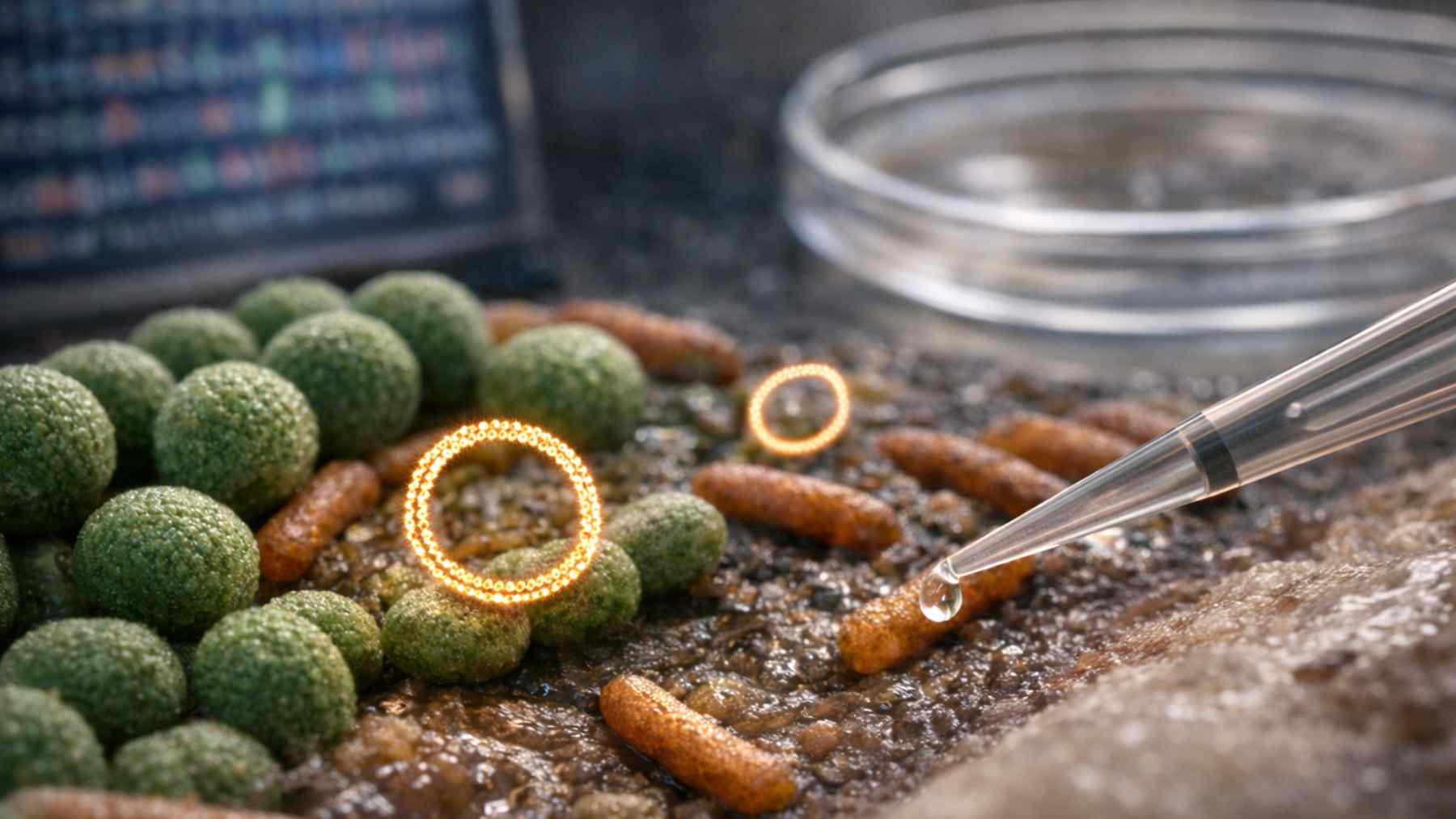
A tiny new player has joined the list of inhabitants inside the human body. While we brush our teeth or rush through breakfast, millions of mysterious RNA loops called “obelisks” may be quietly copying themselves in the bacteria that live in our mouths and guts.
First spotted by a team led by Nobel laureate Andrew Fire at Stanford, these obelisks form a newly described class of circular RNA elements that do not match any known virus, viroid, plasmid, or cell-based organism. They appear to be part of a hidden genetic world inside the microbiome, and some scientists say they could reshape how we think about the minimum requirements for life.
What scientists actually found
Working with vast public sequencing datasets from human stool and saliva, the researchers built a custom search tool to hunt for circular RNA molecules that show signs of replicating.
Out of millions of fragments, a strange pattern kept appearing.
These sequences formed single-stranded RNA circles about one thousand genetic letters long. They folded into tight rod-like structures, and many carried tiny open reading frames that code for brand new proteins the team named “Oblins”. Unlike classic viruses, no familiar capsid genes appeared, and no clear relatives showed up in any database. Obelisks seem to belong to a branch of biology all their own.
In follow up work, researchers mined more than five million sequencing datasets from around the world and cataloged nearly thirty thousand distinct obelisk sequences. They found them in about seven percent of human stool samples and roughly half of the saliva samples examined, often persisting in the same person for more than three hundred days.
An invisible ecosystem inside an ecosystem
Obelisks do not float freely in our bodies. They sit inside bacteria. In at least one clear case, a common oral microbe called Streptococcus sanguinis carries its own resident obelisk. Lab strains can grow with or without this RNA passenger, which suggests that, under standard conditions, the element is not essential for the bacterium.
For microbiologists, that raises an ecological question. If these RNA loops are not obviously helping their hosts survive, why are they so common and so stable? They might be neutral hitchhikers. They might subtly tip the balance among competing microbes. Or they might matter only under specific stresses such as infection, antibiotics, or dietary shifts. At this stage, no direct effects on human health have been demonstrated.
The story is not limited to our bodies either. Separate studies have now traced obelisk-like RNA replicons in acidic hot springs and in marine environments, linked to bacteria that tolerate extreme heat and acidity. Put together, these findings hint at a global RNA-level “micro ecosystem” that quietly shares space with the better known world of cells and viruses.
Not quite virus, not quite viroid
On paper, obelisks look a little like plant viroids, which are tiny circular RNAs that cause serious crop diseases yet encode no proteins.
Obelisks share the circular, highly base paired structure and sometimes carry self-cleaving ribozyme motifs that probably help them replicate through a rolling circle mechanism.
The key difference is that obelisks do have coding capacity. Their Oblin proteins form a completely new superfamily with no similarity to known enzymes or structural proteins.
Some models suggest that one of them may bind metal ions and another may mediate protein interactions, but those are still working hypotheses, not proven roles.
This strange mix has left classification committees scratching their heads. Obelisks lack the protein coats that define most viruses, yet they go beyond classic viroids, which rely entirely on host machinery and do not encode proteins at all. Several reviews now place them in a growing family of viroid-like circular RNA agents that blur the line between genetic parasite and minimal life form.
A window into the early RNA world
For researchers who study how life began, obelisks are especially tempting.
They represent some of the smallest autonomous RNA replicons known in animal-associated ecosystems, operating with compact genomes, unusual ribozymes, and unfamiliar proteins.
Work on viroids and related circular RNAs has already pushed the idea that tiny self replicating RNA rings might echo the chemistry of a much earlier Earth, when RNA may have handled both information storage and catalysis. Obelisks add a new twist. They show that similar minimal systems can thrive today inside modern microbiomes, from human mouths to hot springs and the open ocean.
At the same time, experts caution against declaring them a brand new kingdom of life. Many prefer to speak of “autonomous RNA replicons” or “viroid-like agents” rather than full-fledged organisms, at least until their life cycles and host interactions are understood.
What it could mean for health and technology
Right now, there is no evidence that obelisks cause disease in people.
Even so, they sit inside microbes that help digest food, train the immune system, and keep harmful bacteria in check. That is why researchers are starting to ask whether these RNA passengers change which bacterial strains thrive, how they respond to stress, or how they communicate with each other.
A few groups are already exploring more futuristic possibilities. Because obelisks are small, structured, and apparently stable in the mouth, some scientists have floated the idea that engineered versions could one day act as oral delivery vehicles for therapeutic RNAs or designer proteins, riding along with friendly bacteria. Those ideas are at a very early stage, and many safety questions would need answers before any such tool reaches patients.
For now, the discovery delivers something more basic and a bit humbling. Even in a place as well studied as the human microbiome, an entire class of replicating genetic entities went unnoticed until new sequencing tools and clever software brought them into view.
If obelisks were hiding in plain sight in our own mouths and guts, quietly shaping microscopic communities we depend on every day, it is hard not to wonder what else is still out there, waiting in the data for someone to look more closely.
The study was published in Cell.