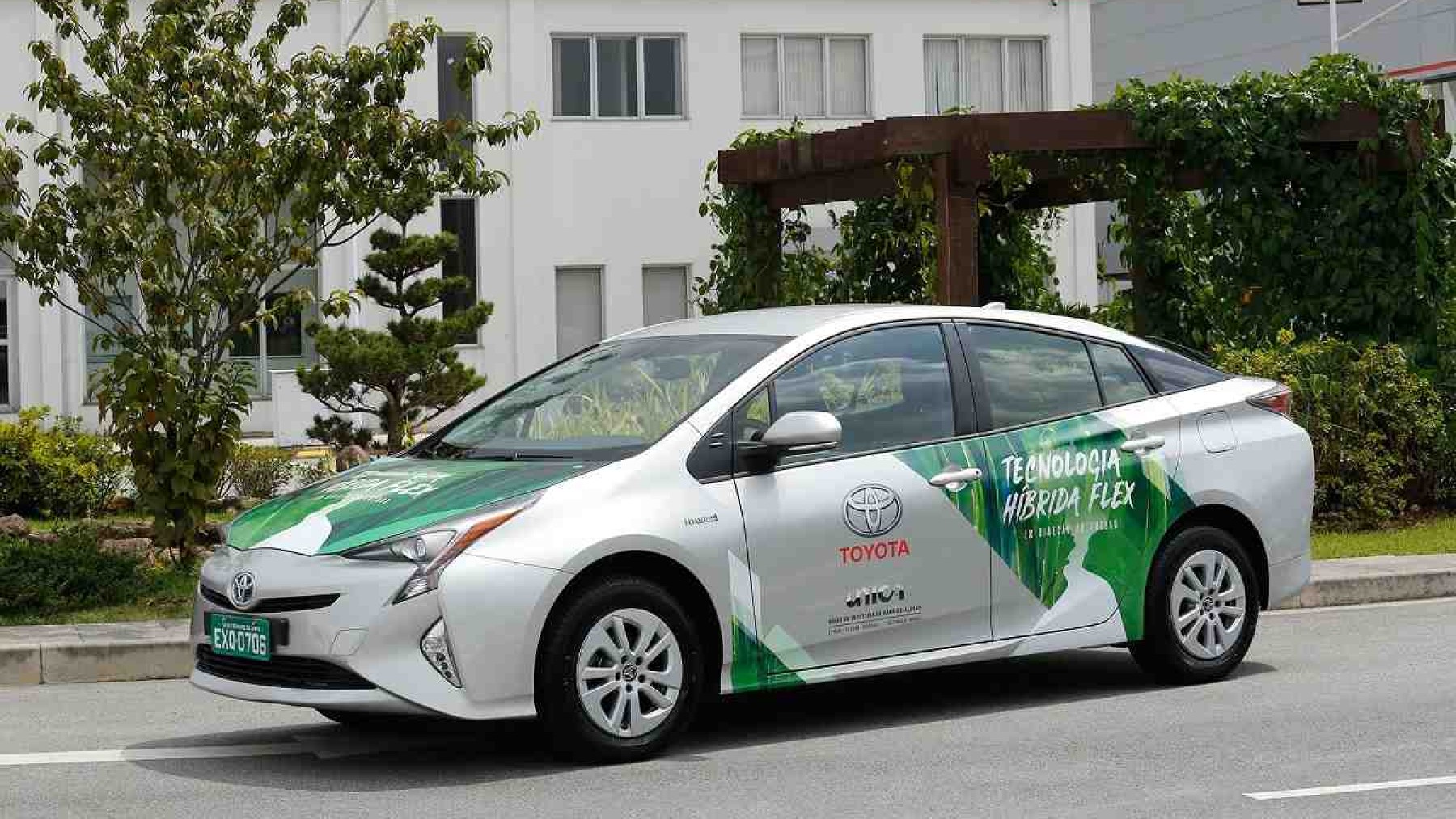
The car manufacturer giant Toyota plans to launch an ethanol fuel-powered Camry in India, which is to happen in August 2023. This is a message regarding the company’s intention to fight carbon emissions and use renewable energy sources in automakers. By launching flex-fuel technology in one of its bestselling models, Toyota wants to give consumers in India a chance to experience using green cars.
Flex-fuel engines: How Toyota’s new Camry is changing the game for sustainable vehicles
One of the novelties of the next Camry is its flex-fuel engine, which means the car is equipped with a petrol engine that can be filled with petrol mixed with ethanol or pure ethanol. In this sense, there are essential advantages in relation to their fuel flexibility and environmental footprint. Consumers with FFVs can select environmentally friendly fuels depending on the type that is available in the market and the cost of this kind of fuel.
The main advantage of flex-fuel technology is the possibility to decrease greenhouse gas emissions. Ethanol is a biofuel produced from crops such as sugarcane and corn, and when burned, is cleaner than conventional fuels. It emits fewer harmful chemicals like carbon monoxide and hydrocarbons responsible for air pollution than the older models. Also, ethanol is relatively biodegradable, and in case of leakage, it causes a minor impact on the environment.
Flexible fuel engines have been in circulation for a few years now in places such as the United States, Canada, and Brazil, where ethanol is readily available. With this technology, Toyota wants to advance the use of renewable energies and decrease India’s reliance on imported oil. This fits well with the Indian government’s vision that aims at 20% ethanol blending of petrol by 2025 under its National Biofuel Policy.
India’s sustainable future: Why flex-fuel vehicles could be the answer to air pollution and energy security
Currently, India has many issues related to air pollution and energy insecurity. Transportation is one of the largest culprits on both counts, traffic fumes being a significant component of urban air pollution. This research notes that as the market for automobiles in the country expands, more fuel is needed, thus exerting more pressure on the environment and the economy. This is where flex-fuel vehicles such as the ethanol Camry can go a long way in meeting these challenges.
Flex-fuel technology serves as an intermediate measure to change the orientation towards sustainable transport in the long run. Although fully electric vehicles are the ideal type of vehicle in the sense that they emit no gases at all, ethanol-fueled cars are the immediate and realistic solution to the problem. Ethanol can be produced in the country, and because it has most of the necessary agricultural products, it will help farmers. This is useful for energy security, economic stability, and employment potential through ethanol production in rural areas.
Toyota’s history of innovation: How the company is driving change with green technologies
Toyota has innovated in environmental technology in one of the world’s first mass-produced hybrid cars – the Prius since 1997. Since then, however, the company has been adding more green cars, hybrids, plug-in hybrids, and even cars powered by hydrogen fuel cells. The rollout of the ethanol-driven Camry in India is another process of this kind, which shows that Toyota is a company seriously committed to minimizing its impact on the environment.
The flex-fuel Camry will complement the Corolla Altis Hybrid models Toyota introduced to the Indian market in October 2022. It combines a 1.8 L engine with an electric drive and adopts a 1.3 kWh battery for better fuel economy than the conventional Altis with a lower carbon footprint. The use of both hybrid and flex-fuel technology is an influential way to prompt the changes and give a customer several opportunities to mitigate their undesirable impact on the environment.
A step toward a greener future: How Toyota’s flex-fuel Camry could transform India’s auto industry
The entry of the ethanol-powered Camry by Toyota in India can be applauded as a significant step in reducing the carbon footprint of the automobile Industry. Therefore, by integrating the flex-fuel technology option in its model, Toyota helps achieve energy security and minimal carbon emission standards for the nation, as well as providing a solution to the issues of air pollution or reliance on imported oil.
As the world seeks answers for more efficient transportation and combating climate change, Toyota has set its foundation on innovation and environmentally sustainable automobile designs for automakers across the globe, thereby charting out a path for the future automobile industry where vehicles run on clean energy.