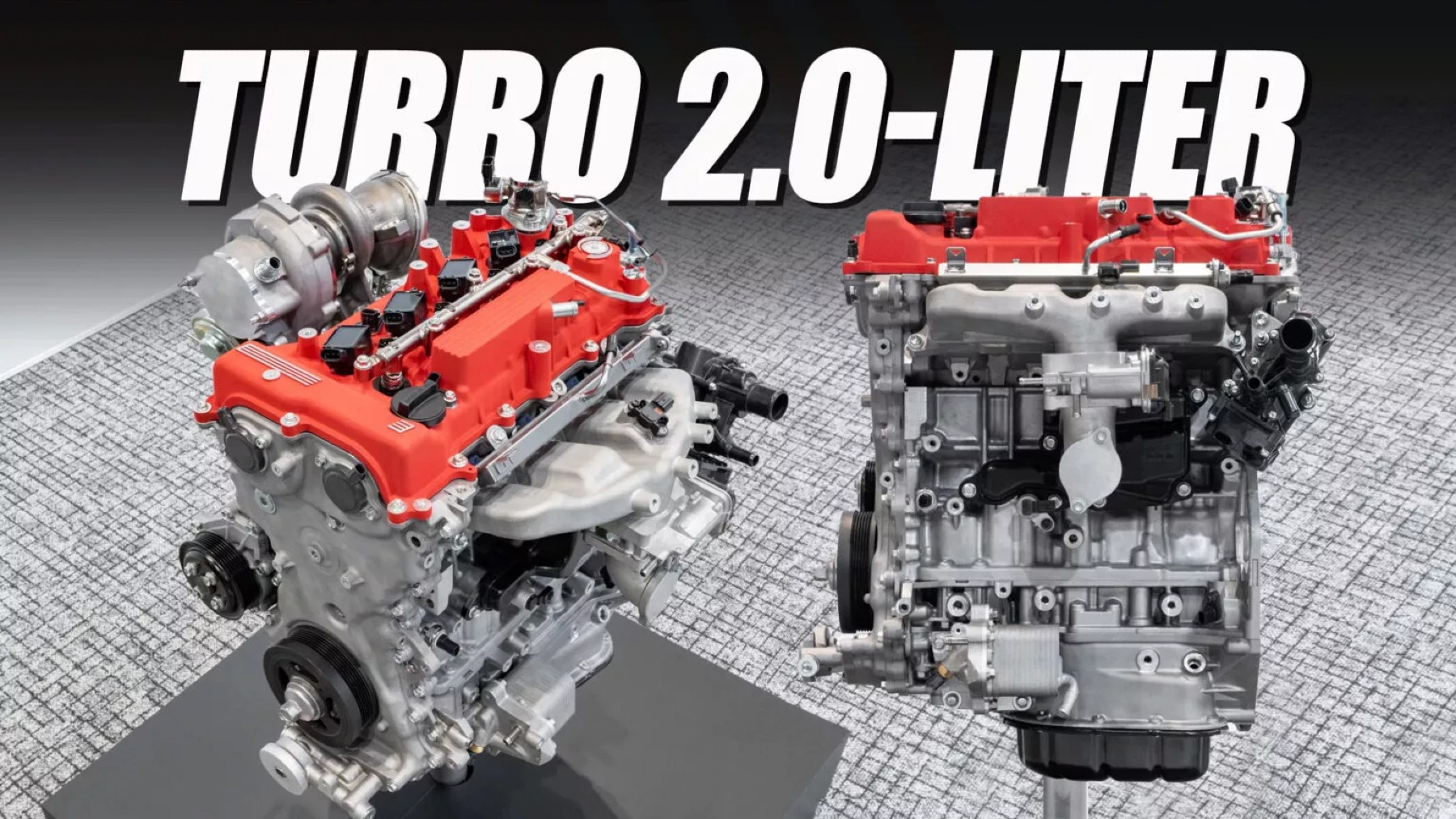
Toyota continues to lead the way in hydrogen as the main alternative, once the myth of ammonia has been debunked. However, the Japanese company has just taken an unexpected turn by showing that they are not going to be guided only by that path. They have just created a new one, which already has its first prototype, with a 2.0-liter turbo engine that runs on a different fuel. You know it, but you don’t expect to see it developed in this way and with such potential, just what has been rumored for some time.
Toyota swaps hydrogen for this innovative fuel: Is it better or just an experimental one?
Toyota, a pioneer in hybrid technology, is making waves in the automotive industry with its latest development: a new 2.0-liter turbocharged engine. This powerplant is expected to set a new benchmark for performance, and every bit of it is underlined by Toyota’s time-tested values of efficiency and sustainability.
Toyota is currently in the final stages of setting up this new 2.0-liter turbocharged engine. The Japanese automaker has also said that this engine is a part of a bigger corporate strategy to foster new 1.5-liter and 2.5-liter models, which were jointly designed with Subaru and Mazda.
This partnership is more or less intended to give ICE a long-term future to ICE in an emerging electric vehicles market. This engine is intended to be launched in production vehicles by the end of 2026. At first, it might be launched in hybrid and plug-in hybrids, which will immediately demonstrate Toyota’s approach to pairing ICE technology with electrification.
Could this be the most powerful Toyota engine ever? A comparison with other brands
The new 2.0-liter turbo engine is apparently even more compact and efficient in comparison with its predecessors. On the same point, the estimates are higher than the current 2.4-liter turbo engine:
- Volume: 10% smaller.
- Height: 10% reduction.
- Efficiency: 30% improvement.
These improvements in its physical size and effectiveness also show how Toyota aims to deliver top performance without compromising the planet. Toyota is developing multiple versions of this engine to suit various applications:
- High-Performance Road Version
- Power output: 395 hp (294 kW/400 PS).
- Torque: 550 Nm (406 lb/ft).
- Standard Road Version
- Power output: 296 hp, 221 kW and 300 PS.
- Torque: 400 Nm (295 lb/ft).
- Racing Version
- Power output: 441 kW (592 hp/600 PS)
- It’s specially high, with output of more than 300 PS per liter without any hybrid boost.
Toyota is clear about the future: This electric engine will open new opportunities for the carmaker
While Toyota has not officially announced which vehicles will feature this new engine, industry speculation and rumors suggest several exciting possibilities:
- MR2 Revival: There are themes for the creation of the new generation MR2 roadster, and as before there is a plan of using both electric power and internal combustion engines.
- Celica Return: The Celica series may be revived as a front-wheel-drive, two-door coupe that will use the same powerplant and rear-wheel drive layout as the unverified MR2.
As you have been able to see, the new Toyota electric engine is more than an experimental prototype, it is a demonstration of the power that Japan is bringing to the world. They have presented it as part of their strategy to decarbonize transportation and compete against their own hydrogen industry. Does all this sound somewhat contradictory to you? Perhaps it is, but it is part of the diversification that we have advocated on previous occasions as a strategy to meet the 2030 sustainable mobility targets.