Solar energy is one of the most promising solutions for effective power generation, and it has been in the market for a long time. However, traditional solar panels have some drawbacks regarding performance, dimensions, and appearance. In a relatively short period, scientists have found a remarkable breakthrough in developing TSCs that will help change the solar market.
These new transparent solar cells have demonstrated their ability to produce 1000 times more power than standard panels. This innovation offers a new approach to incorporating SP into daily-use items such as windows, automobiles, and clothing.
Transparent solar cells are changing the way we think about energy generation
The invention of clear solar cells is a breakthrough in creating better and new renewable energy technologies. Conventional photovoltaic systems are large, rigid, and cannot be easily incorporated into architectural structures or products.
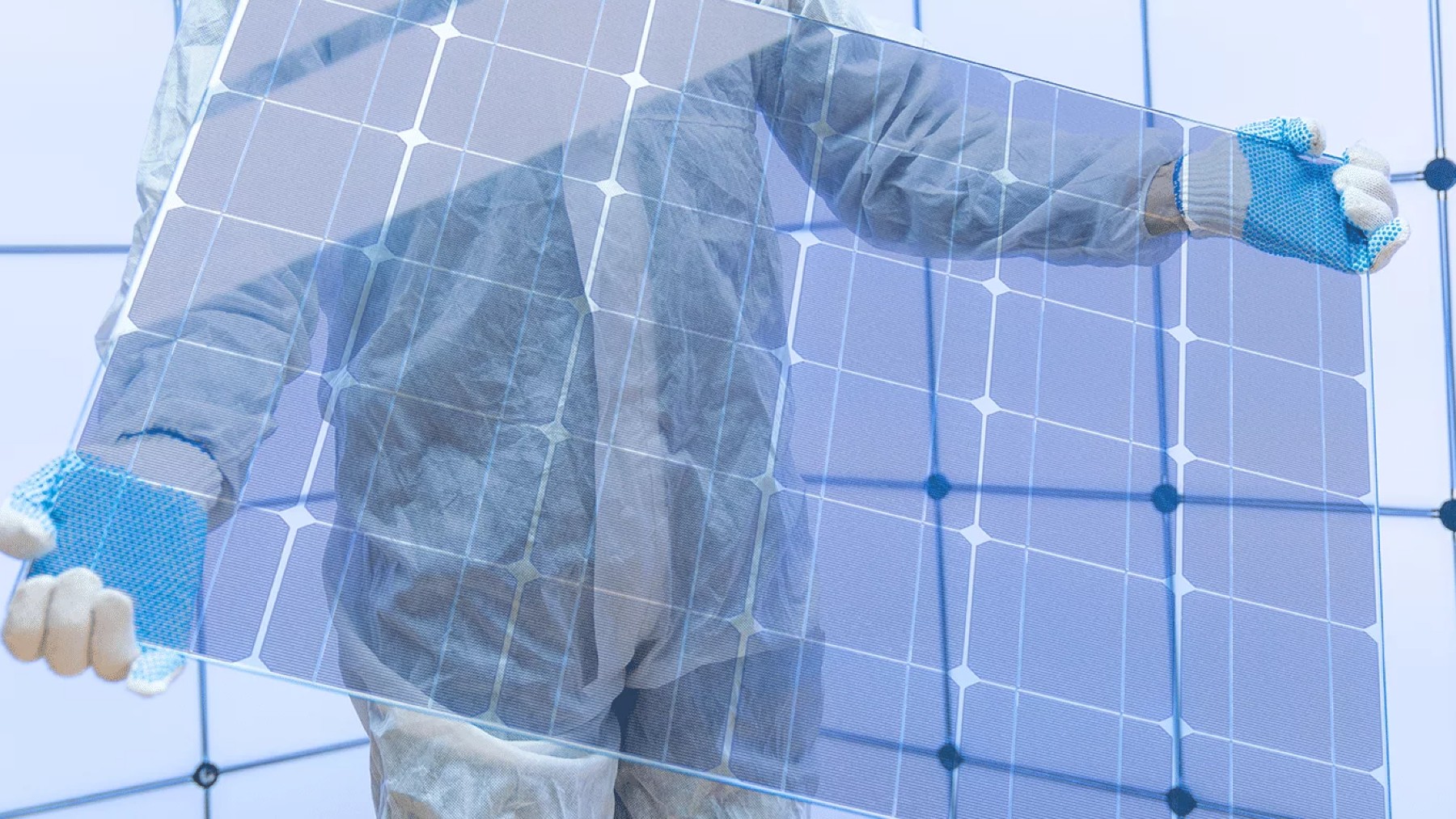
On the other hand, organic solar cells, especially near-infrared solar cells (NISCs), can be integrated into glass windows, car bodies, or even electronic appliances’ frames without hindering their efficiency or visibility. These cells have an average visible transmittance of more than 70%.
They are, therefore, suitable for the urban environment where space and aesthetics are factors of concern since they allow light to pass through and, at the same time, produce power. The materials and construction are the key to the high efficiency of these transparent solar cells.
Scientists have explored two-dimensional materials such as transition metal dichalcogenides (TMDs) with a thickness of interest in the order of a single micrometre and demonstrated strong light absorption.
With the incorporation of TMDs with ITO, the fabrication of so-called ‘transparent’ solar cells with high efficiency has become possible. The structure of these cells employs tungsten disulfide (WS₂) as the photoactive material to improve energy conversion and carrier collection, thus boosting power efficiency.
Here’s why transparent solar cells can revolutionize multiple industries
There are numerous possible uses of transparent solar cells. In architecture, they could revolutionize how buildings look by turning large glass windows into power-producing surfaces, with the tall structures being their power stations.
In electric cars, these cells could be incorporated into windshields or the body of the car, which will help the car to have a longer range without having to be charged in the usual manner. In addition, wearable technology will also benefit from the market’s growth.
Everything we wear, touching our skin, including smartwatches, fitness trackers, and implanted medical devices, can be charged via transparent solar cells rather than charging cables. Further, this technology could potentially transform consumer electronics as a field.
Mobile devices may have a range of new form factors, from wearable to solar charging: smartphones, tablets, and laptops could incorporate transparent solar cells, which would charge the device from light. This would decrease the effects of frequently charging the battery and reduce the daily dependence on external power sources.
How transparent solar cells are contributing to a greener future
The effects of transparent solar cells on the environment are immense. In contrast to other energy sources, renewable solar power does not emit greenhouse gases that have catastrophic effects on climate change.
It is quite possible to imagine that the need for fossil resources can be cut down by incorporating solar cells into ordinary objects and constructions. Furthermore, these cells help recycle surfaces that would remain vacant in a circular economy.
Though the application of transparent solar cells is not developed yet, the future utilization of the technology has the potential to decrease energy consumption and global CO2 emissions. However, some challenges need to be sorted out for the large-scale usage of such cells.
The stability of transparent solar cells under conditions like weather and temperature vagaries is paramount. Sustaining these cells also becomes a problem in manufacturing since higher levels of accuracy are needed to replicate high performances.
However, despite these challenges, researchers are confident that, with help from material science and manufacturing processes that are progressively evolving, it is possible to reduce the cost of creating transparent solar cells shortly.
Transparent solar cells could shape the future of solar energy and technology
As the technology grows, transparent solar cells could become the primary enabler of green energy solutions. There is a certain potential for improvement if the materials science used in these cells advances faster in the future.
As incorporated into buildings, automobiles and other popular consumer electronics, they could shift the globe towards renewable energy sources. Because they can harvest energy from previously unseen surfaces, transparent solar cells are the future of solar power – invisible, yet making the world of technology and architecture glow.
The change from regular silicon solar panels to invisible solar cells is not simply a technology change; it is the start of a new generation of solar energy. If the technology advances to the next level, transparent solar cells could significantly contribute to a sustainable and energy-efficient world.
As researchers work to improve these cells, we will likely realize more applications, making solar energy part of our world.