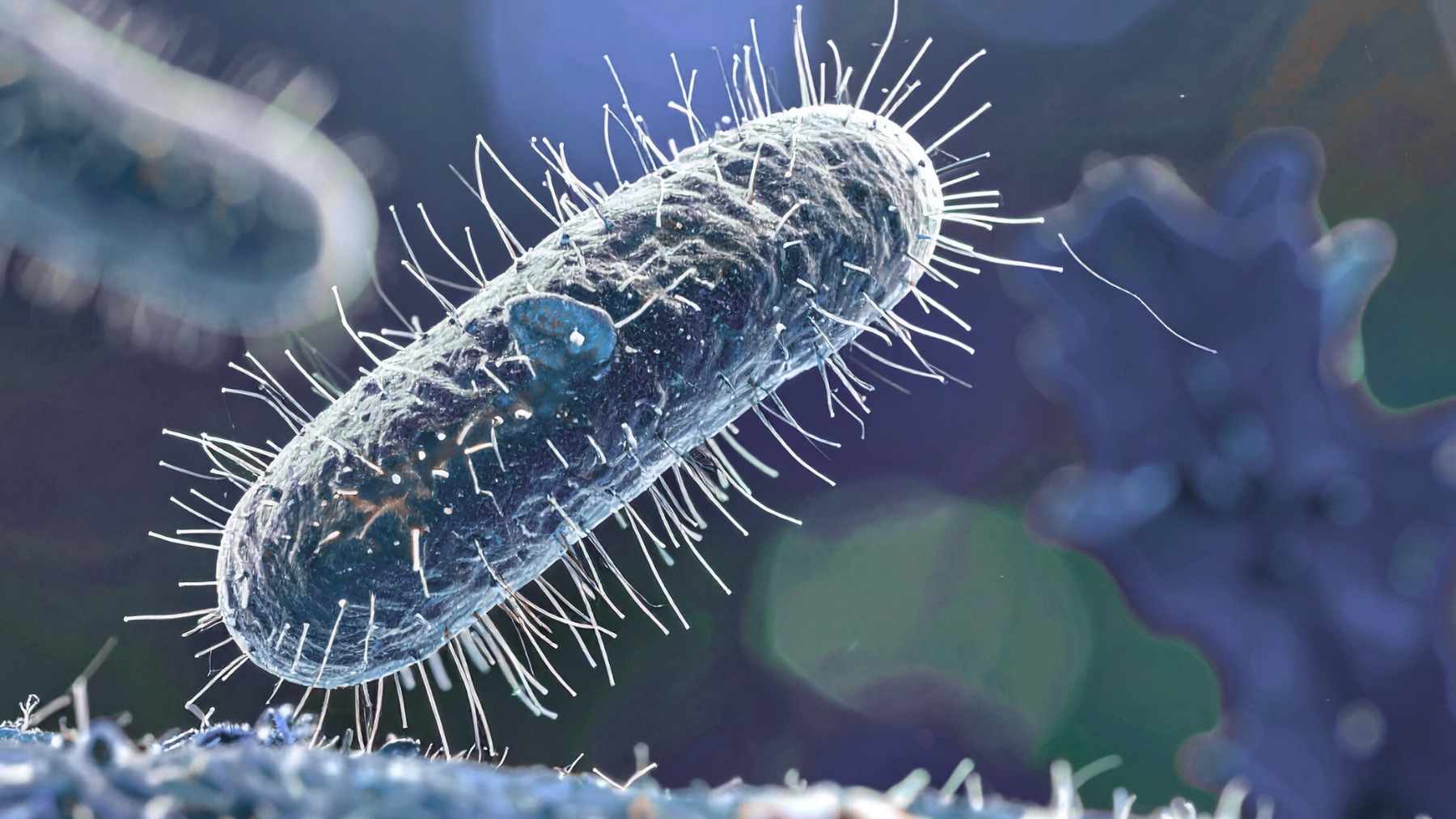
Scientists discovered extraordinary structures near desert regions of Namibia, Oman, and Saudi Arabia that may represent unknown microorganisms. The microorganism exists within the Namibian desert, where it has dwelt for thousands of years and settled into marble and limestone domains. Knowledgeable scientists predict the unidentified organism will reveal critical information about extreme survival properties and their effects on global carbon cycle processes. This article examines the findings and their scientific importance.
Small microbe tunnels resulted from this unidentified organism when it invaded desert stones.
Geologist Cees Passchier first saw the unusual rock features from Johannes Gutenberg University Mainz while he was working in Namibia. All tane-shaped stone tubes found within continuous marble and limestone formations result from biological activity rather than natural geological processes. The microscopic organism served as the probable origin of these features.
Subsequent analysis showed biological compounds inside the tubes, which proved that microorganisms drilled through the rock surface. The tubes extending from half a millimeter to three centimeters revealed clean calcium carbonate powder, indicating that microorganisms obtained their nutrients directly from the rock substance.
The curious rock structures appeared to scientists for the first time 15 years back.
Over the past 25 years, Passchier has dedicated his professional career to Namibia by studying Precambrian terranes through geological Reconstruction. His research focuses on the geological formation process that brought together the supercontinent Gondwana between 500 and 600 million years ago. Through his research, he found unusual patterns inside the marble sample that differed from what could be expected from natural erosion or seismic movement.
Experts observed these geological formations for the first time in 2002. Passchier and his research team have investigated the phenomenon for the last fifteen years. According to their findings, this microorganism shows evidence of similar structures in both Oman and Saudi Arabia. The team expressed their surprise because, according to Passchier, geological processes cannot produce such structures.
The discovery points to the potential existence of life, which has never been observed before.
Endolithic microorganisms, spanning from bacteria to fungi and lichen, inhabit extreme settings, especially desert regions. They derive their nutrition while obtaining energy from the rock substrate. The underground rock tubes indicate that the microorganism maintains survival during lightless conditions, thus classifying it as an endolithic organism.
Scientists are thrilled because they cannot identify the endolithic microbial identity now. The scientific investigation must clarify if the organism belongs to known life forms or represents an entirely new type. Passchier said. The researchers uncovered biological material without either DNA or proteins, which would have enabled additional scientific investigations about microbial identity.
Climate research experts predict this discovery will affect future studies.
This unrecognizable microorganism is important for understanding carbon cycling throughout the world. All of Earth’s CO2 balance depends heavily upon biological processes performed by various microorganisms. Passchier recommends that endolithic organism specialists conduct additional research about this discovered phenomenon. Scientists do not understand if we can no longer detect this biological entity.
The carbon emissions these microorganisms drive would modify Earth’s CO2 content, making this research intriguing and significant for managing climate change. The scientific community is interested in determining whether this fossilized microbial life form remains active or inactive for centuries. The team expressed their surprise because, according to Passchier, geological processes cannot produce such structures.
Research exploring the unknown microorganisms discovered within Namibian Omani and Saudi Arabian desert territories creates new opportunities for studying life in harsh environments. Two billion-year-old desert microorganisms exist in Namibia, Saudi Arabia, and Oman, enabling scientists to study how life adapts to difficult conditions.
For more information about this discovery, check the full article here: Passchier, C. W., Wassenaar, T. M., Groschopf, N., Jantschke, A., & Mertz-Kraus, R. (2025). Subfossil Fracture-Related Euendolithic Micro-burrows in Marble and Limestone. Geomicrobiology Journal, 1–16