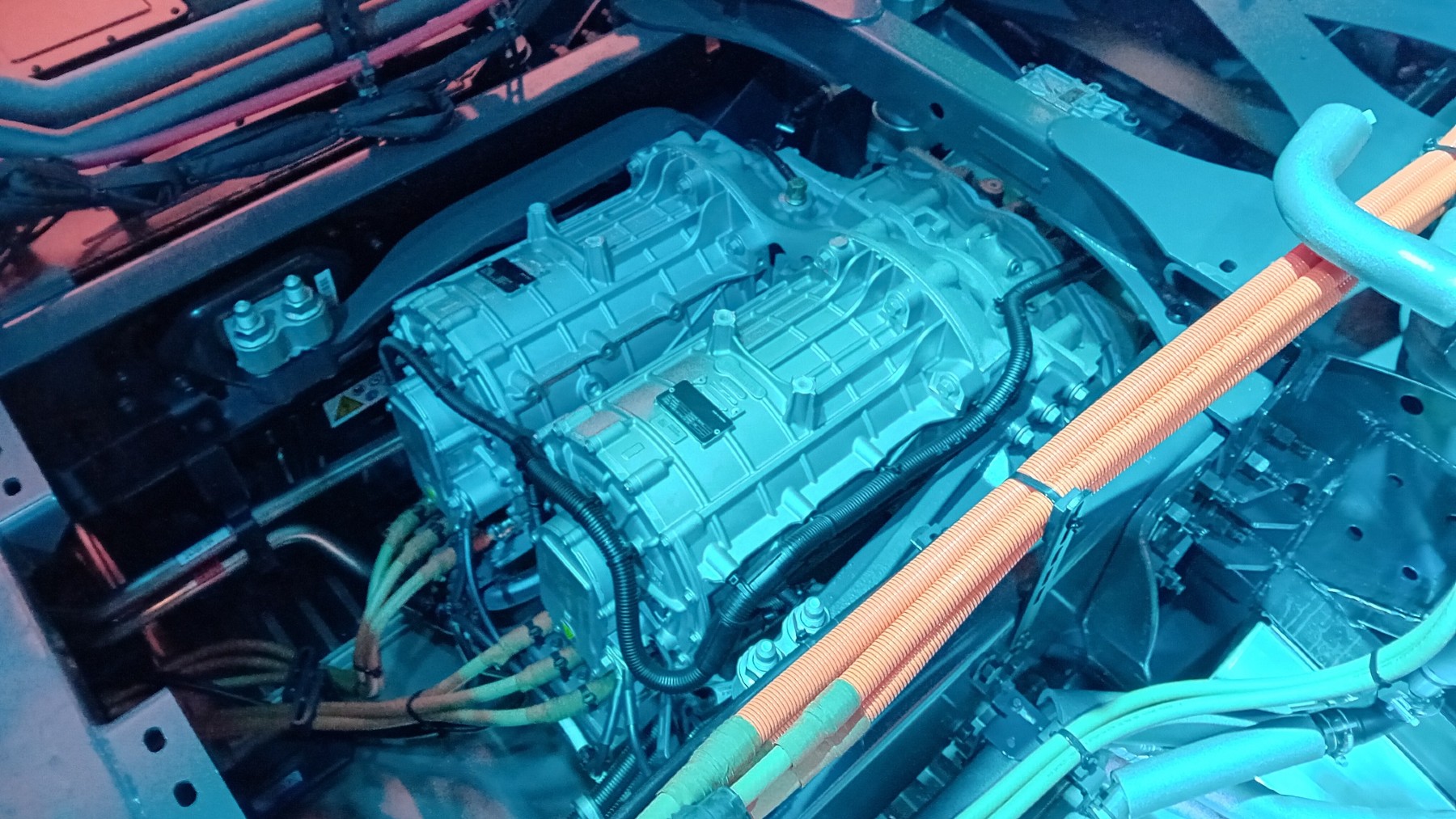
The H2-ICE is being developed as a solution to long-haul transport to pave the way for sustainable mobility through Volvo Trucks. Unveiled at the ACT Expo in Las Vegas, the programme is to begin road trials of these new-generation vehicles by 2026, with commercialization towards the end of the decade.
This is a part of Volvo Group’s plan towards achieving net zero emissions, which is crucial with the increasing need for foreign solutions in heavy-duty trucks.
High-pressure direct injection technology explained
At the core of Volvo Group’s hydrogen-powered trucks is the high-pressure direct injection (HPDI). This is an enhanced standard rail system whereby a small quantity of regular diesel fuel is injected at high pressure to act as a pilot fuel. After this step, hydrogen is directly introduced into the engine. This innovative approach results in several advantages.
- Enhanced Power and Torque: The HPDI system can promise 30% more throughput power and torque than regular diesel motors, perfect for heavy-duty operations.
- Improved Thermal Efficiency: There could also be a 10% increase in thermal efficiency over conventional diesel engines, hence better fuel efficiency.
- Significant Emission Reductions: With the help of the H2-ICE system, CO2 emission can be cut down to 95%, and with the help of future improvement, it may touch 98%.
Volvo plans to use diesel ignition and hydrogen combustion to develop powerful breakthroughs to conventional fuel sources.
Market readiness for hydrogen technology solutions
Volvo’s hydrogen trucks are timely since there is increased pressure to improve the hydrogen infrastructure worldwide. Hydrogen fueling stations are another area where countries across the globe are spending considerably. For instance, those like the $900 million project in British Columbia envision constructing hydrogen-producing plants and stations for refuelling.
Moreover, in its H2 Gateway project, the company intends to develop 20 hydrogen fueling stations designed for hydrogen fuel cell vehicles.
All these advancements enable the realization of the market for hydrogen trucks and put into place the conduits needed for the shift realization transportation systems. Hydrogen combustion trucks from
Advantages of hydrogen trucks over other technologies
Volvo provide a variety of benefits compared to other types of AFV solutions. While hydrogen fuel cells have their benefits, H2-ICE technology presents unique economic and practical benefits:
- Cost-Effectiveness: The engines that run on hydrogen are cheaper and easier to manufacture and maintain than hydrogen fuel cells. This primarily benefits operators seeking cost-effective solutions within the heavy-duty truck segment.
- Flexibility: The benefit of spark ignition is the ability to calibrate the vehicle to use a small amount of ignition fuel to meet specific needs and flexibility in areas where charging stations remain scarce or situations that require rapid charging.
- Zero Emission Vehicle Classification: As these trucks can be dispatched on renewable fuels such as hydrotreated vegetable oil (HVO), they can fall into the ‘Zero Emission Vehicles’ category under the new EU CO2 emission standards.
Strategic benefits for long-haul trucking operations
Volvo understands that all these technologies are critical for decarbonizing heavy transport. Hydrogen combustion engines will coexist with battery electric trucks and vehicles powered by renewable decarbonizing tactical diversification, which enables consumers to select the most appropriate substitute depending on transportation requirements and infrastructure.
During the presentation, Jan Hjelmgren, head of Product Management and Quality at Volvo Trucks, noted that these hydrogen trucks will have the same performance and durability as the modern diesel trucks and with the CO2 emissions reduction potential.
Upcoming milestones and environmental impact expectations
Moving to lab testing of hydrogen combustion engines, on-road testing planned for 2026 will be the next stepping stone towards proving the feasibility and efficiency of the developed technology. If successful, Volvo’ss hydrogen-driven trucks will be instrumental in achieving sustainable transport solutions.
Volvo has put its bet on hydrogen combustion technology as a measure that will help to decrease emissions in the segment of heavy-duty transportation. Thus, using HPDI technology and initiating cooperation with the development of infrastructure systems worldwide, Volvo has every chance to become a vehicle manufacturer that will help the world build a cleaner and more sustainable future for transport.