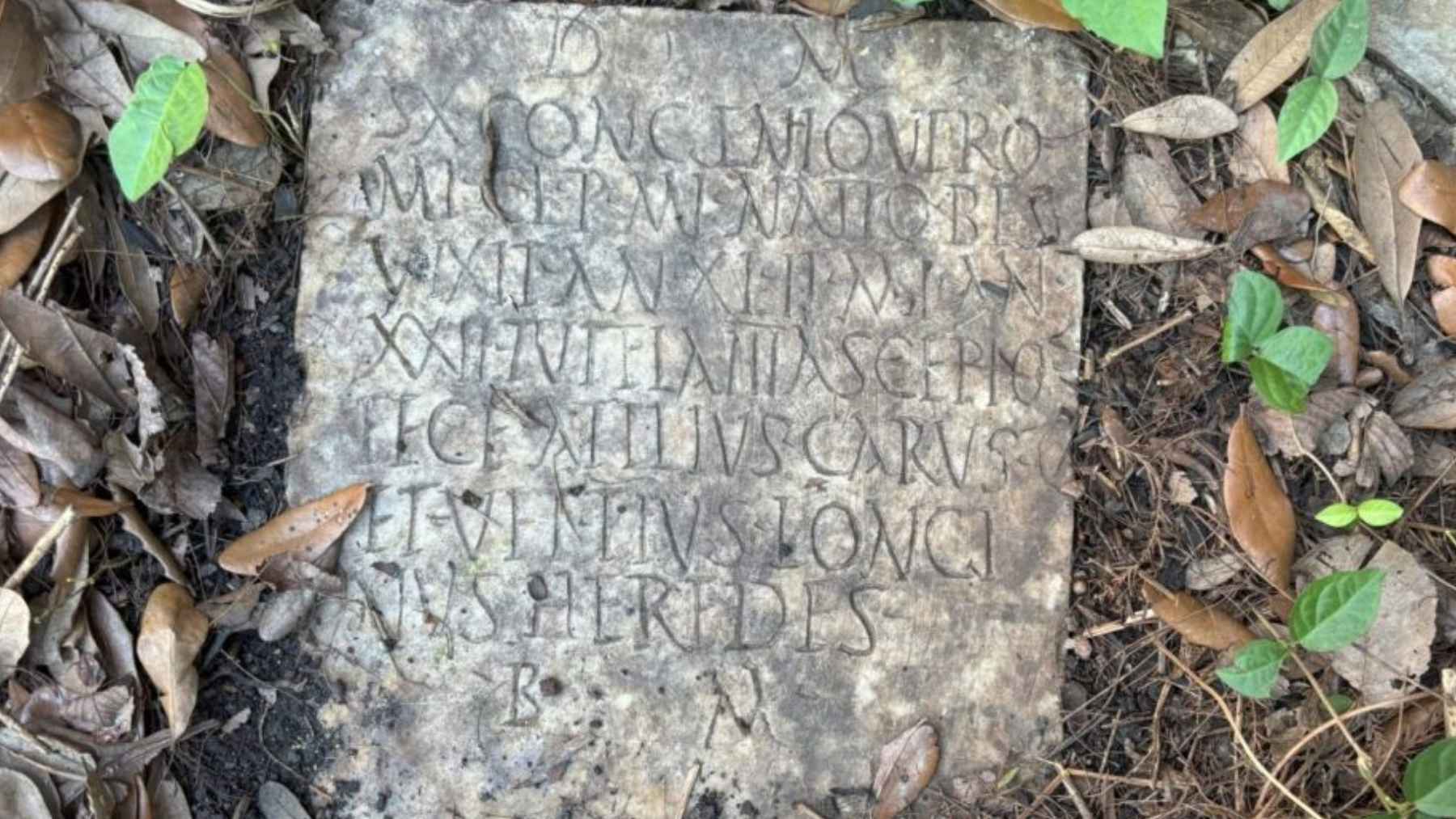
A routine yard cleanup in New Orleans turned into an international repatriation case after a couple pulled a carved marble slab from the weeds behind their historic home. Experts identified the Latin inscription as a second-century Roman funerary marker, and the FBI’s Art Crime Team has taken custody to coordinate its return to the museum in Civitavecchia, Italy.
It is the kind of story that starts with dirt under your fingernails and ends with federal paperwork. It also lands on a very modern pressure point, because weather, pollution, and coastal flooding can erase history faster than most of us realize.
A backyard find that raised the wrong kind of questions
The discovery happened in spring 2025, when Tulane University anthropologist Daniella Santoro and her husband, Aaron Lorenz, were clearing overgrowth in their backyard in the Carrollton area. Seeing formal Latin carved into marble, Santoro briefly worried they might have stumbled onto a forgotten burial site.
Instead of treating the slab as a strange decoration, Santoro asked for help. She looped in experts including University of New Orleans archaeologist D. Ryan Gray and Tulane classicist Susann S. Lusnia, who began working the inscription line by line.
The Latin clue that unlocked a 1,900-year-old identity
At the top of the text sat a telltale Roman phrase, “Dis Manibus,” which translates as “to the spirits of the dead.” That short formula appears on countless Roman grave markers, and it signaled that this was likely the real thing.
A fuller translation revealed a specific person and a specific life. The stone commemorates Sextus Congenius Verus, described as a soldier in the praetorian fleet at Misenum, from the Bessi people of Thrace, who lived 42 years and served 22, apparently aboard a ship named Asclepius.
Even the closing lines feel familiar in a quiet way. The inscription says the monument was set up by two heirs, Atilius Carus and Vettius Longinus, and it calls Sextus “well deserving.”
A missing museum object with a World War II-sized gap
Once the inscription was translated, the mystery widened. Lusnia and colleagues matched the text to records from the Museo Archeologico Nazionale di Civitavecchia, a port city northwest of Rome, where a near-identical marker had been documented decades ago.
Museum records even included the slab’s size, about 1 square foot and about 1 inch thick, and that matched the stone in New Orleans. Civitavecchia was heavily bombed in 1943 and 1944, and the museum was later rebuilt, which is one reason objects could be lost or displaced in the chaos.
So how did it end up in Louisiana? Reporting later suggested the stone stayed in a U.S. soldier’s family after World War II, then became a yard ornament for a previous homeowner who did not realize it was ancient and left it behind when the house was sold.
Why the FBI stepped in and what repatriation looks like
Because the artifact was linked to a specific museum collection overseas, “Team Tombstone” concluded the case needed a formal path back to Italy. The FBI’s Art Crime Team took custody while the repatriation process moved forward.
The unit is small but busy. The FBI says that since the team’s creation in 2004, it has recovered more than 20,000 items valued at over $1 billion, often working with foreign partners on returns that can take months.
International rules matter, too. UNESCO’s 1970 convention urges countries to prevent the illicit import and export of cultural property and to cooperate on restitution, a framework that shapes how museums and law enforcement handle cases like this.
The environmental stakes for a stone left outdoors
There is a practical conservation reason this discovery could not stay a curiosity in someone’s yard. Marble is largely made of calcite, and the U.S. Geological Survey notes that acids in polluted air and rain react with calcite and dissolve it, roughening surfaces and erasing carved details.
Add in the realities of a coastal city built around water. NOAA sea level trend data for New Canal, Louisiana show a relative sea level rise of 5.99 millimeters per year, which is about 0.24 inches per year, a pace that makes flooding and drainage problems more familiar to residents.
Italy’s port towns face their own climate pressures, too, from storm surge to salt exposure, and the IPCC warns that cultural heritage sites in coastal cities are vulnerable because relocation or adaptation options can be limited. In practical terms, keeping a 1,900-year-old inscription in a controlled museum setting is not just about ownership – it is about survival.
What this case suggests for homeowners and collectors
Most people will never dig up a Roman grave marker, but plenty of us find “weird old stuff” during renovations. If you find something that looks archaeological, the safest move is to stop digging, photograph it in place, and contact local experts or authorities, because the context around an object can be as valuable as the object itself.
This case also shows how quickly a personal keepsake can become a public responsibility. A wartime souvenir might feel harmless in a display case, but outdoors, under rain, algae, and that sticky summer heat we all know, it can turn into a slow-motion loss.
For now, the marble tablet is on a path back across the Atlantic, toward the port city where it was once cataloged before the war.
The official statement was published in Tulanian.